
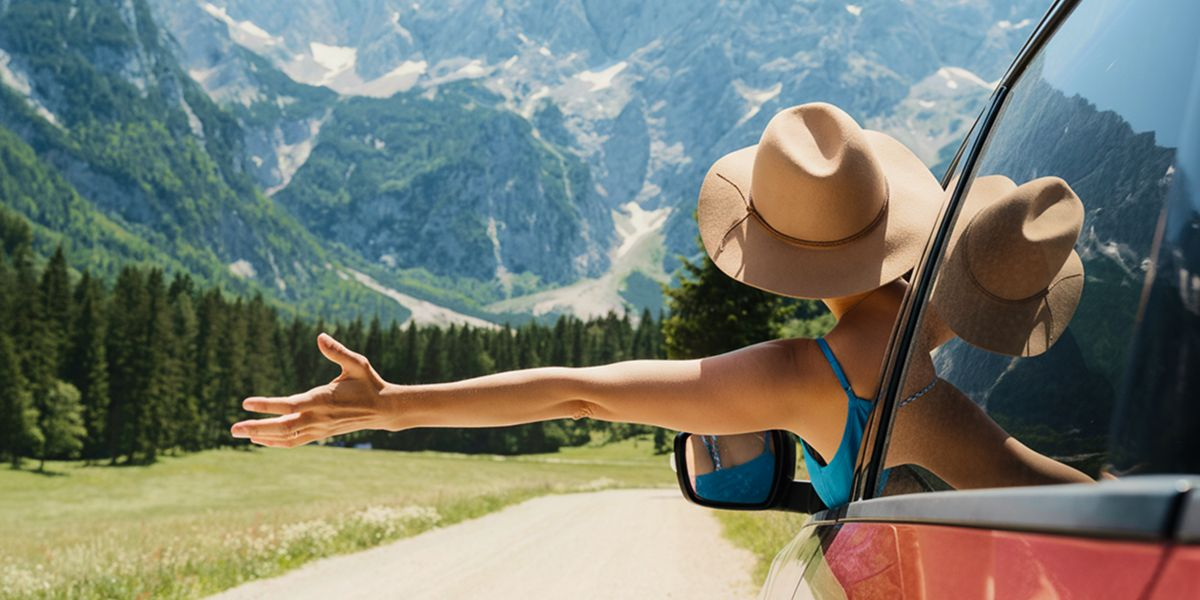
We live our lives in boxes. We wake up in a square bedroom, stare at a glowing glass rectangle for eight hours, and scroll through compressed, algorithmic versions of the world while sitting on a couch. The modern world moves at a clip that our brains weren’t exactly wired to handle. Adventures We are constantly accessible, perpetually stimulated, and deeply, systemically tired.
But then, you get in a car, turn a physical key or push a button, and watch your house fade away in the rearview mirror.
For anyone whose soul feels a little bruised by the relentless hum of modern life, a road trip into the wild isn’t just a vacation—it’s a sensory reclamation project. It is the deliberate act of breaking out of the box. When your primary objective shifts from answering emails to simply watching a mountain range slowly grow larger on the horizon, something inside your chest downshifts. The road stops being a black strip of asphalt designed to get you to work; it becomes a living portal to wide-open spaces, ancient forests, and the quiet, comforting reality of the physical earth.
1. The Psychology of the Open Windows: Why Driving Resets the Brain

There is a very specific magic to traveling by car that a plane ticket simply cannot buy. Air travel treats the world like an abstraction—you board a metal tube in one climate and step out into another, completely skipping the structural story of the earth below.
When you drive, you are an active witness to the slow, beautiful transitions of the planet. You watch the urban concrete gradually give way to rolling farmland. You feel your car’s engine work harder as the road begins to tilt upward into pine-scented foothills. You notice the exact mile where the deciduous trees lose their leaves and the rugged, unyielding evergreens take over the landscape.
This gradual progression does wonders for a cluttered mind. It mirrors the exact cognitive pacing our ancestors used to navigate the world. The rhythmic thrum of the tires against the road serves as a gentle white noise, clearing away the frantic internal monologue of daily anxieties and replacing it with raw, unadulterated presence.
2. Choosing Your Horizon: Four Classic Natural Terrains of Adventures

The kind of route you choose shouldn’t just be based on geographic convenience; it should match the specific kind of internal quiet your mind is craving. Different landscapes offer entirely different emotional frequencies.
                  ┌───────────────────────────┐
                  │   NATURAL ROAD TERRAINS   │
                  └─────────────┬─────────────┘
                                │
         ┌──────────────────────┼──────────────────────┐
         ▼                      ▼                      ▼
 ┌───────────────┐      ┌───────────────┐      ┌───────────────┐
 │ Mountain Pass │      │ Coastal Route │      │ Desert Desert │
 ├───────────────┤      ├───────────────┤      ├───────────────┤
 │ Best for raw  │      │ Best for rhythmic│   │ Best for deep │
 │ perspective & │      │ perspective & │      │ stillness and │
 │ majestic scale│      │ fluid motion  │      │ absolute space│
 └───────────────┘      └───────────────┘      └───────────────┘
The Mountain Adventures Pass: The Great Humbler
Driving through high-altitude switchbacks forces an intense, beautiful focus. As you navigate steep drop-offs and look out over valleys carved by ancient glaciers, your everyday problems suddenly shrink down to their actual, microscopic size. It is nearly impossible to stress over a missed text message when you are staring directly into the timeless face of a granite peak topped with perpetual snow.
The Coastal Highway: The Rhythmic Constant
For those who feel a deep, magnetic pull toward water, a coastal drive offers a unique blend of drama and tranquility. The horizon stays completely flat and infinite on one side of your vehicle, while rugged cliffs collapse directly into the churning white foam of the sea on the other. The steady, rhythmic crash of the waves acts as a natural metronome, encouraging a long, deep, and deeply restorative exhale.
The Forest Canopy: The Intimate Sanctuary
While mountains and oceans offer massive, sweeping grand vistas, a road winding deep through an old-growth forest offers an entirely different kind of comfort: intimacy.
The world closes in around you in a warm, green embrace. The bright sunlight filters through thousands of overlapping leaves, casting dancing patterns of light and shadow across your dashboard. The air feels cool, heavy with moisture, and smells intensely of damp earth, moss, and pine needles. It is a quiet, secret world that makes you feel completely safe, insulated, and protected from the noise of the outside world.
The High Desert: The Ultimate Space
There is a profound, startling honesty to a desert road trip. At first glance, a novice traveler might see nothing but empty, barren dirt. But if you stay long enough to let your eyes adjust, you begin to see a masterclass in rich color, stark texture, and dramatic geological lines. The sheer vastness of a desert road—where you can see the highway stretching perfectly straight for ten miles ahead into a horizon of red rock mesas—creates a beautiful, expansive canvas for internal reflection and absolute clarity.
3. The Manifesto of Slow Adventures Travel: Throwing Away the Spreadsheet Itinerary

The quickest way to completely ruin a nature-focused road trip is to treat it like a corporate logistics operation. If your travel notes are packed with precise, fifteen-minute increments, rigid arrival times, and a desperate checklist of twenty different tourist lookouts you feel obligated to photograph, you are completely missing the point.
The real magic of the road always happens in the unscripted margins of your day. It’s the completely unmapped gravel pullout that reveals a hidden, crystal-clear creek. It’s the sudden decision to put the car in park for an hour just to sit on a warm rock and watch a family of elk graze through a meadow of wild grass. It’s the foggy morning where the road conditions force you to slow down to thirty miles per hour, allowing you to actually spot a blue heron standing frozen in a roadside marsh.
When you practice slow travel, you surrender your timeline to the natural rhythm of the landscape. You give up the hollow satisfaction of “making good time” in exchange for the deep fulfillment of having an unforgettable, unhurried human experience.
4. The Self-Reliance Checklist: Preparing Your Moving Sanctuary

A truly peaceful road trip requires a baseline of intelligent preparation. If you are constantly worried about your car breaking down or running out of water in the middle of nowhere, your brain won’t have the mental space to enjoy the beauty outside your window. Treat your car like a self-contained, protective capsule.
| Layer of Care | Essential Gear | Core Purpose |
|---|---|---|
| Mechanical Security | Full-sized spare tire, jumper cables, full fluid checks | Eliminates the anxiety of getting stranded in remote areas |
| Physical Hydration | Multi-gallon water jug, shelf-stable protein snacks | Keeps you independent of fast-food chains and remote gas stations |
| Navigation Backup | Physical paper topographic maps of the region | Guarantees safety when cellular signals invariably drop in valleys |
| Sensory Comfort | Wool blanket, broken-in hiking boots, headlamp | Allows you to comfortably step out of the car whenever inspiration strikes |
5. The Golden Hour Phenomenon: Learning to Observe Again of Adventures

When you spend weeks living on the road, you naturally become deeply attuned to the changing positions of the sun. You stop looking at your watch to tell time and start reading the sky.
         ┌────────────────────────────────────────────────────────┐
         │             THE DIURNAL LANDSCAPE SHIFT                │
         └───────────────────────────┬────────────────────────────┘
                                     │
                 ┌───────────────────┴───────────────────┐
                 ▼                                       ▼
       ┌───────────────────┐                   ┌───────────────────┐
       │   The Dawn Mist   │                   │  The Golden Glow  │
       ├───────────────────┤                   ├───────────────────┤
       │ Cool, heavy air   │                   │ Long, deep shadows│
       │ Low light beams   │                   │ Warm rock tones   │
       │ Wildlife activity │                   │ Quiet stillness   │
       └───────────────────┘                   └───────────────────┘
The First Light Cleanse
There is no experience quite like waking up before dawn in a quiet campground or roadside pullout. The air is cold enough to see your breath, and a low, heavy mist hangs over the forest floor. Adventures As the sun cracks over the horizon, individual beams of light pierce through the trees like cathedral windows, warming the damp earth and waking up the local birds. It is a clean, holy moment that belongs entirely to you.
The Evening Twilight Glow
Conversely, the final hour before sunset—what photographers call the golden hour—transforms even the most mundane landscapes into a cinematic masterpiece. The long, low shadows accentuate every ridge, valley, and texture of the terrain. The rocks glow with warm shades of deep amber and ochre, and for a few fleeting minutes, the entire world feels soft, still, and completely at peace.
6. Leaving No Trace: The Ethical Contract of the Road Adventures

To love nature means taking an active, fierce responsibility for its preservation. The Adventures roads we travel cut through delicate, complex ecosystems that were homes long before humans laid down asphalt.
- Respecting the Local Wildlife: Spotting a bear, a moose, or a coyote from your car windows is a thrilling, unforgettable highlight. Keep it that way by keeping your distance. Never offer food to wild animals—it alters their natural survival behaviors and frequently leads to tragic outcomes. Use a telephoto lens, stay near your vehicle, and observe their lives with quiet, humble respect.
- Packing it Completely Out: Your car makes it incredibly easy to carry your trash with you. Keep a dedicated waste bag inside your passenger footwell, and never let a single piece of plastic, wrapper, or food scrap fly out your window. Leave every single campsite, trail, and scenic overlook in a cleaner condition than you found it.
The Road is Always Waiting

You don’t need a custom-built overland rig, a pristine camper van, or a Adventures month of vacation time to experience this. You just need a functional vehicle, a couple of days, and the willingness to take the scenic route home.
The next time the notifications on your phone start to feel like an avalanche, pull up a map. Find a line of highway that twists, turns, and cuts through a patch of green or a stretch of open valley. Adventures Pack an old cooler, roll the windows down until your hair is a messy tangled wreck, and let the road do what it has always done best: remind you that you are a living, breathing human being, and you belong to a remarkably beautiful world.
FAQs
1.What makes a road trip good for nature lovers?
A good nature road trip includes scenic landscapes, outdoor stops, and opportunities to enjoy peaceful natural settings. Routes with mountains, forests, lakes, coastlines, or wildlife viewing areas are especially appealing.
2.How do I choose the best road trip route for scenic views?
Choose a route based on the type of scenery you enjoy most. Some travelers prefer mountains, while others enjoy oceans, deserts, or forests. It also helps to consider seasonal weather, road safety, and the amount of time you have.
3.What should I pack for a nature road trip?
It is helpful to pack water, snacks, comfortable clothing, a first aid kit, a phone charger, a camera, sunscreen, and any items you may need for hiking or outdoor stops. Packing for changing weather is also smart.
4.Are road trips better than flights for nature travel?
For many nature lovers, yes. Road trips offer more flexibility, more scenic stops, and a slower pace that makes it easier to enjoy the journey. They also allow you to explore places that may not be accessible by plane.
5.How can I make my road trip more relaxing?
Keep your schedule flexible, avoid overplanning, and include time for rest and spontaneous stops. Choosing scenic routes, traveling during pleasant weather, and allowing yourself to slow down can make the trip much more relaxing.




Leave a Reply