
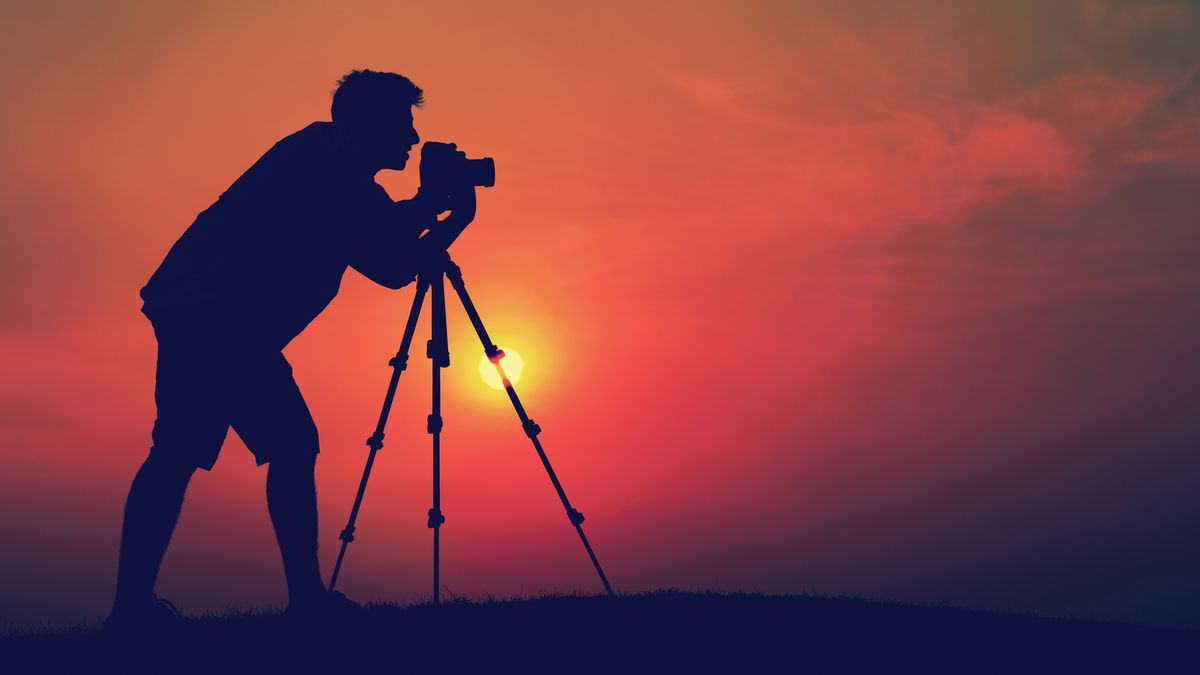
We live in a world where everyone is a photographer, yet we are drowning in images that feel utterly empty. Think about your own smartphone Photography gallery right now. It is likely clogged with thousands of pictures—blurry screenshots, random receipts you needed to remember, five identical bursts of a pet doing something cute, and a dozen flat, washed-out photos of a beautiful vacation sunset that looked infinitely better in real life.
We carry incredibly sophisticated camera systems in our pockets every single day, yet getting a photo that actually makes you feel something remains frustratingly rare.
When people want to take better pictures, the default instinct is always to blame the tools. We think, “If I just buy that expensive mirrorless camera, or upgrade to the newest smartphone with the triple-lens array, my photos will finally look professional.”
But let’s be completely honest: buying a premium paintbrush doesn’t make you a master painter.
A genuinely breath-taking photograph has almost nothing to do with the price tag of your gear, and everything to do with how intentionally you look at the world before you press the shutter. Photography, at its core, is the art of pausing time. It’s about catching a fleeting smile, a dramatic shadow cutting across a sidewalk, or a quiet, mundane detail of everyday life that everyone else is rushing right past. Better photography doesn’t require a degree or a massive tech budget—it just requires you to slow down, train your eyes, and learn the quiet language of light and lines.
The Shift: Moving From a Snapshot to a Photograph

The fundamental difference between a casual snapshot and a powerful photograph comes down to a single word: awareness.
Most people take snapshots. A snapshot is a purely reactive impulse. You see something neat, you pull out your phone, you point it directly at the object from eye level, and you click. It’s a visual note that says, “I was here, and this thing existed.”
A photograph, however, is a deliberate choice. It requires you to pause and ask yourself a crucial question before you ever touch the button: What is the actual story I am trying to tell right here?
When you stop reacting instantly and give yourself ten seconds to observe a scene, your brain switches tracks. You start noticing the background clutter that might ruin the mood. You notice how a person’s expression changes when they turn toward a window. You see patterns, textures, and layers. You stop merely documenting a scene and start interpreting it.
Light Is Not Just a Utility—It Is the Paint
The word photography literally translates from Greek as “drawing with light.” Yet, most beginners treat light as a simple utility—something you need just so the picture isn’t dark. If you want to make your images look instantly premium, you have to start treating light as your main subject.
The quality, direction, and color of your light dictate the emotional weight of your entire image.
| Time of Day | The Character of the Light | Best Used For… |
| The Golden Hour (Just after sunrise / before sunset) | Low-angle, warm, incredibly soft, long dramatic shadows | Portraits, sweeping landscapes, and cinematic street scenes. |
| Midday Sun (12:00 PM – 2:00 PM) | Harsh, direct, high-contrast, creates deep shadows under eyes | Moody architectural shots, graphic black-and-whites; avoid for standard portraits. |
| Overcast / Cloudy Days | Massive, natural softbox; completely even, shadowless illumination | Intimate close-ups, vibrant nature shots, and clean, flattering portraits. |

Stop fighting the light and start dancing with it. If you’re taking a portrait indoors, don’t use the harsh, clinical fluorescent ceiling light. Move your subject next to a window so the soft, directional daylight skims across their face, creating depth and dimension. If you’re outside at noon, don’t shoot in the blinding glare—move under the shade of a tree where the light is even and forgiving. Once you learn to see light, you will see beauty in places you used to ignore.
Composition: Guiding the Eye Without Saying a Word
Composition is simply the way you arrange the pieces of the puzzle inside your four-sided frame. Without good composition, even a photo of a magnificent mountain range will feel messy and uninspiring.

The easiest way to master composition is to understand that the human eye is inherently lazy. It wants to be told exactly where to look. If your frame is cluttered with telephone poles, stray trash cans, and distracting bright spots, the viewer’s eye gets tired and moves on.
You don’t need to memorize complex mathematical grids, but you should lean into a few classic structural habits:
- Get Off-Center (The Rule of Thirds): Stop placing your subject dead-center in every single frame like a bullseye. Imagine your screen is divided into a $3 \times 3$ grid. Place your main point of interest—whether it’s a person’s eyes, a lonely tree, or a distant sailboat—along those intersecting lines. It immediately creates a sense of balance, movement, and visual tension.
- Change Your Perspective: The vast majority of photos are taken from exactly 1.5 to 1.8 meters ($5\text{ to }6\text{ feet}$) off the ground—the height of an average standing adult. It is a deeply predictable, boring perspective. Crouch down low to the ground to make your subject look heroic and monumental. Step onto a bench and shoot looking down to map out the geometry of a space.
- Simplify the Frame: Look at the edges of your viewfinder before you shoot. Is there a stray shoulder or a distracting exit sign creeping into the corner? Crop with your feet. Step closer, tilt your angle, or alter your position until everything in the frame serves the main story.
The Camera is an Instrument, Not the Master

There is a beautiful liberation in realizing that the device in your hand matters significantly less than your understanding of the core principles. Some of the most historic, culture-shifting photographs in human history were captured on grainy film with completely manual lenses that wouldn’t stand a chance against the baseline sensor of a modern budget phone.
Instead of wishing for better equipment, master the device you currently own. Figure out how it locks focus. Learn how to tap the screen to manually lower the exposure when a bright sky threatens to wash out your details. Understand how your camera behaves in low-light environments. When you stop fighting your gear and start working within its unique boundaries, your style transitions from accidental luck to consistent, intentional creation.
The Power of the Unposed Moment

Patience is perhaps the most underrated skill in a photographer’s toolkit. In our hyper-accelerated culture, we want to walk up to a scene, snap a photo in half a second, and keep walking. But the magic rarely happens on the first click.
The most unforgettable photographs capture genuine, unvarnished human emotion—and you cannot force or stage an authentic feeling.
If you are photographing a family gathering, stop yelling “Everyone look here and say cheese!” All that gives you is a row of stiff, unnatural, hostage-like smiles. Instead, keep your camera ready during the quiet gaps between the action. Catch the spontaneous burst of laughter when someone tells a bad joke, the quiet glance shared between partners, or the chaotic, messy energy of children running around when they think no one is watching. Anticipate the moment. Find a great background, set up your frame, lock your focus, and just wait for life to happen inside your boundaries.
Editing: Enhancing the Truth, Not Masking It

In the digital era, editing is half the fun. It is your opportunity to add your own creative punctuation mark to the sentence you wrote in the camera. However, editing software should be used like salt in cooking—it is meant to bring out the natural flavors of the dish, not completely bury it. A common trap for beginners is going entirely overboard with filters, extreme color saturation, and artificial textures until the photo looks like a surreal sci-fi movie poster.
True, sophisticated editing is remarkably subtle. A gentle crop to fix a crooked horizon line, a tiny boost to the contrast to make the shadows pop, a touch of warmth to recreate the actual feeling of the sun on your skin, or lifting the shadows slightly so details don’t get lost in total blackness. The goal of a great edit isn’t to create a flawless, plastic version of reality; it’s to make the final image look exactly the way the moment felt when you were standing there living it.
Finding Comfort in Everyday Shadows
You do not need to book a flight to a tropical island or wait for a major life milestone to create stunning photography. Some of the most profound photographic art is discovered right in the middle of a completely ordinary Tuesday.
Make a habit of looking for the extraordinary hidden inside the mundane:
- The dramatic geometric shadows cast across your kitchen floor by a window blind at 4:00 PM.
- The delicate condensation rings left by a hot cup of tea on a wooden tabletop.
- The abstract patterns of rain droplets streaking down a car window against city lights.

When you use your daily life as a training ground, your eyes adapt. You stop sleepwalking through your routine and start actively hunting for visual stories. This practice builds immense creative confidence. Photography ceases to be an intimidating technical skill and transforms into a grounding daily practice—a personal, recognizable way of seeing the world that belongs entirely to you. Grab whatever camera you have on hand, step outside, drop the pressure of perfection, and go find the light.
FAQs
1. How can I improve my photography skills?
Practice regularly, learn composition, and understand how to use natural light.
2. Is a professional camera necessary for great photography?
No, even a smartphone can capture amazing photos with the right techniques.
3. What is the best lighting for photography?
Soft natural light during the golden hour is ideal for most types of photography.
4. Why is composition important in photography?
Good composition helps create balanced, visually appealing, and engaging images.
5. How often should I practice photography?
Practice as often as possible to build confidence and improve your creative skills.




Leave a Reply