
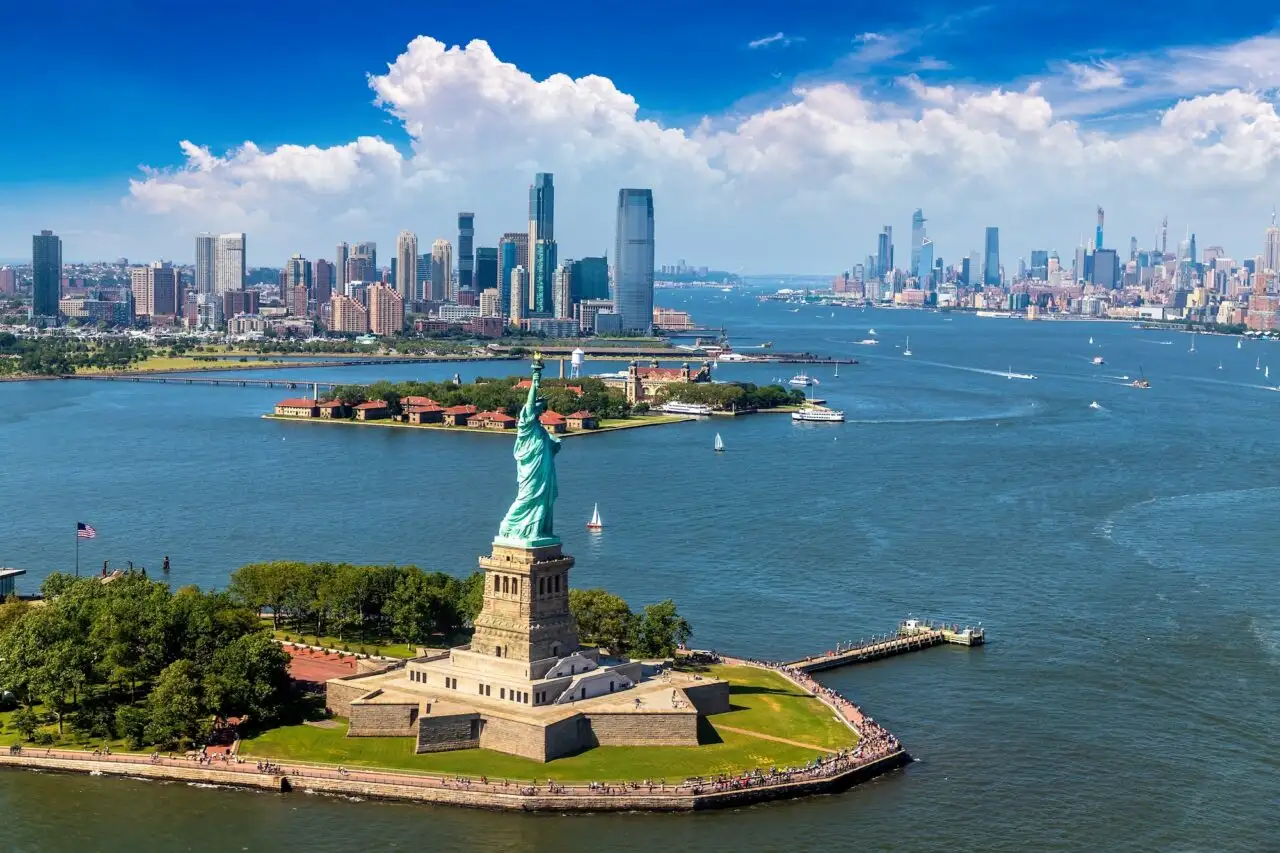
New York City Culture doesn’t care about your expectations. The moment you step above ground from a subway stairwell, the city hits you like a physical wall of sound and energy—the hiss of bus brakes, the rapid-fire cadence of a dozen different languages blending into a single block, the smell of roasted nuts competing with diesel exhaust, and the absolute, unwavering sense that everyone around you is on an urgent, uncompromising mission.
To understand New York Culture, you have to stop looking at it as a collection of famous postcards and start feeling it as a massive, living organism.
It is a city built on a paradox: it is intensely competitive and ruthlessly expensive, yet it remains the most deeply democratic, creatively forgiving, and welcoming melting pot on the planet. Anyone can become a New Yorker; all it takes is the stamina to survive its pace and the willingness to let the city rewrite your internal rhythm.
The Neighborhood Mosaic: Life Beyond the Skyline

Manhattan’s towering skyscrapers grab all the cinematic glory, but the real soul of New York is fractured into hundreds of hyper-distinct neighborhoods spread across five boroughs. Moving between them doesn’t just feel like changing zip codes; it feels like crossing international borders on the price of a single transit swipe.
If you stay in Midtown, you are missing the point. The magic happens in the intersections. It’s in the transition where the trendy boutiques of SoHo bleed into the crowded, vibrant street fruit markets of Chinatown. It’s in Queens, specifically Jackson Heights or Astoria, where you can walk down a single avenue and hear over thirty different languages spoken by business owners who have recreated their homelands inside brick storefronts.
It’s in the historic brownstone-lined streets of Bed-Stuy and Bushwick in Brooklyn, where generations of community history rub shoulders with young artists, creating a vibrant canvas of street murals, independent coffee shops, and late-night block parti New York isn’t a monoculture; it’s an overlapping mosaic of millions of people fighting for their piece of sidewalk.
The Sidewalk Culinary Symphony

In New York, food is not a passive experience—it is a competitive sport, a cultural archive, and the ultimate equalizer. The food culture here mirrors the people: it is fast, unapologetic, diverse, and brilliant.
The true culinary genius of the city lies in its lack of pretension. A classic New York bagel—boiled properly, impossibly chewy, and slathered with scallion cream cheese from a neighborhood bodega—carries just as much cultural weight and culinary respect as a twenty-course fine dining menu in Tribeca.
You can start your morning with a hot Jamaican beef patty from a subway kiosk, spend your afternoon eating hand-pulled cumin lamb noodles in a subterranean Flushing basement, and end your night at a historic Jewish deli eating pastrami stacked so high it defies gravity. The food truck vendors, the multi-generational bakers, and the immigrant line cooks are the ones who keep the city running. We don’t just eat to survive the hustle; we eat to connect with the global heritage that built the streets we walk on.
Raw Expression: Art and Music Formed by Friction

Art in New York does not live exclusively behind the clean white walls of the Met or the MoMA. The city itself is the canvas. The creative output of New York has always been fueled by friction—by the sheer pressure of too many creative minds packed into tiny, expensive apartments.
This friction is what birthed hip-hop in the rec rooms of the Bronx during the 1970s, using turn-tables and raw poetry to process urban neglect. It’s what drove the punk movement at CBGB on the Bowery, and what fueled the jazz renaissance in Harlem.
When you walk through the city today, that legacy is alive in the subterranean echoes of subway buskers playing cello suites on the platform, the massive, building-sized murals transforming industrial walls in Long Island City, and the experimental theater spaces hidden behind unmarked doors in the East Village. New York doesn’t ask you to appreciate art politely; it forces you to confront it on your commute.
The Theater of the Pavement: Fashion and Subtext

New York fashion is born out of brutal utility and radical self-expression. Because New Yorkers live their lives in public—walking miles of concrete, riding crowded subway cars, and transitioning from freezing wind to overheated bodegas—clothing has to perform. It is an architecture of survival, which has created an entirely unique aesthetic.
| The Functional Base | The Visual Statement | The Subtext |
|---|---|---|
| Heavy, utilitarian black coats and broken-in sneakers. | Asymmetric silhouettes, vintage layers, and bold eyewear. | “I have somewhere important to be, but I look incredible getting there.” |
In New York, the sidewalk is the definitive runway. People dress with a fierce, quiet confidence that values individuality over conformity. You will see a corporate lawyer in a flawless bespoke suit walking next to a skate kid in oversized vintage workwear, next to an artist draped in architectural, monochrome drapery.
Nobody stares, and nobody judges. The city fosters an environment where the strangest, most creative version of yourself is accepted without question. Your clothes are your business card, your shield against the elements, and your loudest statement of identity in a crowd of eight million people.
The New York State of Mind: Myth vs. Reality

There is a lazy stereotype that New Yorkers are rude, cold, and chronically impatient. That is an outsider’s misunderstanding of a beautiful, collective survival strategy. New Yorkers aren’t rude; they are merely efficient. When you are navigating an intense, high-stimulus environment every day, efficiency is an act of respect for everyone else’s time and space.
“The true New York attitude isn’t a lack of kindness—it’s a radical, fiercely protective respect for personal space in a city that offers none.”
If you stop in the middle of a busy sidewalk to look at your map, you will get bumped into. But if you fall down on that same sidewalk, three people will immediately reach down to pick you up, grab your dropped items, ask if you’re okay, and then keep walking without waiting for a thank you.
There is a deep, unshakeable camaraderie that binds New Yorkers together. It is an unwritten contract born out of shared hardship—surviving brutal winters, insane rent prices, delayed trains, and historic tragedies. It is a city of survivors who recognize that beneath the gruff, fast-talking exterior, they are all in this beautiful, chaotic experiment together.
The Ever-Changing Anchor

Ultimately, New York City culture is impossible to pin down because its defining feature is volatility. The spots that define a neighborhood today might become something completely different tomorrow. Landmarks fade, trends vanish, and generations shift.
But the underlying spirit—the insatiable ambition, the radical inclusivity, the creative hunger, and the beautiful, messy collisions of humanity—remains completely unshakeable. It is a city that demands your absolute best, breaks your illusions, and builds you back up into a sharper, more resilient version of yourself. It is a place where you can be completely anonymous and completely seen all at the exact same time. It is a beautiful, exhausting, glorious chaos—and once its rhythm gets under your skin, nowhere else on earth will ever feel quite as alive.
FAQ’S
1. What is New York City famous for culturally?
New York City is known for its diverse communities, Broadway, world-class museums, music, art, and iconic food culture.
2. Which neighborhoods are best for experiencing New York culture?
Harlem, Brooklyn, Queens, Chinatown, Little Italy, and the Bronx each offer unique cultural experiences.
3. What foods should I try in New York City?
Don’t miss New York-style pizza, bagels, cheesecake, deli sandwiches, hot dogs, and international cuisine from around the world.
4. Why is New York City called a cultural melting pot?
Because people from many different countries and cultures live there, creating a rich mix of traditions, languages, and customs.
5. What are the top cultural attractions in New York City?
Broadway, the Metropolitan Museum of Art, Central Park, Times Square, and neighborhood festivals are among the city’s top cultural attractions.




Leave a Reply