
To talk about Gujarat is to talk about a place that has mastered a seemingly impossible balancing act. It is a land where multi-billion dollar tech parks and cutting-edge infrastructure sit perfectly comfortable right next to thousand-year-old stepwells and artisan villages.
There is a distinct, rhythmic magic that hits you the moment you cross into Gujarati Culture . It isn’t just the sudden shift in landscape or the salty breeze blowing off its massive coastline; it’s an invisible, humming energy. You feel it in the bustling morning markets, smell it in the aroma of tempering mustard seeds, and hear it in the gentle, welcoming tone of the local dialect.
This isn’t a museum piece of a society frozen in time. It is a living, breathing, evolving indigenous culture that manages to look directly into the future without ever losing its footing in the soil of its past. If you want to understand what makes this corner of India tick, you have to look past the modern concrete and dive into the daily rhythms, family tables, and centuries of shared history that define the daily reality here.
The Soil of History: How Centuries of Trade Shaped Today’s Gujarat Culture

You cannot truly comprehend modern Gujarati tradition and culture without understanding its geographic destiny. With the longest coastline of any Indian state, Gujarat was never isolated; it was the ancient world’s front door. Millennia ago, the dockyards of Lothal were bustling with merchants trading with Mesopotamia and Egypt.
Over the generations, waves of traders, travelers, and refugees—from Persia, Arabia, Africa, and Europe—washed onto these shores. They didn’t just leave behind coins; they left behind pieces of their souls. This constant cross-pollination created a mindset that is uniquely Gujarati: remarkably entrepreneurial, fiercely adaptive, yet deeply rooted.
It is also the landscape that gave the world Mahatma Gandhi. His core philosophies of Satyagraha (truth-force) and Ahimsa (non-violence) weren’t built in a vacuum. They were distilled directly from the local spiritual soil, deeply influencing the state’s collective identity and emphasizing simplicity, community care, and peaceful co-existence.
The Multigenerational Anchor: Family Dynamics Within the Local Culture

In many parts of the modern world, the nuclear family is the absolute limit of daily connection. But in the heart of Gujarat’s social culture, the extended family remains the definitive emotional anchor. Walk into a traditional home at dinner time, and you’re likely to find three generations sitting around the same table, passing flatbreads and debating the day’s events.
- The Wisdom Ecosystem: Grandparents aren’t relegated to the sidelines; they are the active curators of history, storytelling, and moral guidance for the young.
- Shared Triumphs: Birthdays, job promotions, and even minor life updates aren’t private affairs—they are communal celebrations wrapped in shared meals and loud laughter.
- The Safety Net: This deep interconnectedness creates a profound psychological safety net. When the world gets chaotic, a Gujarati knows they have a massive, fiercely loyal collective standing firmly behind them.
Nine Nights of Pure Ecstasy: Navratri and the Festive Explosion of Culture
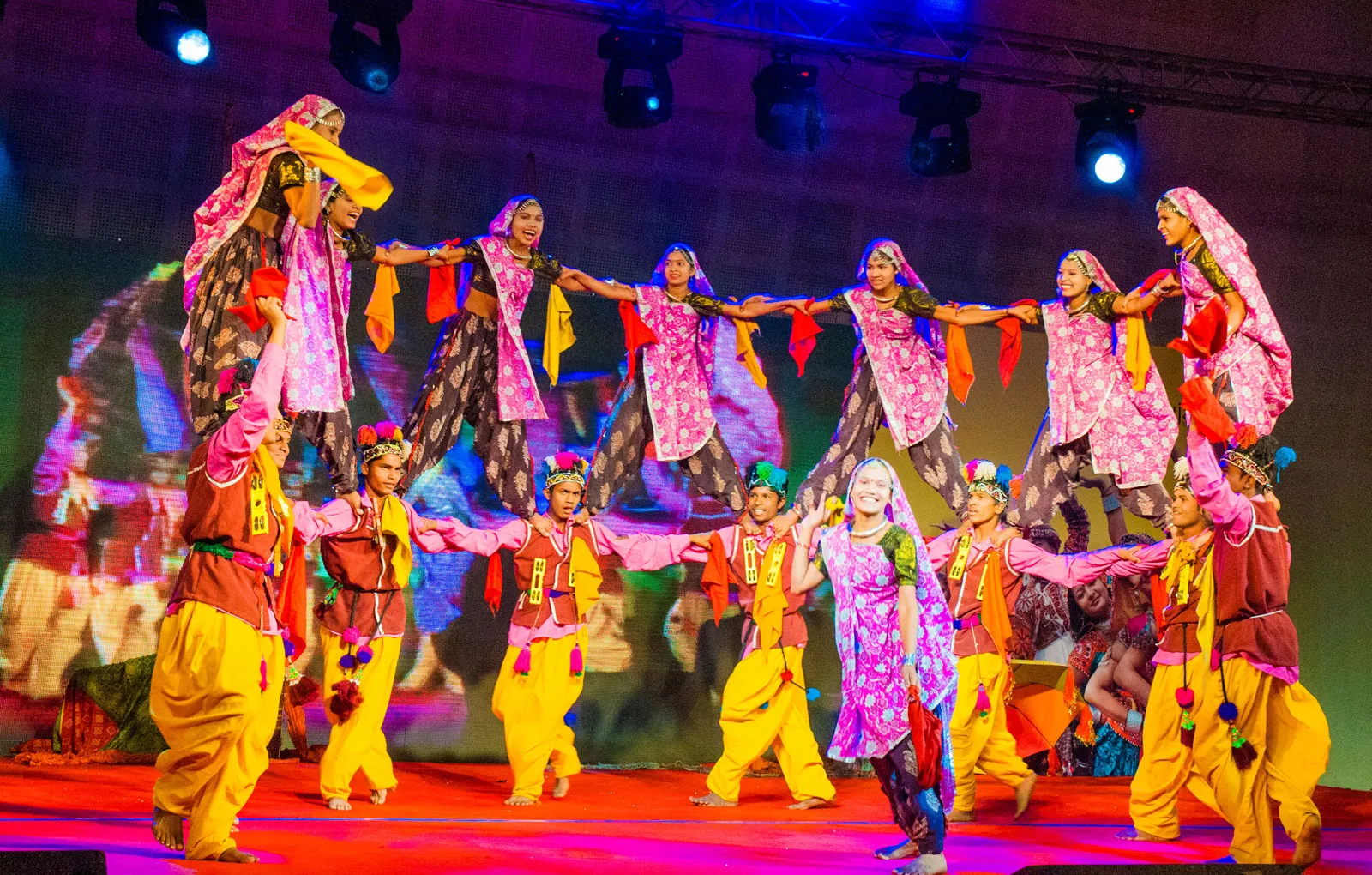
If you want to see this society in its most raw, joyful, and unfiltered state, you have to witness Navratri. It is quite literally the longest dance festival on earth, but describing it as just a festival misses the point entirely. It is a collective spiritual release disguised as a massive block party.
The Cosmic Circle of Garba
For nine consecutive nights, millions of people drop their professional titles, their worries, and their daily stress to step into the circular formations of Garba.

Dressed in explosive hues of marigold, turquoise, and vermillion—garments heavy with mirror work that catches the light like tiny stars—dancers move in perfect synchronicity to the rising tempo of the dhol.
It is a hypnotic, dizzying spectacle. In that circle, there is no divide between the wealthy corporate executive and the street vendor; their hands clap in the exact same rhythm, celebrating the divine feminine energy that binds them all together. It’s an undeniable testament to the egalitarian spirit embedded within the regional celebratory culture.
A Symphony of Flavors: Navigating the Traditional Kitchen Culture
To the uninitiated, Indian food is often lumped into one spicy category. But Gujarati culinary culture flips that script completely. It is a highly sophisticated, complex cuisine defined by its ability to balance contrasting flavors: sweet, salty, spicy, and tangy, often within a single bite.
| Iconic Dish | Flavor Profile | Cultural Context |
| Undhiyu | Earthy, spicy, seasonal greens. | A winter masterpiece cooked upside down in clay pots underground. |
| Dhokla / Khandvi | Tangy, savory, fermented, and light. | The ultimate testament to the meticulous art of Gujarati snacking. |
| The Traditional Thali | A complete sensory wheel of textures and tastes. | An open invitation to experience unconditional hospitality. |
Because of deep-seated Jain and Vaishnavite influences, the vast majority of the cuisine is strictly vegetarian. Yet, the sheer variety of textures—from the melt-in-your-mouth softness of a steamed khandvi to the satisfying crunch of a deep-fried fafda—ensures that a meal here feels like a luxury.
More than the food itself, it is the act of serving that defines this kitchen. A host will aggressively, yet lovingly, pile seconds and thirds onto your plate, viewing the nourishment of a guest as a direct spiritual duty.
Earth and Thread: The Tactile Genius of Artisan Culture

Long before mass production stripped the world of its individuality, the artisans of this region were translating the colors of the desert into breathtaking textiles and pottery. The rural landscape, particularly around the rugged terrain of Kutch, is a living gallery of handicraft culture.
Think of Bandhani—the painstaking process of tying thousands of tiny knots into a piece of silk before dyeing it, creating patterns that look like shifting constellations. Or the geometric perfection of Ajrakh block printing, using natural dyes derived from mud, pomegranate skins, and indigo.
These aren’t just commercial products made for tourists; they are sacred visual languages. Every single embroidery stitch pattern passed down from a mother to her daughter tells a story of tribal identity, marital status, and seasonal changes. It is history preserved not in dusty books, but in the very threads of everyday garments.
Stone That Sings: The Subterranean Wonders of Architectural Culture
While many ancient civilizations built massive monuments that reached aggressively toward the sky, one of the most staggering achievements of historic architecture here points directly downward into the earth. The stepwells, or Vavs, are subterranean architectural marvels that serve as a brilliant metaphor for the local design culture.

Take Rani ki Vav (the Queen’s Stepwell) in Patan. It isn’t just a well; it’s an inverted underground temple. As you walk down the stone stairs away from the scorching heat of the sun, you are surrounded by hundreds of breathtaking, intricate carvings of deities, celestial dancers, and geometric friezes.
It was a functional water gathering space, a cool sanctuary for weary travelers, and a spiritual oasis all at once. It shows an engineering mindset that didn’t seek to conquer nature, but rather worked in deep, artistic harmony with the natural elements.
The Tomorrow Mindset: How Progress Infuses Modern Culture
It would be a massive mistake to look at this state as a community trapped by its yesterdays. The modern reality is that the local population possesses a legendary, razor-sharp entrepreneurial instinct. The state’s business acumen is famous worldwide; there is a natural comfort with risk, innovation, and global commerce.
Yet, what makes this growth unique is that it doesn’t seem to require discarding old values. You will routinely see young software engineers or startup founders spending their days pitching to global investors, and their evenings helping their mothers prepare for a family prayer ceremony or practicing their Garba steps for the upcoming season.
The digital age hasn’t diluted the regional identity; it has amplified it. YouTube channels dedicated to traditional recipes, Instagram reels celebrating classic folk music, and digital forums keeping the language alive across the global diaspora are thriving.
The Ultimate Takeaway: The Enduring Resonance of this Coastal Way of Life
Ultimately, the magic of this region lies in its profound human warmth. It is a community that understands that life is meant to be shared, seasoned with good food, celebrated with dance, and anchored by family.

It reminds us that progress doesn’t have to mean erasure. You can build smart cities while still honoring the ancient soil beneath them. You can travel the world for business while still keeping the flavor of home alive in your heart. It is a resilient, beautiful, and deeply inspiring human culture—a reminder that when a community knows exactly who they are and where they come from, they can walk into the future with absolute confidence and joy.
FAQ’S
1. What is Gujarati culture famous for?
Gujarati culture is famous for its colorful festivals, Garba dance, delicious cuisine, handicrafts, and warm hospitality.
2. Which is the most celebrated festival in Gujarat?
Navratri is the most widely celebrated festival, known for its vibrant Garba and Dandiya performances.
3. What are some popular traditional Gujarati dishes?
Dhokla, thepla, undhiyu, khandvi, fafda, khichdi, and Gujarati thali are among the most popular dishes.
4. Why is Garba important in Gujarati culture?
Garba is a traditional folk dance that symbolizes devotion, unity, and celebration during the Navratri festival.
5. Why do people visit Gujarat?
People visit Gujarat to experience its rich heritage, historic temples, colorful festivals, delicious food, wildlife, and cultural traditions.



Leave a Reply