
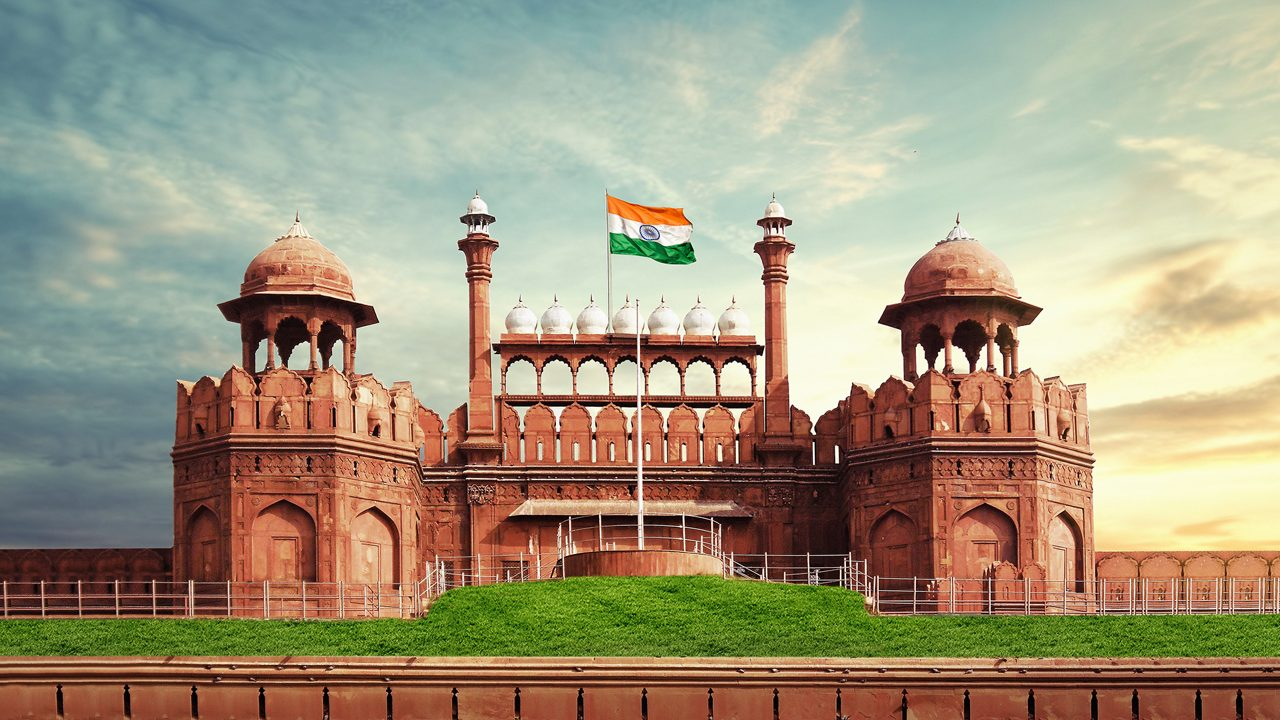
India Independence Day is celebrated every year on 15 August to commemorate India’s freedom from British colonial rule in 1947. In 2026, India will celebrate its 80th Independence Day on Saturday, 15 August, marking 79 completed years of independence.
The Independence Day 2026 theme, “Yuva Shakti for Viksit Bharat@2047,” highlights the role of India’s youth in shaping a developed and future-ready nation. The celebrations will also mark 150 years of Vande Mataram, honouring the national song and its enduring place in India’s patriotic heritage.
Across the country, 15 August Independence Day is celebrated through flag-hoisting ceremonies, patriotic songs, cultural programmes, speeches, competitions, parades and tributes to freedom fighters. The main national celebration takes place at the Red Fort in New Delhi, where the Prime Minister hoists the National Flag and addresses the nation.
Which Independence Day is Celebrated in 2026?

India will celebrate its 80th Independence Day in 2026.
India achieved independence on 15 August 1947, which was observed as the country’s first Independence Day. Therefore, 15 August 2025 was the 79th Independence Day, while 15 August 2026 is the 80th Independence Day. The Government of India’s official 2025 Independence Day page also identified the 2025 celebration as the 79th Independence Day.
Students searching for “2026 Independence Day how many years” should remember this distinction:
India completes 79 years of independence on 15 August 2026 but celebrates its 80th Independence Day.
So, the answer to “15 August 2026 which Independence Day?” is the 80th Independence Day of India.
History

The independence movement was largely mobilized by the Indian National Congress (Congress Party), which was founded in 1885. The first organized mass resistance in the independence struggle was the Swadeshi Movement, which was launched in 1905 to protest the partition of Bengal.
British rule in India began in 1757 when, following the British victory at the Battle of Plassey, the British East India Company transitioned from a mercantile presence into a dominant military and political power in the country. The East India Company ruled India for 100 years, until it was replaced by direct British rule (often referred to as the British raj) in the wake of the Indian Rebellion of 1857 (also called the Sepoy Mutiny). Although the rebellion was suppressed, it was the beginning of widespread discontent with colonial rule.
The movement gained momentum during World War I (1914–18), and public unrest in British-ruled India grew in response to repressive laws, such as the Rowlatt Act (1919), and the Jallianwala bags Massacre (also 1919). Among the independence movement’s key figures was Mahatma Gandhi, who championed nonviolent resistance through movements such as the noncooperation movement (1920–22), the Salt March (1930), and the Quit India Movement (1942–43).
Celebrations
As the clock struck midnight on August 14, 1947, the Indian tricolor flag replaced the Union Jack (the national flag of the United Kingdom), marking the birth of a free country. Jawaharlal Nehru, independent India’s first prime minister, addressed the Constituent Assembly with his famous “Tryst with Destiny” speech. Thousands of people gathered in Delhi for the occasion. Across the country, people celebrated with joy, music, and prayer, despite the shadow of partition.

On the eve of Independence Day, the president of India addresses the country. The next day is marked throughout India with flag-raising ceremonies, drills, and the singing of “Jana Gana Mana”—the Indian national anthem. Additionally, various cultural programs are held in the state capitals. After the prime minister participates in the flag-raising ceremony at the Red Fort, a Mughal fort in Old Delhi, a parade ensues with members of the armed forces and police. The prime minister then delivers a televised address to the country, recounting the major accomplishments of India during the previous year and outlining future challenges and goals. Kite flying has also become an Independence Day tradition, with kites of various sizes, shapes, and colors filling the sky. The government offices in New Delhi remain lit throughout the holiday.
The British East India Company
The British first arrived not as conquerors, but as merchants, drawn by India’s extraordinary wealth, which had been famous in the West since Greek times. They arrived to find India dominated by the vast Mughal empire, which had been established in the 16th century by the conqueror Bābur and now ruled most of the subcontinent. In 1613, the Mughal emperor Jahāngīr granted the British permission to establish a trading post in Surat, Gujarat, which would become the first British foothold in India.
Over the following century, the British East India Company established additional trading posts and also gradually increased its economic and political influence throughout the subcontinent. After the death of Emperor Aurangzeb in 1707, the Mughal empire entered a rapid phase of decline, providing an opening for various regional powers, including the Marathas, the Sikhs, and the northern Rajput chiefs to assert their sovereignty. By the middle of the 18th century, there was no longer a single dominant power in the subcontinent, leaving the region vulnerable to colonial ambitions.
Formation of the All-India Muslim League
The All-India Muslim League, the first political party for Muslims in India, was founded in Dhaka (now the capital of Bangladesh) on December 30, 1906. This development was driven by the increasing dissatisfaction among Indian Muslims with the Indian National Congress, which many perceived as primarily representing Hindu interests. The party was heavily influenced by the visionary Indian Muslim leader Sir saying Ahmad Khan, who had died in 1898. It had been founded by such leaders as Mian Muhammad Shafi, Nawab Waqar-ul-Mulk, Nawab Mohsin-ul-Mulk, Syed Ameer Ali, Mualana Mohammad Ali Jouhar, and Sir Sultan Mohammed Shah (the league’s first president, also known as Aga Khan III). Sir Muhammad Iqbal would emerge as a key voice within a few years of the party’s founding.
The league aimed to safeguard the rights of Indian Muslims and initially espoused loyalty to the British raj as a means to achieve greater civil rights and counterbalance the dominance of the Congress Party. The Muslim League would eventually lay the groundwork for modern Pakistan. Mohammed Ali Jinnah, who joined the league in 1913, would later transform the political party into a mass movement for Muslim autonomy.

Provincial elections of 1937
Following the Government of India Act of 1935, which granted significant autonomy to the provinces of India in response to increasing momentum in the struggle against British rule, elections were held during the winter of 1936–37, and results were declared in February 1937. The Indian National Congress emerged victorious in seven provinces, demonstrating its popularity with the Indian populace. This allowed the Congress Party to form provincial governments, giving Indians significant control over local governance for the first time in over a century. The Muslim League, however, was unable to establish a government in any province, even the Muslim-majority provinces of Punjab and Bengal. The Congress Party ministries resigned only a few years later, in 1939, in protest against India being declared a belligerent country in World War II without consultation.
World War II begins
With the outbreak of World War II in 1939, the Indian Independence Movement entered its last, crucial phase. The viceroy of India, Victor Alexander John Hope (commonly known as Lord Linlithgow), declared that India was at war with Germany, to the dismay of the Congress Party, which had not been consulted. Throughout the war, Indian soldiers would fight for Britain in Asia, Africa, and Europe.
The Indian National Congress, under the leadership of figures like Mahatma Gandhi and Jawaharlal Nehru, grappled with how to respond to the war. Gandhi, a staunch anti-fascist, was fundamentally opposed to all forms of violence, including war. However, he was equally critical of British colonialism. Initially, the Congress Party was willing to support the British war effort, provided that Britain assured India of eventual self-governance. However, the British did not agree to this condition, leading the Congress Party to distance itself from Britain as the war progressed. In contrast, the Muslim League fully supported the war effort.
The Quit India Movement
On July 14, 1942, the Congress Party passed its “Quit India” resolution calling for an immediate end to British rule in India. The involvement of India in the war outraged many Indian political leaders, who, despite a range of opinions on the just nature of the war, thought it was immoral for the British to force their subjects into the fighting without consulting Indian leadership and to use Indian resources for the effort. By the war’s end 2.5 million Indians had served in the British armed forces, though the majority were volunteers.
As the war continued and Japanese armies swept through Britain’s Southeast Asian colonies—Singapore, Malaya (now Malaysia), and Burma (now Myanmar)—a faction of the Congress Party began to call for India to gain immediate independence from Britain in order to avoid a Japanese invasion. Japanese forces moved into the Bay of Bengal, attacked British ships, and bombed the east coast ports of Visakhapatnam and Kakinada, thus making the threat of full-scale war on Indian soil seem imminent.

Gandhi became more adamant about the departure of the British colonists and less concerned about internal squabbles among Indian leadership. He notably demanded of the British in his magazine Harijan on May 24, 1942: “Leave India to God. If that is too much leave her to anarchy.”
FAQ’S
1. Why is 15 August important in Indian culture?
15 August is celebrated as India’s Independence Day and represents freedom, unity, patriotism, and national pride.
2. How is Independence Day celebrated in India?
People celebrate with flag hoisting, cultural programs, patriotic songs, speeches, and community events.
3. What are the traditional symbols of 15 August?
The Indian tricolor, the Ashoka Chakra, patriotic songs, and the national flag are important symbols of Independence Day.
4. How do schools celebrate 15 August?
Schools often organize flag-hoisting ceremonies, cultural performances, speeches, quizzes, and patriotic activities.
5. What does 15 August teach about Indian heritage?
It highlights India’s diverse cultural heritage while celebrating the unity and shared national identity of its people.



Leave a Reply