
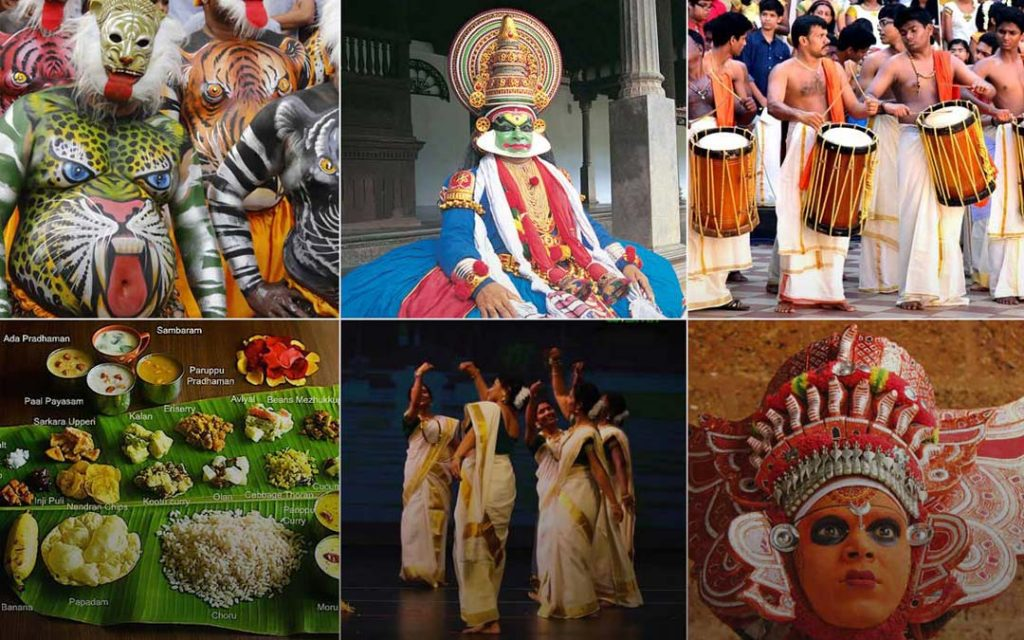
Onam is one of those rare Onam festivals that defies a simple, one-sentence explanation. It is a harvest celebration, a mythological homecoming, a masterclass in regional gastronomy, a showcase of traditional performance art, and an absolute triumph of community spirit. Yet, to anyone who has ever spent late August or early September in Kerala—or in a Malayali household anywhere else in the world—Onam is fundamentally an emotional season.
It is a time when the relentless pace of daily life slows to a human rhythm. Homes feel warmer, families make the effort to reunite, and ancient traditions seamlessly slide back into the modern routine. Walk into any neighborhood during Onam, and the subtle cues hit you immediately: the sweet, earthy aroma of crushed jasmine and marigolds at the doorstep, the crackle of wood fires and roasting coconut wafting from the kitchen, and the quiet visual harmony of families draped in classic cream-and-gold handlooms.
At the absolute center of this festive universe sits the Sadya—a meal so culturally significant that an Onam celebration simply feels incomplete without it.
The Architecture of the Onam Sadya
Calling the Onam Sadya a “large vegetarian meal” is like calling a symphony a collection of notes. It is a carefully structured culinary ritual served on a crisp, fresh banana leaf, designed to take the diner on an intentional journey through texture, heat, acidity, and sweetness.

The placement of every dish on the leaf is dictated by tradition:
- The Base: At the center sits a generous mound of Matta rice—the plump, nutrient-dense red parboiled grain native to the region.
- The Foundation Curries: Pouring over the rice comes Parippu (a comforting, seasoned yellow lentil dish finished with a dollop of pure ghee), followed by deep, aromatic Sambar, and eventually a light, digestive Rasam.
- The Coconut Showcase: Coconut is the undisputed soul of the Kerala kitchen, featured prominently in Avial (a thick, velvety mix of native vegetables, coarse coconut paste, and yogurt), Thoran (finely shredded vegetables flash-sauteed with mustard seeds and fresh coconut), Olan (a gentle, subtle dish of ash gourd and red beans simmered in thin coconut milk), and Erissery (pumpkin and beans cooked down and topped with deeply toasted coconut).
- The Flavor Balancers: Tucked along the top edge of the leaf are the sharp, punchy accents: Inji Puli (a dark, jam-like reduction of ginger, tamarind, and jaggery that acts as a palate cleanser), along with various Pachadis and Kichadis featuring pineapple, beetroot, or cucumber folded into spiced yogurt.
- The Texture and Crunch: No leaf is complete without crisp Pappadams, salty banana chips (upper i), and sweet, jaggery-coated plantain bites (Sharkara Varatti).
- The Grand Finale: The meal concludes with Payasam—rich, slow-simmered dessert puddings like Ada Pradhaman (made with flat rice ribbons, dark palm jaggery, and coconut milk) or Paal Payasam (a creamy, cardamom-scented milk and rice reduction).
The real magic of a Sadya lies in its balance. No single dish carries the meal alone. One bite is sharp and fiery, the next is cool and soothing, followed by a sudden crunch, and finished with deep, unrefined sweetness. Eating with your hands isn’t just traditional; it allows you to mix the curries into the rice precisely to your own taste.
A Shared Effort in the Kitchen

A proper, multi-course Sadya is rarely the work of a single cook working in isolation. It is a collaborative event that brings the entire household together long before the first leaf is laid out.
The preparation often begins the evening before. Mountains of native vegetables—yams, plantains, ash gourds, drumsticks, and snake gourds—are washed, peeled, and sliced into precise geometric shapes. Hundreds of coconuts are scraped by hand. Spices are dry-roasted and ground down into fragrant pastes.
On the day of Thiruvonam, the kitchen becomes an orchestrated hive of activity. One person handles the large vessel of bubbling Sambar, another monitors the delicate balance of the Avial, while someone else watches the sweet Payasam slowly reduce over low heat. Outside the kitchen, younger family members wipe down fresh banana leaves, set up seating along the floor, and prepare the dining space.
When everyone finally sits down together, the meal feels like a shared achievement. It carries a profound sense of hospitality—a physical representation of abundance meant to be enjoyed without rush, alongside people you care about.
Kasavu: The Quiet Power of Cream and Gold
The visual identity of Onam is just as distinct as its culinary one. Traditional Kerala attire, broadly known as Kasavu, offers a striking contrast to the vibrant, heavily embroidered garments seen in many other regional festivals across India.

Kasavu relies on extreme restraint and timeless minimalism:
- For Women: The Kasavu Saree or the two-piece Set Mundu features handwoven, unbleached cream or off-white cotton trimmed with a clean, metallic gold border (zari).
- For Men: The look centers around the Mundu—a lightweight white cotton garment wrapped neatly around the waist, paired with a matching shirt or a simple silk tunic.
There is a calm, understated elegance to this aesthetic. The soft cream fabric and warm gold trimming mirror the natural landscape of Kerala, echoing the bright sunlight, white sands, and lush greenery. During Onam, as entire neighborhoods, workplaces, and public spaces fill with people dressed in Kasavu, it creates a remarkably unified visual tapestry.
Spectacles of the Season: Water, Streets, and Stages
While the heart of Onam resides within the home, its energy spills dramatically out into the public sphere through extraordinary cultural traditions.
Vallam Kali (The Snake Boat Races) During the festive season, Kerala’s tranquil backwaters transform into thrilling arenas. The famous Chundan Vallams—snake boats measuring over 100 feet in length with steep, pointed sterns—are powered by up to 100 rowers paddling in perfect unison. Set to the rhythmic, thunderous cadence of traditional boat songs (Vanchipattu) and the pounding of drums, these races demand absolute coordination and collective strength.
Pulikali (The Tiger Dance) If the Sadya is gentle and domestic, Pulikali is pure, joyful madness. Most famously celebrated in the city of Thrissur, hundreds of men paint their bodies in intricate, vibrant patterns to resemble tigers and leopards. Wearing heavy bells around their waists and tiger masks, they dance through the streets to booming percussion beats. It is a wildly energetic folk tradition that turns entire city centers into massive, laughing open-air theaters.

Thiruvathirakali In contrast to the wild energy of the tiger dance, Thiruvathirakali is a graceful, meditative group dance traditionally performed by women. Dressed in matching Kasavu sarees, dancers move in smooth, fluid circles around a lit bronze oil lamp (Nilavilakku), clapping their hands in a soft, steady rhythm while singing devotional and seasonal songs. Every movement is synchronized, creating a mesmerizing rhythm of collective grace.
A Truly Inclusive Cultural Tapestry
What makes Onam truly exceptional in the landscape of global cultural celebrations is its radical inclusivity.
Although the foundational myth of King Mahabali stems from Hindu Purans, Onam in contemporary Kerala belongs to everyone. It is celebrated with equal fervor by Hindus, Christians, Muslims, and secular communities alike.
In schools, offices, and neighborhood committees, people gather to build floral carpets (Pookalam), share massive community Sadyas, and organize traditional games regardless of religious background. The festival functions as a powerful cultural bridge, reinforcing a shared regional identity built on mutual respect, hospitality, and a joint pride in Kerala’s heritage.
The Vision of Mahabali: An Enduring Social Ideal
At its core, the legend of King Mahabali is far more than a simple fairytale about a generous ruler pushed to the underworld by Lord Vishnu’s Vamana avatar. It carries a profound, timeless political and social philosophy.

Folk songs sung during Onam describe Mahabali’s rule as a time when:
- All human beings were treated with equal dignity and respect.
- Deception, theft, and systemic corruption were entirely absent.
- Poverty did not exist, and resources were shared fairly.
- Society functioned without fear or prejudice.
When people welcome Mahabali back each year, they are not just honoring an old story; they are briefly holding up a mirror to their current world. The festival becomes a collective pause to reflect on an ideal society—one where leadership is defined by humility and sacrifice, where no one goes hungry, and where community well-being takes priority over individual greed.
Onam in the Global Malayali Diaspora
In an increasingly interconnected world, millions of people from Kerala live far away from their hometowns—working across the Gulf states, North America, Europe, Southeast Asia, and Australia.
For the diaspora, Onam takes on an even deeper emotional resonance. Distance often transforms the festival into a conscious effort to preserve identity and pass heritage down to the next generation.
In apartment complexes in Dubai, London, or Toronto:
- Fresh tropical flowers are sourced or substituted to build intricate Pookalam designs on concrete balconies.
- Community groups fly in banana leaves, red Matta rice, and fresh spices directly from Kerala to prepare authentic feasts for hundreds of expats.
- Children born thousands of miles away put on Kasavu clothing, learn the steps to traditional dances, and listen to the story of King Mahabali.
When traveling home isn’t an option, technology steps in. Video calls span across time zones as families share virtual tours of their living room floral arrangements, compare the color of their Payasam, and catch up with relatives back home. Distance doesn’t dilute the festival; if anything, it makes the shared connection feel even more vital.
Evolving Traditions, Unchanging Sentiment

Modern life has inevitably altered how Onam is observed. In fast-paced urban centers, few people have the time to forage wild blossoms for ten days straight or cook 26 individual dishes completely from scratch on a workday morning.
Today, ore-packaged flower mixes are widely sold in city markets, catered Sadyas from local restaurants are increasingly popular, and traditional outfits can be ordered with a single click. Digital greetings have largely replaced physical visits for distant acquaintances.
Yet, these logistical shifts do not mean the festival has lost its soul. Traditions adapt because human lives change. What matters is the underlying intent.
A busy young family ordering a catered Sadya to eat off banana leaves at their dining table still experiences the same fundamental joy of gathering, sharing food, and honoring their roots as a household that spent 12 hours over a wood fire. The tools may evolve, but the warmth, generosity, and desire for connection remain completely unchanged.
Why Onam Still Matters Today
In a world that often feels overwhelmingly fast, transactional, and divided, Onam serves as an essential, restorative reset button.
It provides a gentle, built-in excuse to step away from screens and work schedules. It asks us to open our doors, sit on the floor beside friends and family, share an unhurried meal, appreciate simple craftsmanship, and remember where we came from.

Ultimately, Onam is a celebration of what makes us human. It reminds us that real wealth isn’t found in what we accumulate, but in what we share; that true strength lies in community; and that a happier, more generous world is always worth imagining—and working toward—together.
FAQ’S
1. What is the cultural significance of Onam?
Onam celebrates Kerala’s rich culture, traditions, harvest, family values, and the legendary return of King Mahabali.
2. What are the main traditions of Onam?
Popular traditions include Pookalam, Onam Sadya, traditional clothing, Vallam Kali, Pulikali, dances, and family gatherings.
3. Why is King Mahabali important to Onam?
King Mahabali is remembered as a generous and beloved ruler. According to tradition, he returns to Kerala during Onam each year.
4. What is Onam Sadya?
Onam Sadya is a traditional vegetarian feast served on a banana leaf, featuring rice, curries, vegetables, pickles, snacks, and desserts.
5. What is Pookalam in Onam?
Pookalam is a colourful floral decoration created at the entrance of homes during Onam as a traditional welcome for King Mahabali.




Leave a Reply