
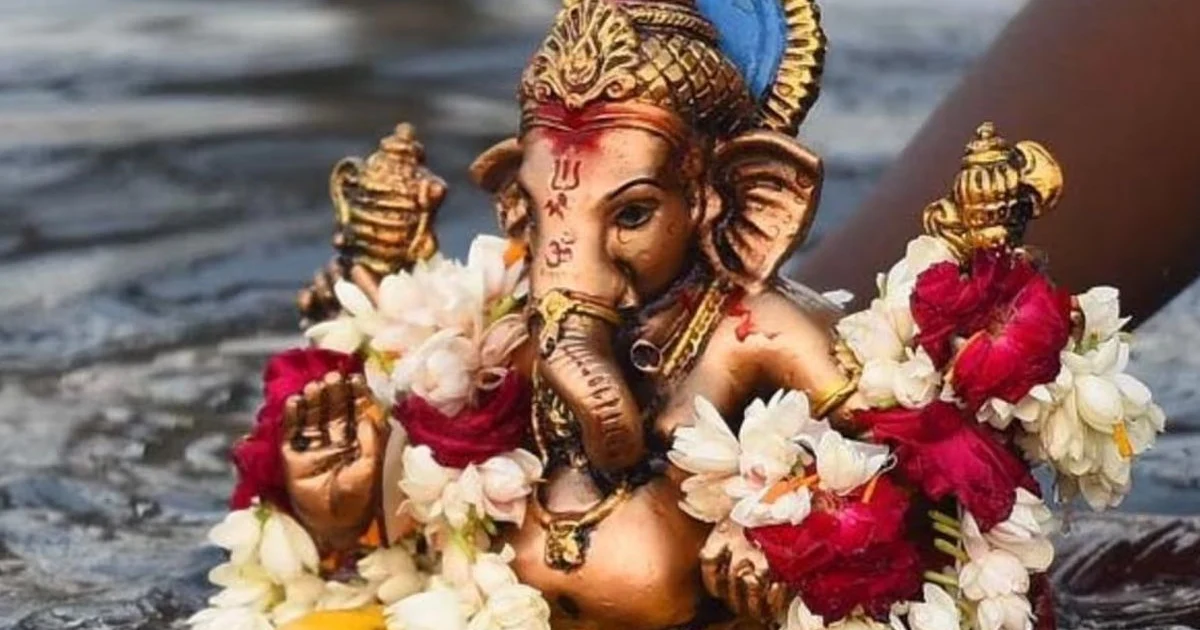
If you’ve ever grown up in a house that celebrates Ganesh Chaturthi, you know the exact moment the shift happens.
It’s usually about a week before the festival. The living room suddenly turns into a temporary staging ground: half-opened cardboard boxes of fairy lights sit on the sofa, someone is furiously wiping down the brass thali with lemon and salt, and the kitchen smells heavily of roasted poppy seeds, cardamom, and toasted coconut.
There’s a specific kind of joyful chaos that fills the air. People are arguing over which corner of the room gets the best light for Bappa’s altar, who forgot to order the marigold garlands in advance, and whether we’re making fried modaks or steamed ones this year.
Ganesh Chaturthi isn’t just a date on a religious calendar—it’s a living, breathing emotional reset. For millions of families, welcoming Lord Ganesha home is the ultimate excuse to pause our absurdly busy lives, open our front doors to neighbors, eat way too much ghee-laden prasad, and reconnect with what actually matters.
In 2026, Ganesh Chaturthi officially lands on Monday, September 14.

Whether this is your twentieth year hosting Bappa or your very first time setting up a small idol in a tiny apartment, let’s talk through how to make the celebration feel warm, meaningful, and low-stress—without getting lost in endless checklists.
The Dates, Timings, and Real-World Timeline for 2026
Let’s start with the practical stuff. Navigating festival dates can feel confusing when everyone’s WhatsApp group is sharing conflicting Panchang screenshots.
For 2026, the Chaturthi Tithi begins at 7:06 AM on Monday, September 14, and officially wraps up at 7:44 AM on Tuesday, September 15.
The main Madhyahna Ganesh Puja—which is the traditional mid-day window when Lord Ganesha’s presence is invoked during Sthapana—happens during late morning to early afternoon. Depending on where you’re located, the exact auspicious window shifts slightly:
- Mumbai & Western India: 11:20 AM to 1:48 PM
- New Delhi & Northern India: 11:02 AM to 1:31 PM
- Bengaluru & Southern India: 11:15 AM to 1:42 PM
Here is a simple, no-nonsense breakdown of how the festival timeline plays out across the full ten days:
| Key Event | Official Date (2026) | What’s Actually Happening at Home | Stress Level / Vibe |
| Ganesh Sthapana | Monday, Sept 14 | Bringing Bappa home, placing him on the decorated altar, and singing the first loud evening Aarti. | High excitement, frantic last-minute flower runs. |
| 1.5-Day Visarjan | Tuesday, Sept 15 | Short home celebrations farewell Bappa after Tuesday afternoon prayers. | Sweet, intimate, a little emotional. |
| 3rd & 5th Day Visarjan | Sept 16 & Sept 18 | Popular farewell days for families balancing heavy work schedules. | Relaxed, steady stream of close friends visiting. |
| 7th Day Visarjan | Sunday, Sept 20 | A weekend farewell day that allows extended family to gather easily. | Festive, leisurely Sunday afternoon. |
| Anant Chaturdashi | Friday, Sept 25 | The massive, grand finale! Street processions, heavy dhol beats, and city-wide immersions. | Pure unadulterated energy, loud chanting, dancing. |
The Heart of the Festival: Why We Love Bappa

Whenever someone buys a new house, starts a messy new business venture, signs a scary contract, or gets married, Ganesha is the first name invoked. “Gam” is the seed mantra, but “Bappa” is what we call him out of pure affection.
Have you ever wondered why Ganesha feels so approachable compared to almost any other deity?
He’s the Vighnaharta—the remover of obstacles—and the patron of wisdom, art, and new beginnings. But more than that, Ganesha’s persona is warm, forgiving, and deeply humanized. He loves good food, he has a sweet tooth, and he isn’t represented as an intimidating figure sitting far away in the clouds. He sits right in your living room, surrounded by hibiscus flowers, looking like an honoured family guest.
The Story We All Grew Up With
The story of Ganesha’s origin is classic mythology, but its lessons are timeless.
Goddess Parvati created a boy from sandalwood paste to guard her doorway while she bathed. When Lord Shiva returned home, the boy faithfully refused to let him enter. In the ensuing clash, the boy’s head was severed. Seeing Parvati’s devastating grief, Shiva promised to restore him to life using the head of the first living creature found facing north—an elephant.
Beyond the legend, every physical detail of Ganesha carries a subtle life lesson:
- The Elephant Head: Symbolizes big thinking, immense wisdom, and staying calm under pressure.
- The Large Ears: Reminds us to listen twice as much as we speak.
- The Small Eyes: Encourages deep focus and piercing through life’s distractions.
- The Pot Belly: Shows the ability to peacefully digest both the good and bad moments in life.
How to Bring Bappa Home Without Losing Your Mind

If you’re taking on the responsibility of hosting Bappa at your place this year, take a deep breath. You do not need a interior-designer-level setup to create a sacred atmosphere.
Here is how to tackle the prep in simple, manageable steps:
1. Choose a Clay (Shadalu) Idol
If there is one change every family should commit to, it’s ditching Plaster of Paris (PoP) idols forever. PoP doesn’t dissolve in water, pollutes rivers and lakes, and leaves behind tragic debris on beaches the morning after Visarjan.
Natural clay idols (Shadalu clay), on the other hand, dissolve completely within a couple of hours. Many eco-conscious families now do their Visarjan right on their balcony in a big bucket of water and use the resulting rich clay-water to nourish their house plants. It’s clean, respectful, and environmentally kind.
2. Create a Cozy Altar (No Big Budget Required)
Don’t waste thousands of rupees on single-use plastic props. The warmest altars are built using stuff you already own:
- Saree Backdrops: Drape a vibrant silk or zari saree over a simple wooden frame or curtain rod behind the altar.
- Fairy Lights: String warm-white LED lights behind sheer curtains to create a soft, magical glow for evening prayers.
- Fresh Marigolds: Stringing yellow and orange marigolds with dark green mango leaves brings an instant traditional fragrance to the room.
The Food: Modak Magic and Beyond


Let’s be honest: half the reason everyone looks forward to Ganesh Chaturthi is the food.
Ganesha is famously fond of sweets, and Modak is the undisputed king of the festival spread.
The Art of the Ukadiche Modak
In Maharashtra, the ultimate offering is the Ukadiche Modak—a delicate, steamed dumpling made from rice flour, stuffed with a juicy mixture of fresh grated coconut, dark jaggery, cardamom, and nutmeg, finished off with a generous spoonful of warm ghee poured over the top.
If you’ve ever tried making them from scratch, you know the struggle. The rice dough can break, the pleats might look like crumpled paper, and your first few attempts will almost certainly look like tiny deformed tepees instead of neat flower buds.
Don’t stress over it! The whole point of making modaks is sitting around the dining table with your mother, aunts, or siblings, laughing at each other’s terrible pleating attempts, and sneaking bites of the sweet coconut filling when nobody is watching.
Other Classic Festive Treats:
- Motichoor Ladoo: Tiny, syrup-soaked golden pearls melted together into sweet balls.
- Puran Poli: Thin, golden flatbread filled with a sweet paste of cooked chana dal and jaggery.
- Panchamrut: A sacred mix of milk, curd, honey, ghee, and sugar offered during the main Puja.
- Durva Grass (21 Blades): While not food for us, offering fresh, cool 21-blade clusters of durva grass to Ganesha is considered essential during morning prayers.
A Realistic Pre-Festival Checklist for Busy Families

To prevent that dreadful 11:00 PM frantic run to the market the night before Sthapana, use this handy timeline:
3 Days Before (Sept 11, 2026):
- [ ] Clear out the designated corner of the living room and give the floors a deep scrub.
- [ ] Pull out your Puja thalis, brass lamps, and decorative cloths from storage and polish them.
- [ ] Confirm your eco-friendly clay idol booking with the local artisan or vendor.
1 Day Before (Sept 13, 2026):
- [ ] Buy fresh flowers (red hibiscus, marigolds) and green durva grass clusters early in the morning.
- [ ] Prepare the coconut-jaggery stuffing for your modaks ahead of time and store it in the fridge.
- [ ] Set up the backdrop, test your fairy lights, and make sure your extension cords work properly.
On Festival Day (Sept 14, 2026):
- [ ] Take a bath early, wear comfortable traditional clothes, and place Bappa on his altar.
- [ ] Perform the Sthapana prayers during your city’s auspicious mid-day window.
- [ ] Steam your fresh modaks, light the diya, grab the brass bell, and lead the family in a loud, joyous Aarti!
Ganesh Visarjan: The Emotional Farewell

Eventually, the celebration reaches its final act: Visarjan.
No matter how many times you’ve experienced it, the farewell always stings a little. For days, Bappa has been sitting in your home. The house has smelled of incense and fried sweets, the evening Aarti has brought everyone together, and the atmosphere has felt light and protected.
When it’s time to carry the idol out of the house, the mood transforms into a mix of deep gratitude and electric energy. People dance down the street to the deafening beats of the dhol-tasha drums, tossing pink gulal powder into the air, shouting at the top of their lungs:
“Ganpati Bappa Morya, Pudhchya Varshi Lavkar Ya!”
(O Lord Ganesha, goodbye for now—come back quickly next year!)
As the idol slowly submerged into the water, it serves as a gentle reminder: physical forms come and go, but the love, wisdom, and blessings Bappa brought into your home remain with you long after the water settles.
FAQs
Q1: When is the exact date for Ganesh Chaturthi in 2026?
A: Ganesh Chaturthi takes place on Monday, September 14, 2026. The Chaturthi Tithi starts at 7:06 AM on September 14 and ends at 7:44 AM on September 15.
Q2: What is the main Visarjan date for 2026?
A: The grand final day of immersion—Anant Chaturdashi—falls on Friday, September 25, 2026. However, depending on family tradition, you can also perform Visarjan on the 1.5th, 3rd, 5th, or 7th day.
Q3: Why is modak considered Lord Ganesha’s favorite sweet?
A: Mythological stories label Ganesha as Modakapriya (one who loves modaks). Symbolically, the sharp top of a modak represents the focus needed to attain knowledge, while the sweet coconut-jaggery interior represents the sweetness of ultimate wisdom.
Q4: Can I perform Ganesh Visarjan at home instead of going to a lake or beach?
A: Absolutely! If you have a natural clay (Shadalu) idol, simply submerge it in a large bucket or clean drum of water on your balcony or garden. Once it dissolves into clay mud after a few hours, pour the water into your potted plants. It’s clean, intimate, and eco-friendly.


Leave a Reply