
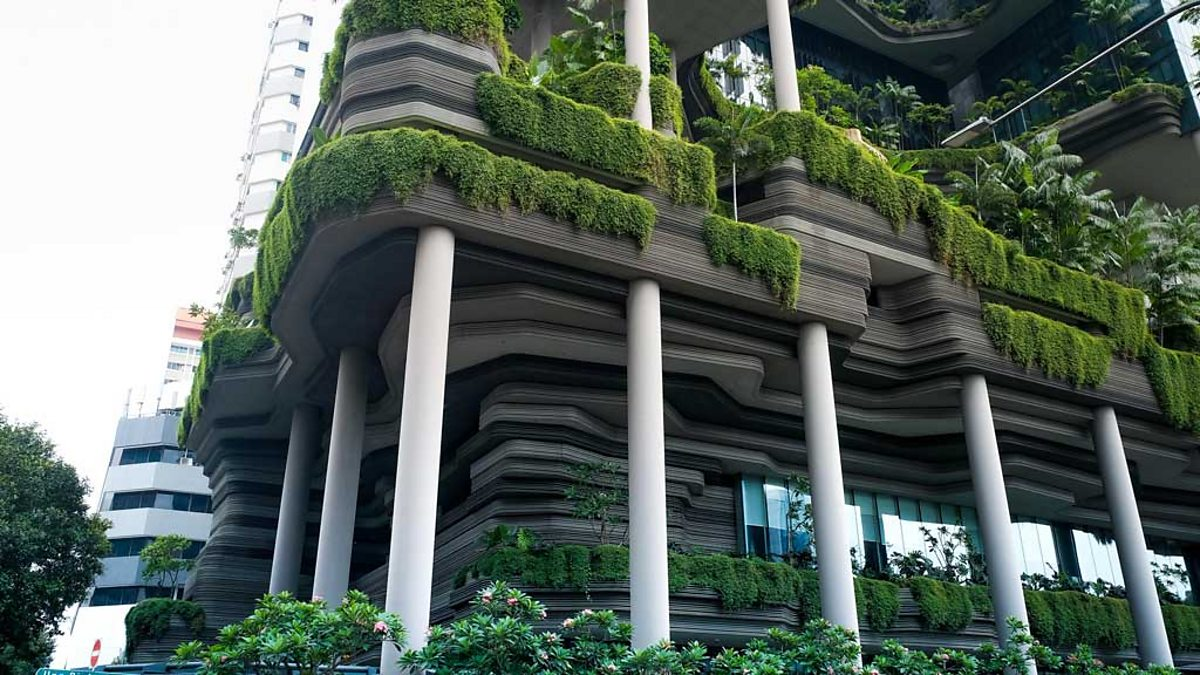
Have you ever walked past a building and thought, That would make a great photo?That’s really where architecture photography begins.You don’t need to visit a famous landmark or stand in front of a huge skyscraper to find something worth photographing. A quiet staircase, an old doorway, a row of windows, a modern glass wall, or even the shadow of a building can turn into an interesting image when you look at it from the right angle.
Architecture photography is less about simply photographing a building and more about how you see it.The same building can look completely different in the morning compared with the evening. Move a few steps to the left and the lines change. Get closer and suddenly a small architectural detail becomes the main subject. Wait for someone to walk through the frame, and the photograph can feel completely different again.
And here’s the good news: you don’t need a huge camera bag to get started. A smartphone is more than enough for learning composition, light, perspective, and timing.Whether you’re interested in modern buildings, historic architecture, interiors, city streets, or unusual structures, there are plenty of ways to make your architecture photographs more interesting.
What Is Architecture Photography?

Architecture photography is simply the art of photographing buildings, structures, interiors, and architectural details.
But the word simply doesn’t really do it justice.A good architecture photograph can show the size of a building, highlight its design, capture a particular mood, or draw attention to a tiny detail that most people would walk past without noticing.
You might photograph a famous monument, a contemporary office building, an old house, a bridge, a museum, a hotel, or even an ordinary building in your neighborhood.
The beauty of architecture is that it gives you so many visual elements to work with. Straight lines, curves, repeating windows, arches, textures, shadows, reflections, and geometric shapes can all become part of the photograph.The trick is learning how to put those elements together in a way that feels natural and interesting.
Best Architecture Photography Ideas
Here are some simple ideas you can try the next time you’re walking around with your camera or phone.
| Architecture Photography Idea | What You Can Photograph | Simple Tip |
|---|---|---|
| Building Exteriors | Full buildings and facades | Step back and give the structure some breathing room |
| Architectural Details | Doors, windows, walls and textures | Get closer and look for details people usually miss |
| Symmetry | Entrances, windows, halls and facades | Keep your camera centered and check your alignment |
| Leading Lines | Stairs, roads, corridors and railings | Let the lines naturally guide the viewer through the image |
| Reflections | Glass, water and polished surfaces | Look around for reflections before taking the obvious shot |
| Minimalist Architecture | Simple shapes and open spaces | Remove unnecessary objects from the frame |
| Interior Photography | Rooms, halls, stairs and ceilings | Make use of natural light whenever possible |
| Night Architecture | Buildings, bridges and city structures | Look for interesting light and shadow after dark |
| Historic Architecture | Old buildings and monuments | Focus on character, materials and craftsmanship |
| Modern Architecture | Contemporary buildings and skyscrapers | Try unusual angles instead of only straight-on views |
| Abstract Architecture | Shapes, patterns and fragments | Forget the whole building and concentrate on visual details |
| People & Architecture | People alongside buildings | Use people to show how large a structure really is |
1. Start With the Lines Around You
One of the easiest ways to improve an architecture photograph is to pay attention to lines.
Look around any building and you’ll probably find them everywhere. Walls, windows, balconies, staircases, railings, roads, rooftops, and even shadows can create strong lines.
These lines can make a photograph feel organized and can naturally lead the viewer toward a particular part of the image.
For example, stand at the bottom of a staircase and photograph upward. The steps can create a pattern that pulls the eye into the frame.You can also stand at the end of a hallway and use the walls and ceiling to create a sense of depth.
Before you press the shutter, take a second to ask yourself: Where are these lines taking my eye?That small pause can make a surprisingly big difference.
2. Give Symmetry a Try

Symmetry and architecture seem to get along very well.
Large entrances, bridges, domes, staircases, windows, and building facades can create naturally balanced compositions.
If you find a structure with strong symmetry, try standing directly in front of it. Keep your camera as level and centered as possible.
Don’t rush the shot.
Look at the edges of the frame. Check whether one side has more empty space than the other. On a phone, the grid lines can be useful for getting your composition closer to center.
Perfect symmetry can look beautiful, but don’t feel as though every photograph has to be perfectly balanced. A little imperfection can sometimes make an image feel more relaxed and natural.
3. Don’t Forget the Small Details
When people photograph architecture, they often concentrate on the entire building.
There’s nothing wrong with that, but sometimes the most interesting photograph is much smaller.
Walk closer.
Look at the door handles, old bricks, decorative windows, carved stone, tiles, railings, ceilings, columns, or unusual textures.
An old building might have years of character sitting right there in a single doorway.
Modern buildings can be just as interesting. A repeating pattern of windows or an unusual section of a glass wall can make a great abstract photograph.
Try taking one wide shot and then moving closer for a detail shot. You’ll often be surprised by how different the two photographs feel.
4. Look for Reflections

Reflections can turn an ordinary architecture photograph into something much more interesting.
Glass buildings are an obvious place to start, but don’t stop there.
After rain, look at puddles on the pavement. Check windows, polished floors, metal surfaces, lakes, and even car windows.
You don’t always have to photograph the building directly. Sometimes the reflection is the more interesting part of the scene.
Try changing your position instead of immediately taking the first reflection you see. Move a little lower, step sideways, or get closer.
A small change in your position can completely alter the reflection.
5. Change Your Point of View
If all your architecture photographs are taken from eye level, they can start to look a little predictable.
The easiest solution is to move.
Get down low.
Look straight up.
Stand farther away.
Find a higher viewpoint.
Photograph through another building or doorway.
Get extremely close to one architectural feature.
Even walking a few meters to one side can give you a completely different composition.
Low-angle photographs can make buildings feel enormous, while a photograph from above can reveal patterns and shapes that aren’t obvious from the ground.
Don’t worry about finding the “correct” angle. Walk around and experiment until something catches your eye.
6. Make the Most of Golden Hour

Light can change an architectural photograph more than almost anything else.
During golden hour, sunlight becomes softer and warmer. Buildings can take on gentle highlights, while long shadows add depth to walls and architectural details.
Early morning can be especially nice if you want quieter surroundings. Evening can work beautifully too, particularly when the sunlight hits the side of a building.
You don’t have to know complicated lighting techniques to make use of this.
Simply visit the same location at different times of day.
You may discover that a building you found boring at noon looks completely different an hour before sunset.
7. Explore Architecture After Dark
Some buildings seem to come alive at night.Windows light up. Streets become brighter. Bridges glow. Shadows become deeper. Glass facades reflect the surrounding city.
Night architecture photography can create a completely different mood from daytime photography.
When shooting after dark, try to keep your camera steady. A tripod can be useful for longer exposures, although modern phones and cameras can handle many low-light situations surprisingly well.
Pay attention to very bright lights, too. A beautiful building can quickly lose detail if bright signs or windows are overexposed.Look for a balance between the light and darker parts of the scene.
8. Keep Some Photos Simple

Architecture doesn’t always need to fill the entire frame.Sometimes, less really does give you more.Look for a plain wall with one interesting window. Find a staircase surrounded by empty space. Photograph a single balcony against a clear sky.
Minimalist architecture photography works because it gives the viewer fewer things to look at.Empty space can be just as important as the subject itself.
If there are cars, signs, people, wires, or other distractions around your subject, try changing your position before relying on editing to remove them.A cleaner composition often starts with where you stand.
9. Add People to Show Scale
Some buildings are so large that it’s difficult to understand their size from a photograph alone.
Adding a person to the frame can solve that problem instantly.
A tiny person standing beside a huge building gives the viewer a sense of scale. It also makes the photograph feel more connected to everyday life.
You don’t have to make the person the main subject. They can simply be walking across the frame or standing near the entrance.
If you’re photographing people in public spaces, be respectful of privacy and follow any local rules or restrictions that apply.
10. Give Historic Buildings Some Attention

Old buildings have a personality that can be difficult to reproduce in newer structures.
Weathered stone, old wooden doors, carved decorations, arches, faded paint, traditional roofs, and handmade details can all tell a story.
Instead of taking only a photograph of the front of a historic building, spend a little time exploring it visually.
What catches your eye?
Maybe it’s an old window. Maybe it’s a cracked wall covered in texture. Perhaps there’s a beautiful staircase hidden inside.
Take a mixture of wide shots and close-ups. Together, they can tell a much richer story about the place.
11. Have Fun With Modern Architecture
Modern architecture gives photographers plenty to play with.
Glass walls, curved buildings, unusual rooftops, geometric shapes, repeating windows, and towering skyscrapers can all create strong compositions.
Try standing near the bottom of a skyscraper and looking upward.
The building may appear to stretch toward the sky, while the surrounding structures create additional lines and shapes.
You can also use the sky as negative space. On a clear day, a simple blue sky can help a complicated structure stand out.
Don’t feel that you have to show the entire building. Sometimes one unusual section is enough.
12. Turn Architecture Into Abstract Art

This is where you can forget about photographing a building in the traditional sense.
Instead, look for shapes, patterns, colors, shadows, and textures.
Maybe you notice rows of identical windows.
Perhaps a staircase creates a strange geometric pattern.
A series of balconies might form repeating shapes.
A shadow could divide a plain wall into interesting sections.
Once you start looking at architecture this way, almost any building can become a collection of smaller photographs.
You may not even be able to tell what building the photograph came from, and that’s perfectly fine.
13. Don’t Ignore Interior Spaces
Architecture photography doesn’t have to happen outdoors.
Interiors can be just as interesting.
Libraries, museums, hotels, cafes, homes, public buildings, and historic properties often contain beautiful staircases, ceilings, hallways, arches, windows, and repeating patterns.
Natural light is especially useful indoors.
Look at where the light is coming from and how it falls across the room. A large window can create beautiful highlights and shadows.
When photographing interiors, be careful with very bright windows. You may need to adjust your exposure or change your position to keep important details visible.
And, of course, always check whether photography is allowed before taking pictures inside a private or restricted space.
14. Let the Weather Work for You

Bad weather isn’t always bad for photography.A cloudy day can give you soft, even light. Rain can create reflections on streets. Fog can partially hide a building and create a completely different mood.
Even dramatic clouds can make a simple structure look much more powerful.
If you always wait for perfect sunny weather, you may miss some of the most interesting conditions.
The next time the sky changes, take your camera outside and see what happens.
15. Edit Without Overdoing It
Editing is useful, but architecture photographs don’t need to look heavily processed.
Start with the basics.
You might adjust exposure, contrast, highlights, shadows, white balance, cropping, or straightening.
Perspective correction can also be helpful. When you photograph a tall building from ground level, the walls can appear to lean inward or outward. Correcting the perspective can give the image a more natural appearance.
But don’t feel pressured to change everything.
If the original photograph already has good light and composition, a few small adjustments may be all it needs.
The texture of an old wall or the natural color of a building can be part of its character. Heavy editing can sometimes take that away.
Camera Tips for Architecture Photography

You can start architecture photography with whatever camera you already have.
A smartphone is perfectly capable of helping you learn the basics.
If you’re using a dedicated camera, a wide-angle lens can be useful when you’re trying to fit a large building or interior into the frame. A standard lens can give you a more natural perspective, while a telephoto lens can help isolate details that are farther away.
A tripod is handy for night photography, interiors, and longer exposures.
But equipment shouldn’t stop you from starting.
Knowing how to find good light, choose an interesting viewpoint, keep your lines straight, and simplify your composition will often matter more than having the latest camera.
Common Architecture Photography Mistakes
Even a beautiful building can produce a disappointing photograph if the composition isn’t considered.
Here are a few things to watch out for:
- Crooked buildings: Unless you’re intentionally creating a creative effect, try to keep important vertical and horizontal lines straight.
- Too much clutter: Cars, signs, wires, and random objects can pull attention away from your subject.
- The same viewpoint every time: Walk around before deciding where to take the photograph.
- Ignoring the sky: The sky can become an important part of an architectural composition.
- Very bright windows or lights: Watch your exposure in high-contrast scenes.
- Always shooting at midday: Try morning, evening, or different weather conditions.
- Forgetting details: Don’t photograph only the entire building.
- Over-editing: Heavy filters can make architecture look unnatural.
- Cutting off important elements: Check the edges of your frame before pressing the shutter.
- Ignoring local rules: Some buildings, museums, private properties, and public spaces have photography restrictions.
The best habit is to slow down.
Look around the entire frame before taking the photograph. Notice what’s in the corners. Check the background. Look at the light.
A few extra seconds can save you from discovering an unwanted object after you’ve already left the location.
How to Develop Your Own Architecture Photography Style

Your photography style probably won’t appear overnight.It usually develops naturally as you photograph more places and start noticing the things you enjoy.Maybe you’re drawn to clean, minimalist compositions. Perhaps you love old buildings with plenty of texture. You might prefer colorful facades, dramatic city scenes, quiet interiors, or black-and-white architectural photographs.
Pay attention to those preferences.
One fun exercise is to photograph the same building several different ways.
Take one wide shot.
Then try a close-up.
Photograph it from below.
Try a side angle.
Return at sunset.
Come back after dark.
When you compare the photographs later, you’ll start to see which types of compositions feel most like your photography.
You can also give yourself small challenges. Pick one building and try to create five completely different photographs from it.
This forces you to look beyond the obvious shot.
Frequently Asked Questions
1. What is architecture photography?
Architecture photography is the practice of photographing buildings, structures, interiors, and architectural details. It focuses on elements such as composition, perspective, lighting, shapes, textures, and patterns.
2. What are some good architecture photography ideas for beginners?
Beginners can start with building exteriors, windows, doors, staircases, symmetry, reflections, geometric patterns, and architectural details. Experimenting with different viewpoints is also a simple way to make photos more interesting.
3. Can I do architecture photography with a smartphone?
Yes. A smartphone can be an excellent tool for architecture photography. Pay attention to composition, straight lines, lighting, perspective, and unwanted distractions in the frame.
4. What is the best time for architecture photography?
Golden hour is popular because the softer, warmer light can create attractive highlights and shadows. Early morning, evening, and even nighttime can also produce very different and interesting results.
5. What lens is best for architecture photography?
A wide-angle lens is useful for photographing large buildings and interiors. A standard lens can provide a more natural perspective, while a telephoto lens can help isolate architectural details from a distance.



Leave a Reply