
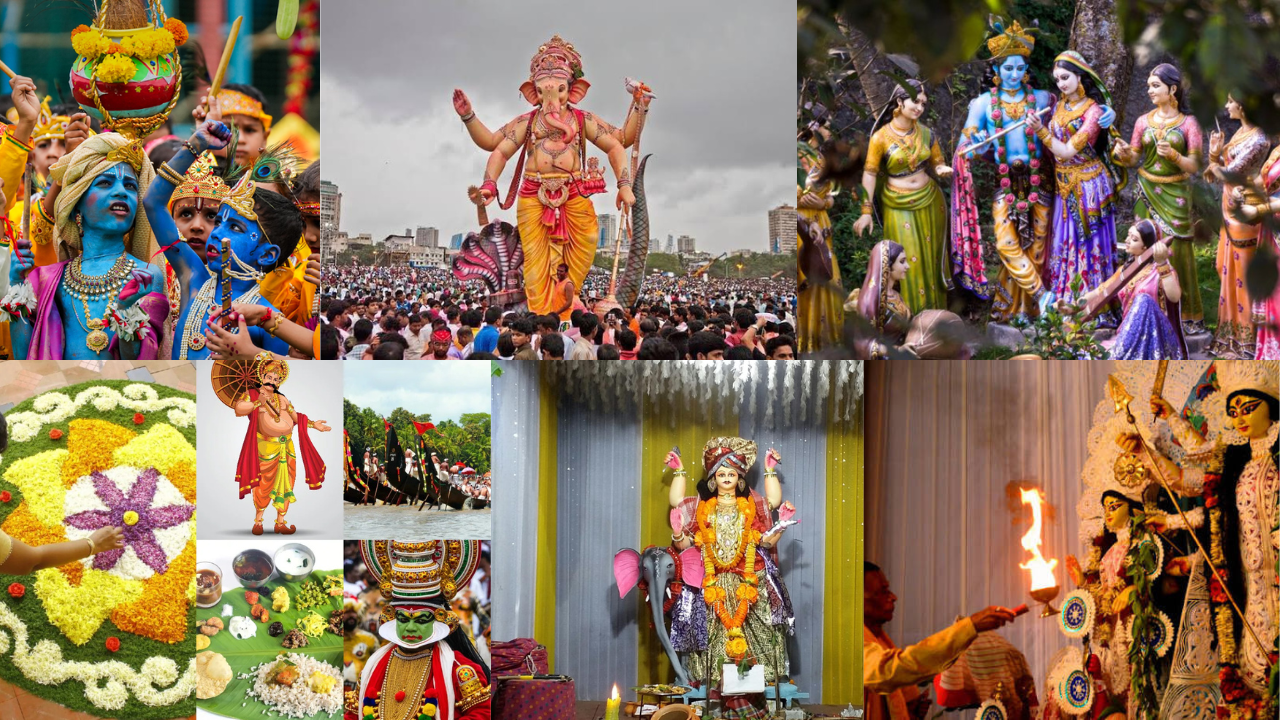
There is a specific moment that happens to almost everyone who travels to India for a major festival. You find yourself standing on a street corner—maybe in Kolkata at two in the morning, or on a dusty desert dune outside Pushkar as the sun comes up—and the sheer volume of life around you hits like a physical wave. The sound of heavy brass drums rattling in your chest, the smell of burning camphor mixed with frying dough, the sea of people moving as one single, fluid organism.
For a second, panic sets in. You wonder why you didn’t just book a quiet week on a beach somewhere. And then, someone hands you a steaming clay cup of sweetened chai, smiles, and says, “Happy festival.”
Just like that, the panic evaporates, and you get it.
If you spend your time in India only chasing quiet mornings at famous stone monuments, you’ll see plenty of history, but you might miss the living heart of the place. India’s culture isn’t locked away in display cases. It is noisy, messy, deeply communal, and overwhelmingly alive—and its festivals are where you get to see it in raw, unfiltered motion.
Kolkata in the Autumn: Walking Through a City-Sized Dream

If you ever get the chance to be in West Bengal during Durga Puja, take it. No photograph or travel blog quite prepares you for what Kolkata does every autumn.
The city basically pauses normal life for a week. Entire neighborhoods transform into open-air art galleries, building giant temporary structures called pandals out of bamboo, jute, and fabric. Some look like intricate ancient stone palaces, while others are wild, modern art installations addressing world events or philosophy. Inside each one sits a handcrafted clay sculpture of the goddess Durga, brought to life by local master sculptors who have practiced the craft for generations.
The real magic happens late at night. Millions of people hit the streets in their finest clothes, walking from one neighborhood display to the next until dawn. The heat recedes, the streets light up with intricate light bulb displays, and the smell of fried kathiawar rolls and sweet mishti doi fills the air.
You don’t drive anywhere. You just walk with the crowd, slipping into narrow back alleys, listening to the thunderous, hypnotic rhythm of dhak drums echoing off old brick buildings. It’s tiring, your feet will ache, and it is easily one of the most remarkable public art celebrations on the planet.
Nine Nights of Dancing in Gujarat
Head west to Gujarat during the same time of year, and you’ll find a completely different kind of energy. Where Kolkata is focused on public art and midnight walks, Gujarat is focused on pure, collective movement.
This is Navratri, nine straight nights dedicated to Garba—a traditional folk dance where entire towns gather in massive open grounds to dance together. Thousands of people move in giant, synchronized circles around a central light or shrine, dancing to live traditional orchestras. The dancers wear swirling, mirror-worked clothes that catch the light with every single pivot.
The amazing thing about Garba is how open it is. It isn’t a show put on stage for spectators; it’s a living community ritual. If you stand on the edge of a circle looking hesitant, it usually takes less than five minutes before someone smiles, grabs your hand, and breaks down the simple two-step so you can join the loop. By midnight, when the tempo picks up and the drums are booming, you completely forget that your legs are sore.
The Misty Hills of Nagaland
If you prefer cool mountain air over hot city streets, head up into the hills of Northeast India in early December for the Hornbill Festival.
Held in a valley village named Kisama, just outside Kohima, the festival was created to bring together the distinct Naga tribes of the region. Nagaland’s terrain is rugged, and historically, its tribes developed unique languages, customs, and traditional dress. Hornbill gives them a shared space to celebrate those differences together.
During the day, you’ll hear folk songs that sound unlike anything else in South Asia, watch traditional archery and wrestling, and wander between recreated tribal huts (morungs). The elders sit by woodfires inside, happily chatting over hot tea or local rice brew, surrounded by hand-woven textiles and intricate woodcarvings.
By the time the sun drops behind the misty mountains and the temperature dips into a crisp chill, the mood shifts. Nagaland has a massive live music culture, and the evening brings world-class local rock bands to the main stage. Sitting around a fire pit in the cool night air, eating simple food cooked over open flames while live music echoes through the valley, feels miles away from the chaos of the big cities.
Acoustic Music in the Shadow of a Fortress

For travelers who want something deeply atmospheric without massive street crowds, Jodhpur RIFF (the Rajasthan International Folk Festival) is in a league of its own.
Timed around the autumn full moon, the festival takes place entirely inside and around Mehrangarh Fort—a colossal 15th-century stone fortress that sits high above the blue-painted houses of Jodhpur. RIFF isn’t about giant speaker stacks or flashing laser lights. It’s a carefully curated, intimate gathering of master folk musicians from across Rajasthan, playing alongside international acoustic artists.
The highlights here are the off-beat moments. You might wake up before dawn to sit on a marble terrace as the sun rises over the city, listening to a solo musician play a haunting stringed instrument while the morning mist clears. Or you might find yourself in a hidden stone courtyard inside the fort at midnight, listening to acoustic jams that blend old desert ballads with international roots music. It feels less like a commercial festival and more like an intimate gathering of people who simply care deeply about sound and history.
Dust, Camels, and Early Mornings in Pushkar
Then there’s Pushkar. A small, holy town sitting around a quiet lake on the edge of the Thar Desert, Pushkar is normally a slow-paced place. But for one week a year during the autumn full moon, the surrounding sand dunes explode into a wild, dusty fair.
Originally an ancient market where desert herders came to trade camels and horses, the Pushkar Fair has grown into an incredible spectacle. You’ll see camel beauty contests, turban-tying competitions, folk dancers, street magicians, and endless rows of temporary shops selling hand-carved leather and silver.
The secret to enjoying Pushkar is waking up early. Walk out into the dunes right at dawn, before the midday heat and tourists arrive. You’ll see camel herders sitting around tiny campfires, brewing morning chai as the blue light turns to gold through the desert dust. It’s loud, it’s dusty, and you’ll be shaking sand out of your shoes for days afterward, but the imagery stays with you forever.
The Reality of Making It Work
Traveling during an Indian festival isn’t a relaxed resort holiday, and pretending otherwise does anyone planning a trip a disservice. You will run into unexpected road closures, train tickets will sell out months in advance, and your carefully planned morning schedule will almost certainly get derailed by a parade or an unexpected invitation to drink tea.
The trick is to stop fighting the unpredictable rhythm and just lean into it.
Do your research early—especially verifying dates, since most festivals follow traditional lunar calendars that shift every single year. Book your stay well in advance, pack broken-in walking shoes instead of anything fancy, and keep your daily plans flexible.
Most importantly, remember that you aren’t just visiting a backdrop; you are stepping into a living, sacred, or historical moment for the people who live there. Treat the rituals with respect, buy your souvenirs directly from the artisans sitting at their looms or benches, and give yourself permission to slow down. The best festival moments are rarely the ones you planned in your notebook—they’re the unscripted ones that happen when you simply show up, stay patient, and let the culture pull you in.
FAQ’s
1. What are the best cultural festivals to visit in India in 2026?
Rann Utsav, Durga Puja, Navratri, Hornbill Festival, and Pushkar Camel Fair are popular choices.
2. What is the best time to experience cultural festivals in India?
August to December is ideal for many major festivals, although celebrations take place throughout the year.
3. How can I plan a cultural festival trip in India?
Check official dates, book accommodation early, plan your budget, and learn about local customs.
4. Are cultural festivals in India suitable for international tourists?
Yes, many festivals welcome international visitors and showcase India’s traditions, food, music, dance, and crafts.
5. How can travellers enjoy cultural festivals responsibly?
Respect local traditions, ask permission before taking photos, avoid littering, and support local businesses.




Leave a Reply