
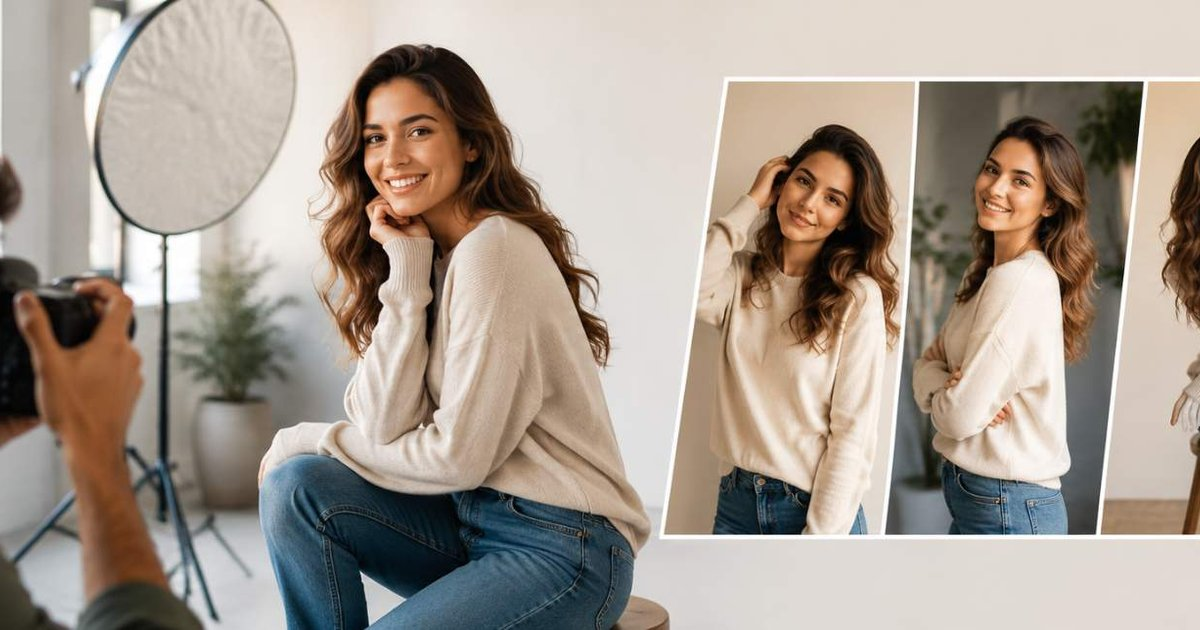
A great photo isn’t always about an expensive camera, perfect light or a gorgeous location. Sometimes the whole picture changes because someone shifted their weight, turned their face a little or found something to do with their hands. That’s why poses matter, whether you’re shooting for Instagram, planning a professional session or just taking snaps with friends and family.
Plenty of people feel awkward the moment a camera points at them. Where do you look? What do you do with your hands? How do you stand without feeling like a statue? The result is often a stiff photo that doesn’t look anything like the real person. The good news is that you don’t have to be a model to look relaxed in pictures. A few simple tricks can help you feel at ease and get much better results.
There’s no single perfect pose, because it depends on the location, your outfit, the light, the camera angle and the mood you’re after. A loose, easy pose that looks great on a beach won’t suit a formal business portrait, and a playful pose with friends would feel odd in a professional headshot. Once you understand that, choosing poses that look natural and fit the occasion gets a lot easier.
Start With the Purpose of Your Photoshoot

Before you think about poses, ask yourself what the photos are for. It sounds basic, but it saves you from random poses that don’t fit the overall style.
A professional portrait usually works best with confident posture, relaxed shoulders and a natural expression. A travel shoot can be much looser, with walking shots, gazing at the scenery or interacting with what’s around you. For a fashion shoot, you might play with body angles, moving fabric and creative hand positions.
Purpose also decides how many poses you need. For social media, a mix of close-ups, full-body shots and candid moments works well. For a family shoot, comfortable groupings and real smiles matter far more than clever poses.
You don’t need a strict shot list. Just having a rough direction in your head makes the whole thing less stressful when the camera comes out.
Choose Poses That Feel Natural
The most common mistake is trying too hard to look perfect. People copy a pose they saw online, twist themselves into something uncomfortable and then wonder why their smile looks stuck on.
Start with movements that already feel familiar. Stand comfortably, shift your weight onto one leg, turn your shoulders slightly and let your hands relax. These small adjustments make a portrait look more balanced without making it feel forced.
Try Simple Standing Poses
Standing poses are the easiest place to begin. Instead of facing the camera straight on with both feet planted evenly, turn your body slightly to one side. Keep your shoulders loose and, if it feels comfortable, put one foot a little forward.
Give your hands something to do. Slip one into a pocket, hold a jacket or rest them gently together. Anything is better than letting them hang stiffly at your sides.
If you’re shooting in a park, try standing beside a tree or walking slowly along a path. Simple actions like these feel far more relaxed than holding the same position over and over.
Use Sitting Poses for Variety
Sitting works well for casual portraits, lifestyle shots and outdoor sessions. A bench, a low wall, some steps or a comfy chair are all good options. Turn your body slightly and keep your posture easy instead of leaning forward awkwardly.
On steps, try a few different leg positions, but stay balanced and comfortable. A slight turn toward the camera adds depth, and looking away can give the photo a thoughtful, candid feel.
Here’s the rule I’d stick to: the best sitting pose is one you can hold comfortably. If it feels awkward in real life, it’ll look awkward in the picture too.
Pay Attention to Body Angles and Posture

Body angles change how a photo feels. Two pictures taken in the same spot with the same camera can look completely different because of a small shift in posture.
Facing the camera directly suits formal portraits and ID-style shots. For something more relaxed, turn your body a little while keeping your face toward the lens. That adds a touch of depth and stops the pose looking rigid.
Good posture doesn’t mean standing unnaturally straight. Keep your back comfortably upright, drop your shoulders and let go of any tension in your neck. For full-body shots, spread your weight so you feel balanced.
Experiment With Camera Angles
The angle of the camera changes how your pose appears. A shot at eye level usually feels natural and balanced, which is why it’s a go-to for portraits. A slightly higher angle gives a different perspective, while a lower one can make the subject look more prominent.
No single angle works for everyone or every situation. It depends on where you’re standing, the lens, how far you are from the camera and what’s around you.
Instead of changing your pose constantly, ask the photographer to take a few shots from different angles. Comparing them afterwards shows you which ones suit the style you want.
Match Your Poses to the Location

Where you are should shape how you pose. When a pose works with its surroundings, the final picture feels connected to the place.
Outdoors, nature can become part of the pose. Walk along a garden path, sit on a rock, lean lightly against a wall or look toward a faraway view. These little actions tell a story, rather than making the photo look like a record of someone standing somewhere.
Indoors, use what’s around you: furniture, windows, doorways, open space. Sitting by a window can give you a soft portrait when the light is right, and standing beside a plain wall keeps attention on your expression and outfit.
Cities offer their own options, like street corners, textured walls, staircases and shopfronts. Just watch the background. A lovely pose can lose its impact when a busy sign or random object sits right behind your head.
Use Facial Expressions to Your Advantage
A pose isn’t only about your body. Your face matters just as much.
A genuine smile makes a photo feel warm and welcoming, while a neutral expression can suit a fashion portrait or something more serious. Looking away from the camera can create a thoughtful mood, especially if the surroundings support it.
If smiling on command feels strange, try chatting with the photography or thinking about something that makes you happy. If your face starts to feel tense, take a short break. These little things help expressions look real.
Eye direction matters too. Looking straight into the lens creates a connection with whoever sees the photo. Looking at something nearby or off into the distance makes the image feel more candid.
And try not to wear the same expression the whole time. A mix of smiles, relaxed looks and unguarded moments usually makes a much more interesting set of photos.
Find the Right Poses for Different Occasions

Different occasions call for different styles, so matching your poses to the event helps the photos feel right.
Couple Photography Poses
Couple photos work best when the two people interact naturally. Walking together, holding hands, laughing or looking at each other all create warm, personal pictures.
You don’t have to look at the camera in every shot. Some of the most memorable couple photos capture a conversation or a quiet moment between the two of you. Pick poses that reflect your relationship instead of copying every trend you see online.
Solo Photography Poses
Solo shoots leave plenty of room to experiment. Try standing poses, sitting portraits, walking shots or close-ups that focus on your expression.
For full-body photos, make sure the camera is far enough away to capture your whole outfit without awkward cropping. For close-ups, pay attention to your shoulders, chin position and expression.
If you’re taking your own pictures on a phone, use a tripod or set it on something stable. A timer or remote shutter makes it much easier to try different poses.
Group Photography Poses
With groups, the arrangement matters as much as the individual poses. If the space allows, avoid lining everyone up in a single row. Let some people stand and others sit for a more balanced look.
Ask everyone to move a little closer when it makes sense, especially for family pictures. Leave enough room that all the faces show, and check that nobody is hiding behind someone else.
For a more natural group photo, give people something simple to do, like walking together or chatting. It’s usually less awkward than asking a big group to hold the same smile for minutes.
Choose Outfits That Support Your Poses

What you wear affects how easily you move. An outfit that fits well and lets you walk, sit and turn naturally makes posing so much easier.
For casual portraits, comfortable jeans, a well-fitting T-shirt or a simple dress can look great. For formal shots, structured clothing can help create a polished look. Pick colours that complement the background without making the whole photo feel crowded.
Details count as well. Long sleeves, loose jackets, scarves and accessories can all become part of your pose. Holding a hat, adjusting a sleeve or carrying a bag gives your hands something natural to do and adds interest to the picture.
Most importantly, wear something that suits the occasion and makes you feel good. Confidence tends to show in a photo more clearly than an expensive outfit does.
Practise Before the Shoot
You don’t need to memorise dozens of poses. Start with three or four simple ones and practise changing a single detail at a time.
For instance, take a standing portrait facing the camera, then turn your body slightly, change your hand position and try looking away from the lens. Compare the results to see which version feels most natural.
A mirror or your phone’s camera is plenty for practice. Look at how your shoulders, hands and expression come across, and try not to judge every picture too harshly.
It also helps to save a few reference photos before the shoot. Use them for inspiration, but adapt the poses to your body, your clothes and the location. A pose that looks effortless on someone else may need a small tweak to feel comfortable on you.
During the shoot itself, keep moving between shots instead of freezing in one position. Small shifts in posture and expression give the photographer plenty of useful images without needing a brand-new pose every time.
Common Posing Mistakes to Avoid
One of the biggest is keeping your shoulders raised and your hands stiff. Relax your body and allow little movements, and the photo will feel more natural.
Another is copying complicated poses without thinking about comfort or balance. If a pose makes you twist awkwardly or hold something uncomfortable, simplify it. You should be able to hold it safely while the picture is taken.
Poor background choices can also hurt the result. Check the frame before you shoot, and move if something distracting sits too close to the subject. Also be careful about standing in harsh sunlight without noticing the shadows it throws across your face.
Finally, don’t judge a whole shoot by one bad picture. Try different expressions, distances and angles. The point of experimenting is to find out what works best for you and for the moment you’re in.
FAQ’s
1. How do I choose the perfect photography poses?
Choose poses that match your personality, outfit, location, and photoshoot style.
2. Which photography poses are best for beginners?
Simple standing, sitting, walking, and natural smiling poses are great for beginners.
3. How can I look natural in pictures?
Relax your shoulders, move naturally, and avoid forcing your facial expressions.
4. Which poses are best for outdoor photography?
Walking shots, relaxed standing poses, and candid poses work well outdoors.
5. How can I improve my photography poses?
Practise in front of a mirror and experiment with different angles and expressions.


Leave a Reply