
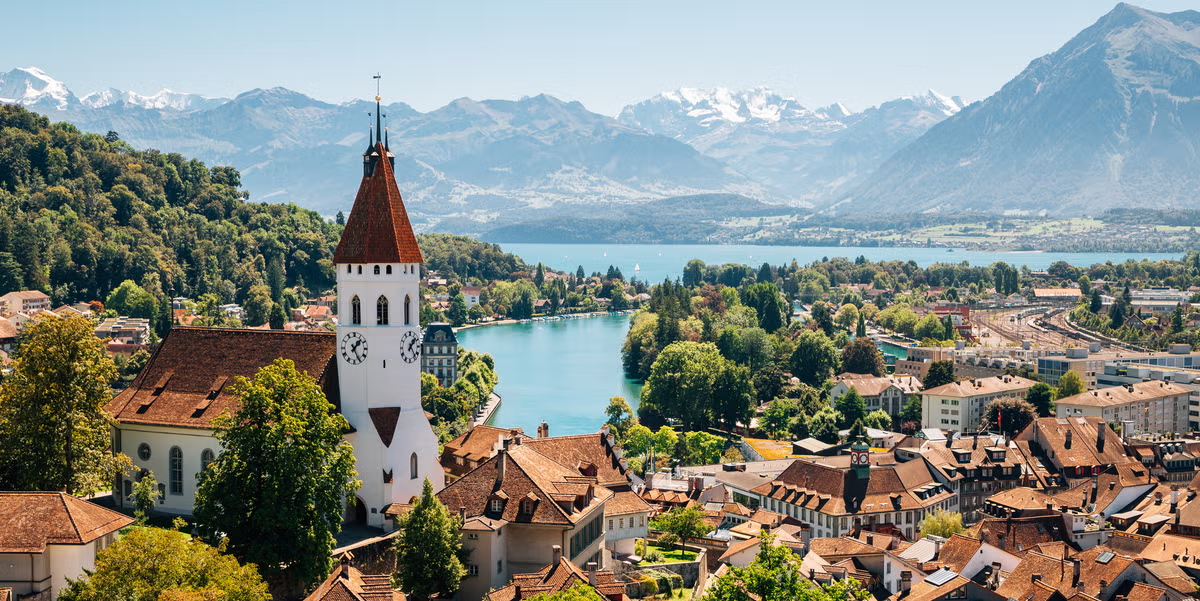
There is a peculiar kind of heartbreak that happens when you leave Switzerland. It is the sort of place that spoils your eyes for any other landscape. Long after you pack your bags and return to the frantic rush of your normal routine, your mind will casually drift back to a specific, quiet moment—the sharp, pristine bite of alpine air in your lungs, the impossibly deep turquoise of a glacier-fed lake, or the rhythmic, distant clink of cowbells echoing across a valley that looks entirely too perfect to exist in the real world.
Switzerland operates on a different internal clock. It is a country where centuries of wild, untamed nature have been gently met by human precision, creating an environment that forces the human psyche to do something it rarely does anymore: slow down, breathe deeply, and simply look.
The Dynamic Cities: Polished Hubs with Historic Souls
Many travelers treat Swiss cities as mere transit lounges—gateways to be hurried through on the way to the mountains. This is a massive psychological oversight. Swiss urban centers are unique because they refuse to cut ties with the natural world.

Zurich
Zurich effortlessly bridges the gap between fast-paced modern energy and historic charm. You can spend your morning navigating high-end boutiques or exploring cutting-edge art galleries, and by afternoon, find yourself sitting on a stone wall in the historic Old Town (Altstadt), watching the Limmat River catch the sunlight. It is sleek and clean, yet completely warm and human.
Geneva
On the western edge of the country, Geneva speaks a different language—both literally and culturally. It is a cosmopolitan, French-speaking hub of global diplomacy that manages to retain a distinctly relaxed, lakeside personality. The iconic Jet d’Eau fountain shoots water high into the sky, serving as a constant visual anchor for a city that feels deeply intellectual, cultured, and gracefully composed.
The Lakeside Postcards: Where Water Meets Stone

There is a distinct emotional decompression that happens when the human eye looks out over an expanse of still water bounded by towering peaks. Switzerland’s lakeside destinations are masters of this therapeutic contrast.
Lucerne: For many, Lucerne is the definitive Swiss dream. The historic wooden Chapel Bridge (Kapellbrücke) curves gently over the Reuss River, its old timbers holding centuries of stories.
- Montreux: Tucked away in a sheltered bay on Lake Geneva, Montreux feels like a Mediterranean anomaly. Palm trees sway against a backdrop of snow-capped peaks, and the lakeside promenade is a lush explosion of vibrant flowers. It has a romantic, artistic soul that has captivated poets, writers, and musicians for generations.
- Lausanne: Built steeply across three hills overlooking the lake, Lausanne possesses a younger, more energetic rhythm. It is a creative, hilly city where historic gothic architecture sits side-by-side with vibrant independent cafés and a bustling student culture.
The Alpine Giants: Facing the Scale of the Earth
When you head deeper into the Bernese Oberland and the Valais regions, the landscape shifts from charming to absolutely overwhelming. This is where you confront the sheer scale of the natural world.
“There is a humbling psychological shift that happens when you stand at the base of a mountain that has existed for millions of years. Your daily anxieties and trivial stresses suddenly shrink against the massive, unyielding stone.”
Zermatt and the Matterhorn
In Zermatt, the modern world is intentionally kept at arm’s length. The village is entirely car-free; the only sounds are the soft hum of electric taxis and the crunch of boots on gravel. Looming above the wooden chalets is the Matterhorn—a lonely, jagged tooth of rock and ice that commands your attention from every angle.

Lauterbrunnen and Grindelwald
A short train ride away lies Lauterbrunnen, a valley so deeply fantastical it famously inspired J.R.R. Tolkien’s Rivendell. Here, vertical limestone cliffs trap the mist, and seventy-two separate waterfalls spill over the edges into green meadows below. Just over the ridge, Grindelwald offers a classic alpine escape, where massive glacier faces hang directly over rolling pastures, perfectly balancing pastoral peace with raw, high-altitude drama.
The Timeless Characters: Off the Beaten Track
If you are willing to look beyond the typical tourist brochures, you will find a version of Switzerland that feels beautifully frozen in time—rooted deeply in community, architecture, and geography.

| Destination | The Core Aesthetic | The Human Experience |
|---|---|---|
| Bern | Medieval sandstone, long covered arcades, and a looping turquoise river. | Walking through a capital city that refuses to rush, feeling completely gentle and historic. |
| Lugano | Palm-fringed lakeshores, Italian architecture, and sun-drenched plazas. | The precision of a Swiss clock melting beautifully into the slow, delicious pace of an Italian summer. |
| Appenzell | Brightly painted wooden houses, rolling green hills, and quiet traditions. | Tasting artisanal cheese and experiencing a deeply rooted, slow-paced pastoral lifestyle. |
The Seasonal Metamorphosis: When to Go
Switzerland does not have an “off-season”—instead, it undergoes a complete physical and emotional metamorphosis four times a year. Your experience will depend entirely on what your soul is looking for.

- The Winter Wonderland (December to March): The country wraps itself in a thick, quiet blanket of snow. This is the time for cozy, candle-lit fondue dinners, the smell of woodsmoke in mountain villages, and the crisp rush of skiing down pristine glaciers.
- The Alpine Awakening (April to June): As the snow melts, the valleys explode into a vibrant, brilliant green. Waterfalls roar with newfound power from the glacier runoff, wildflowers carpet the hillsides, and the hiking trails begin to open up without the summer crowds.
- The High-Summer Freedom (July to August): The lakes become the center of the universe. The weather is warm, the mountain passes are completely clear, and locals spend their evenings swimming in crystal-clear rivers or lounging in lakeside parks under the midnight dusk.
- The Golden Reflection (September to November): The larch forests turn a brilliant, burning gold against the white mountaintops. The air grows crisp and sharp, the summer crowds disperse, and a deep, peaceful stillness settles over the entire country.
The Ultimate Swiss Lesson: The Art of the Journey
The true secret to traveling through Switzerland isn’t found at any single lookout point or historic monument. It is woven directly into the act of moving between them.

The Swiss transit system is an engineering marvel, but more importantly, it is a lesson in mindfulness. Whether you are sitting on a panoramic train climbing a impossible mountain pass, or leaning against the railing of a historic paddle steamer crossing a lake, the windows are designed to frame the world like a gallery. In Switzerland, you quickly learn to stop treating travel as a stressful blank space between Point A and Point B. The journey becomes the destination itself—a smooth, panoramic meditation that leaves you feeling deeply restored, long after you have returned home.
FAQ’S
1. What is the best city to visit in Switzerland?
Zurich and Lucerne are among the best cities for first-time visitors.
2. When is the best time to travel to Switzerland?
Summer (June–August) and winter (December–February) are the most popular seasons.
3. Is Switzerland expensive for tourists?
Yes, but careful planning can help you enjoy Switzerland on a budget.
4. Which Swiss destination is best for nature lovers?
Lauterbrunnen, Grindelwald, and Zermatt offer stunning natural scenery.
5. How many days are ideal for a Switzerland trip?
A 7–10 day itinerary is ideal for exploring the country’s top destinations.



Leave a Reply