
There are some Indian festivals that are full of lights, music, and grand celebrations. Then there are festivals that feel a little more personal—festivals that come from everyday life and the bond people share with their land, animals, and community.Pola Festival, also called Bail Pola, is one of them.
Celebrated mainly across rural Maharashtra and in parts of Madhya Pradesh, Chhattisgarh, Karnataka, and Telangana, Pola is a special day dedicated to bullocks and cattle that have traditionally been an important part of farming life.In 2026, Pola Festival falls on Thursday, September 10. The festival is observed on Shravan Amavasya, the new-moon day of the Shravan month.
At first glance, Pola may look like a colorful village festival where decorated bullocks are taken through the streets. But there is a much deeper feeling behind those decorations.It is a festival about thankfulness, farming traditions, respect for animals, family, and community.
What Is Pola Festival?

Pola is traditionally a farmers’ festival dedicated to bullocks.For generations, bullocks were closely connected with agricultural life. They helped farmers plough their fields, transport goods, and carry out many of the difficult jobs required on a farm.
For farming families, these animals were often much more than livestock. They were familiar companions and an important part of the household.Pola gives farmers a chance to pause their usual routine and show appreciation.
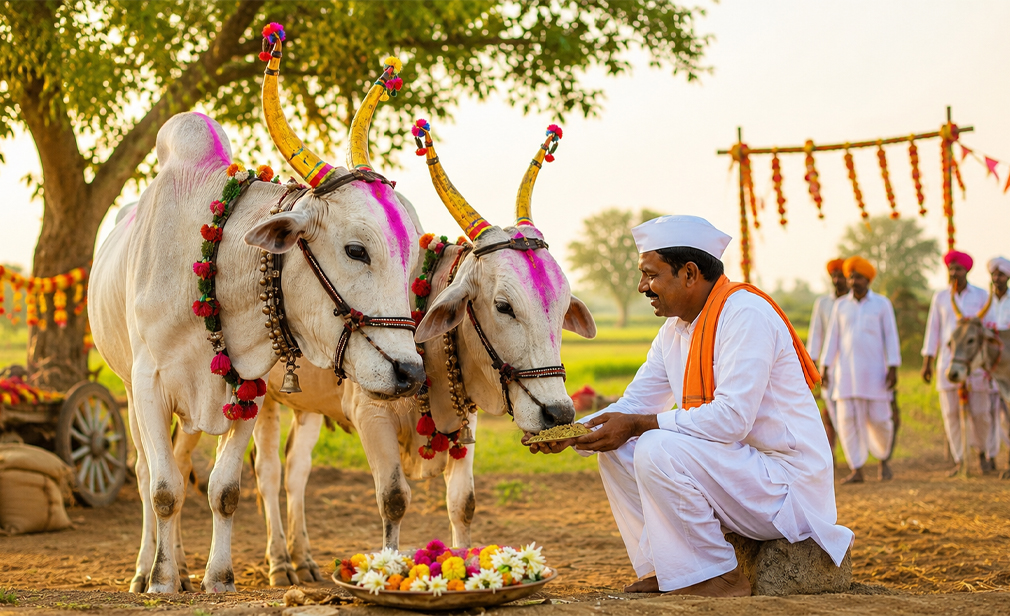
On the festival day, bullocks are cleaned, groomed, decorated, worshipped, and given a well-deserved break from work. Villages may also come alive with music, processions, prayers, rangoli, traditional food, and family gatherings.
When Is Pola Festival 2026?

Pola Festival 2026 will be celebrated on Thursday, September 10.The date is linked to Shravan Amavasya, so it changes each year according to the Hindu lunar calendar.While the basic idea of Pola remains the same, the way people celebrate it can be quite different from one region or village to another.That local flavor is part of what makes the festival so interesting.
Why Is Pola Festival Celebrated?

The simplest answer is gratitude.Farmers traditionally depended heavily on bullocks for agricultural work, and Pola is a day set aside to recognize their contribution.
Instead of treating them simply as working animals, families give them special care and attention.The festival also reflects a much older understanding of rural life—people, animals, soil, crops, and nature are all connected.That message still feels relevant today.
The Story Behind Pola Festival
Pola also has a traditional mythological connection with Lord Krishna and the demon Polasur.According to the popular story, young Krishna defeated Polasur on this day. The story forms part of the religious and cultural background associated with Pola.
But the festival has another equally important side.Its agricultural meaning comes from the relationship between farmers and the animals that helped them work the land.This combination of mythology and farming heritage gives Pola a character that is distinctly its own.
How Is Pola Festival Celebrated?

The preparations often begin with the animals themselves.Farmers take time to clean and groom their bullocks before the main celebration begins.
1. Bullocks Are Bathed and Groomed
The animals are carefully washed and cleaned.For many families, this is more than simply getting ready for a festival. It is an act of care.The bullocks are prepared almost as carefully as people prepare themselves for an important celebration.
2. Traditional Oils and Colors Are Used
Oil may be applied during preparation, while turmeric and vermillion can be part of the traditional worship rituals.These simple rituals add a sense of respect and auspiciousness to the occasion.
3. Bullocks Are Decorated
This is probably the most eye-catching part of Pola.Bullocks may be dressed with:
- Colorful ropes
- Bells
- Flowers
- Decorative cloth
- Shawls
- Ornaments
- Traditional accessories
- Decorated horns
The animals can look remarkably festive, turning ordinary village streets into colorful celebration spaces.The decorations also showcase local creativity and traditional craftsmanship.
4. Families Perform Puja
After the animals have been prepared, families perform traditional puja.A tilak may be placed on the animal, prayers are offered, and the bullocks are honored for their contribution to the household and farm.
5. The Bullocks Get a Day of Rest
Perhaps the most touching part of Pola is also one of the simplest.
The bullocks don’t work.
Traditionally, farmers give their animals a break from agricultural duties on the festival day.After spending so much of their lives helping with farm work, the animals get a day dedicated to them.
Pola Processions and Village Celebrations

Once the animals are ready, the celebration can move beyond individual homes.In many villages, decorated bullocks become part of processions accompanied by traditional music, drums, dancing, prayers, and gatherings.
For villagers, it is a chance to meet neighbors, spend time with family, and celebrate something that is deeply connected to their way of life.The atmosphere can be lively, colorful, and wonderfully local.
Pola and the Farming Community

Pola isn’t only about bullocks.It is also a quiet tribute to farmers and agricultural life.Farming has influenced rural India’s food, occupations, customs, festivals, and community traditions for generations. When people honor the animals that once helped them cultivate their fields, they are also recognizing the work of the farmers themselves.
In that sense, Pola carries a simple message:
Respect the animals that help us.
Respect the people who grow our food.
Traditional Food During Pola


Like most Indian festivals, Pola has its own connection with food.In Maharashtra, Puran Poli is traditionally associated with the celebration. Families may also prepare different homemade dishes depending on their region and family customs.The food is not just about what is served on the table.It is about sitting together, welcoming relatives, sharing a meal, and enjoying the festival as a family.
Rangoli and Festive Home Decorations

The festive feeling doesn’t stop with the cattle.Homes may be cleaned and decorated, with rangoli and traditional torans adding color to entrances. Families also prepare their spaces for puja and visitors.These little details make Pola feel like a celebration throughout the village rather than a single ritual.
Tanha Pola: When Children Join the Celebration

One of the sweetest traditions connected with Pola is Tanha Pola, particularly in Maharashtra.Children can take part in their own way, often through small bull models and festive activities. In some communities, children make or play with wooden bull figures.It may seem like a simple children’s tradition, but it has a bigger purpose.It helps introduce younger generations to the stories and agricultural traditions that shaped their communities.Instead of learning about culture only from books, children experience it through play and celebration.
Where Is Pola Festival Celebrated?

Maharashtra is strongly associated with Bail Pola, but the tradition is also found in other parts of India.
It is observed in areas of:
- Maharashtra
- Madhya Pradesh
- Chhattisgarh
- Karnataka
- Telangana
The details and local customs can vary from place to place.That regional variety is important. Indian festivals often change slightly as they travel from one community to another, while the central idea remains intact.
What Makes Pola Culturally Important?

Pola brings several ideas together in one celebration.
Gratitude
It gives farmers an opportunity to thank the animals that have supported agricultural work.
Compassion for Animals
The festival encourages people to recognize the role animals have played in their lives and communities.
Agricultural Heritage
It keeps traditional farming memories alive even as farming methods change.
Community
Families and neighbors come together for food, music, prayers, and celebrations.
Connection With Nature
Pola reflects the close relationship between rural communities, animals, agriculture, and seasonal cycles.
Pola Festival in Today’s World

Modern farming looks very different from the farming of previous generations.Tractors and agricultural machinery have taken over many tasks that were once performed by bullocks. Even so, Pola continues to hold emotional and cultural value.
And perhaps that is why the festival remains meaningful.Pola isn’t simply about preserving an old agricultural practice. It preserves a connection with a particular way of life—a time when farmers, animals, and the land were closely tied together every day.
How to Celebrate Pola Festival Respectfully

If you’re visiting a Pola celebration in 2026, remember that it is a living cultural tradition, not simply a colorful event to photograph.A few simple things can make your participation more respectful.
Keep Animal Welfare First
Decorations should be comfortable and safe for the animals.
Avoid Harmful Materials
Never use colors, accessories, or decorations that could hurt or distress cattle.
Respect Local Traditions
Every community has its own customs. Watch, learn, and participate appropriately rather than assuming every village celebrates in exactly the same way.
Support Local Artisans
Traditional decorations, wooden toys, crafts, and handmade festive items can provide opportunities to support local makers.
Learn Before You Photograph
If you’re taking pictures, ask permission when appropriate and avoid interrupting prayers or rituals.
The more you understand the festival, the more meaningful the experience becomes.
Pola Festival Photography Ideas


Pola offers plenty of beautiful photography opportunities.
You can capture:
- Decorated bullocks
- Traditional bells and ornaments
- Rangoli designs
- Farmers preparing their animals
- Village streets
- Traditional clothing
- Festive dishes
- Handmade bull toys
- Processions
- Home decorations
But the best photographs aren’t always the most posed ones.Try capturing the small moments—the farmer carefully grooming an animal, a child holding a wooden bull, or a family preparing food together.Those moments often tell the story of Pola better than a perfectly staged picture.
Why Pola Festival Still Matters in 2026

It is easy to think of culture as something found inside museums, ancient buildings, or historical books.Pola reminds us that culture can be much closer to everyday life.
It can be a farmer washing his bullock.
It can be a grandmother preparing festive food.
It can be children playing with traditional toys.
It can be a village gathering in the evening.
It can be a colorful rangoli outside someone’s home.
These ordinary moments carry memories from one generation to the next.
As agriculture becomes more modern and mechanized, festivals like Pola help keep the emotional history of rural communities alive.
Frequently Asked Questions
1. When is Pola Festival 2026?
Pola Festival 2026 will be celebrated on Thursday, September 10, 2026, on Shravan Amavasya.
2. Why is Pola Festival celebrated?
Pola is celebrated to honor and thank bullocks for their traditional contribution to farming and agricultural life.
3. How is Pola Festival celebrated?
Farmers bathe, groom, decorate, and worship their bullocks. The animals are traditionally given a day of rest, while villages may hold processions and community celebrations.
4. Where is Pola Festival mainly celebrated?
Pola is mainly associated with Maharashtra and is also celebrated in parts of Madhya Pradesh, Chhattisgarh, Karnataka, and Telangana.
5. What food is traditionally prepared during Pola?
Puran Poli is traditionally associated with Pola celebrations in Maharashtra, along with other homemade festive dishes that vary by family and region.


Leave a Reply