
Let’s be completely honest for a second.
We’ve all been there, sitting in front of a glowing computer screen at 11:30 PM on a Tuesday, staring blankly at a piece of software, a phone setting, or a flat-pack furniture instruction manual, feeling completely stupid.
You try to do something simple—like exporting a clean PDF, transferring photos to an external drive, or resetting a password—and suddenly you find yourself trapped in a maze of weird menus and cryptic error messages. You open a search tab, click the top result, and what do you get?
A 1,500-word essay detailing the entire back-history of the software company before it even thinks about telling you which button to press. Or worse: a video with a five-minute intro yelling, “WHAT IS UP GUYS, DON’T FORGET TO LIKE AND SUBSCRIBE!” while you’re just desperately trying to figure out how to un-mute your microphone.
It is infuriating.
In 2026, we don’t lack information; we are practically drowning in it. What we lack is clarity.
When you are stuck trying to accomplish a task, you don’t want a lecture. You don’t want fluff. You want a clear, empathetic human voice saying: “Hey, I know this is annoying. Here are the exact four things you need to click, in this exact order, to fix it and get on with your life.”
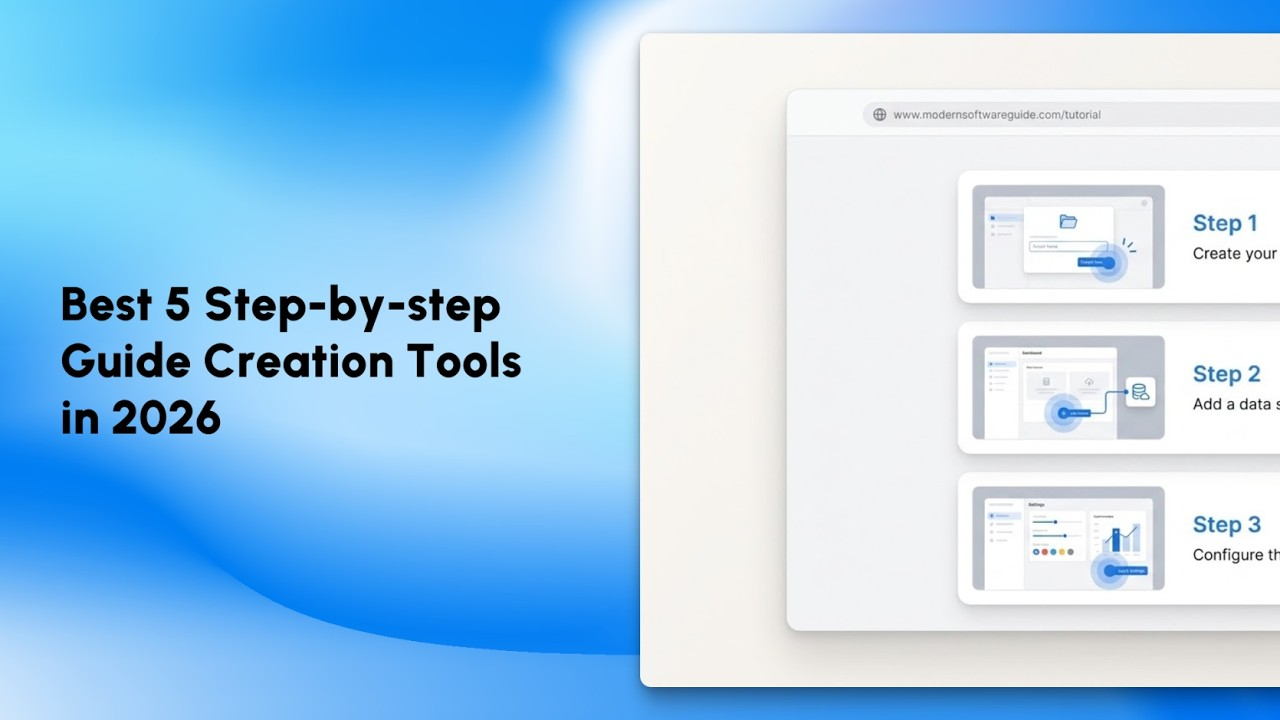
Whether you’re someone who relies on tutorials to learn new skills or you’re trying to write instructions for your team, your clients, or a blog, here is a real-world, deeply practical guide to how step-by-step tutorials work, why most of them fail, and how to write ones that actually help people.
1. What Makes a Step-by-Step Guide Actually Work?

At its absolute core, a step-by-step guide is just a bridge between where someone is stuck right now and where they want to be.
                    THE ANATOMY OF A GREAT TUTORIAL

                        STARTING POINT
                   ("I am stuck and frustrated")
                               │
                               ▼
                        PREREQUISITE CHECK
            ("Before you click anything, grab your phone & log in")
                               │
                               ▼
                   MICRO-ACTIONS (ONE BY ONE)
            ("1. Open menu -> 2. Click Settings -> 3. Toggle off")
                               │
                               ▼
                        THE FINISH LINE
             ("You're done! Your screen should now look like this")
A terrible guide assumes you already know half the steps. It skips the “obvious” parts, uses dense corporate jargon, and leaves you guessing. A brilliant guide, on the other hand, respects your time while holding your hand through the messy parts.
Every truly useful tutorial answers three fundamental questions right at the very beginning:
- What do I need before I even start? (e.g., Do I need a paid account? A specific cable? A backup of my data?)
- What exact actions do I take in sequence? (e.g., Click X, then choose Y, then press Z.)
- How do I know I didn’t mess it up? (e.g., You should see a green checkmark on your dashboard.)
If a tutorial hits those three notes cleanly, the relief you feel as a reader is immediate.
2. The Real-World Reality Check: Why Most Guides Fail
Let’s do a quick breakdown of why so many online tutorials leave us throwing our hands up in frustration:
| Guide Type | What the Writer Thought They Were Doing | What the Reader Actually Experiences | The Human Fix |
| The Novelist | “I’ll give rich background context on this tool!” | 800 words of boring fluff before showing a single instruction. | Jump straight to the steps in paragraph two. Put deep background info at the bottom. |
| The Expert Trap | “Everyone knows where the Dashboard menu is.” | Complete confusion because the interface updated and the menu moved. | Spell out the exact path: Top Right Corner -> Avatar Icon -> Settings. |
| The Outdated Artifact | “I wrote this in 2021, it’s still fine!” | Useless instructions showing buttons that were deleted three years ago. | Put a prominent Last Updated [Date] stamp at the top of the page. |
| The Monolith | “I’ll fit everything into one comprehensive paragraph!” | A giant wall of unreadable text where steps get lost completely. | Use bold numbered lists with single, bite-sized actions per line. |
| The Silent Traitor | “I’ll skip mentioning the hidden $20 fee until the end.” | Instant anger when the user spends 20 minutes following steps only to hit a paywall. | State all cost requirements clearly in the “Prerequisites” section upfront. |
3. How to Follow a Tutorial Without Losing Your Mind

Before we talk about creating tutorials, let’s talk about how to use them efficiently as a learner. When you’re trying to figure out a new tool or fix a tech issue, your instinct is usually to race through the steps as fast as possible.
Slow down for sixty seconds. It will save you an hour of headaches.
                    HOW TO CONSUME A TUTORIAL

    [ READ ONCE FIRST ]                     [ EXECUTE STEP-BY-STEP ]
  Skim the steps to ensure    ──────>    Do Step 1. Verify screen matches.
  you have all requirements              Do Step 2. Verify screen matches.
  before clicking anything.              If stuck, pause and re-check Step 1.
The “Skim First” Rule
Always read or skim through the tutorial once before you start clicking buttons or changing settings.
Why? Because there is nothing worse than getting to Step 7 of a 10-step software tutorial only to read: “Note: To complete this, you will need the Pro version which costs $15/month.”
A quick 30-second skim lets you verify that you have the right software version, the right access permissions, and the actual time required to finish the job.
Go One Click at a Time
When you’re working through a new process, don’t try to perform three actions at once from memory.
- Read Step 1.
- Perform Step 1.
- Look at your screen and confirm it looks like what the guide describes.
- Move to Step 2.
If your screen doesn’t match what the guide says, stop immediately. Don’t keep going hoping it will fix itself on Step 4. Go back to the previous step and see where your path diverged from the writer’s instructions.
4. Different Tasks Need Different Guides

Not every topic should be structured the same way. You wouldn’t write a recipe for baking bread the same way you’d write an emergency troubleshooting guide for a crashed hard drive.
                     MATCHING FORMAT TO CONTENT

       [ QUICK TECH FIXES ]                      [ DEEP CREATIVE TASKS ]
  • Bulleted action steps                   • Visual screenshots / diagrams
  • Direct navigation paths                 • "Why" explanations alongside "How"
  • Emphasize speed & accuracy              • Examples of finished work
  • Clear error warning callouts            • Troubleshooting alternatives
1. Technology & Device Settings
- The Vibe: Fast, precise, zero fluff.
- The Focus: Tell the user the exact menu items to select. Use bold text for UI buttons (e.g., “Click Account, select Privacy, then toggle Off“).
- Pro-Tip: Include a brief “If you don’t see this option…” note, because software updates constantly change where buttons live.
2. Software & Creative Workflows
- The Vibe: Visual, encouraging, outcome-driven.
- The Focus: People learning software like video editors, design tools, or spreadsheets need to know why they are clicking something, not just what to click.
- Pro-Tip: Show what a successful outcome looks like. If you’re teaching someone how to remove a background in a photo tool, show a quick before-and-after comparison.
3. Business & Workplace Processes

- The Vibe: Standardized, clear, risk-averse.
- The Focus: For internal company SOPs (Standard Operating Procedures), highlight who is responsible for each step and what approvals are needed.
- Pro-Tip: Call out potential security or financial risks clearly:
> WARNING: Doing this will permanently delete the customer's billing record.
5. The Blueprint for Writing a Brilliant How-To Guide
If you are tasked with writing a step-by-step tutorial for your team, your website, or your customers, here is the exact framework to make it genuinely helpful and human.
                  THE WRITER'S CHECKLIST

  [ PHASE 1: PREPARATION ]
  • Test the process yourself from scratch
  • Note every single click (don't skip "obvious" ones)
  • Gather necessary screenshots or visual aids

  [ PHASE 2: DRAFTING ]
  • State prerequisites upfront (Accounts, Version, Time)
  • One action per numbered step
  • Use bolding for clickable UI elements

  [ PHASE 3: HUMANIZING ]
  • Add "Troubleshooting" callouts for common pitfalls
  • Write like a helpful peer, not a robot
  • Review on a mobile screen for readability
Step 1: Do the Process Yourself (And Write Down Every Single Click)

Never write a guide from memory. We suffer from something called the Curse of Knowledge: once you know how to do something automatically, your brain skips over the tiny micro-steps without realizing it.
Open a fresh browser window, clear your cache, or log in as a brand-new user. Perform the task slowly. Every time your mouse clicks a button, write down what that button was named and where it was located on the screen.
Step 2: Use One Action Per Step
A major crime in tutorial writing is combining four different actions into a giant paragraph pretending to be a single “step.”
- Bad Step: “Go to the settings tab, click on profile, upload your new image, make sure it’s under 5MB, and hit save.”
- Good Step:
- Click Settings in the top-right corner.
- Select Edit Profile.
- Click Upload Photo (File must be under 5MB).
- Select your image and click Save Changes.
Notice how much easier that second version is to scan? Your eyes can track your progress instantly without losing your place.
Step 3: Write in Plain, Conversational English
Drop the stiff academic prose. You aren’t writing a legal brief; you’re helping a human being solve a problem.
- Instead of writing: “Utilize the drop-down interface to execute a selection of the preferred parameters…”
- Write: “Click the drop-down menu and pick the option that matches your setup.”
Speak directly to the reader (“You”). Use active verbs at the beginning of your steps (“Click,” “Type,” “Select,” “Open,” “Drag”).
Step 4: Call Out the Pitfalls Before They Happen

A great guide anticipates where the reader is going to get stuck. If you know that a certain button takes ten seconds to load, or that a specific option only appears if you’re logged in as an administrator, add a quick note right before that step.
Heads Up: If the “Export” button is grayed out, it means you haven’t selected a file format yet. Pick a format from the box on the left first!
That tiny sentence saves your reader ten minutes of confused swearing at their screen.
6. How to Humanize Your Technical Content
Let’s make sure your writing doesn’t sound like it was auto-generated by an unfeeling machine. Here are four quick voice-and-tone tweaks that immediately make technical tutorials feel warm, human, and approachable:
- Acknowledge the Frustration: If a process is notoriously clunky or hidden behind terrible software design, validate the reader’s feeling: “Finding this setting is harder than it needs to be, but here’s where they hid it.”
- Use Everyday Analogies: If you are explaining a technical concept, anchor it in real life: “Think of your API key like a digital house key—anyone who has it can walk right through your front door, so keep it secret.”
- Be Honest About Time: Tell people up front how long a task actually takes: “Setting this up takes about 5 minutes, but waiting for the verification email can take up to an hour.”
- Celebrate the Finish Line: When the guide ends, give the reader a warm sense of completion: “And that’s it! You’re officially good to go.”
Frequently Asked Questions
How long should a good step-by-step guide be?
As long as it needs to be to solve the problem—and not a single word longer. If a task takes three simple steps, your guide should be 100 words. If it’s a complex multi-stage process, it might take 1,500 words with screenshots. Match the length to the complexity of the task, not an arbitrary word count goal.
Are screenshots always necessary for technology tutorials?
They aren’t strictly mandatory for super-simple tasks, but they add immense value whenever an interface is confusing, crowded, or hard to navigate. A clear screenshot with a bright circle around the exact button to click eliminates 90% of user hesitation.
How often do step-by-step guides need to be updated?
For software and mobile apps, you should review your high-traffic guides at least once every six months. Tech companies love updating their user interfaces, and nothing kills a reader’s trust faster than following a guide that references menus or buttons that no longer exist.
What is the biggest mistake people make when writing how-to guides?
Assuming the reader already knows the context. Writers constantly skip “Step 0″—the basic setup, account permissions, or starting location required before the main process even begins. Always start from the absolute ground level.



Leave a Reply