
Every single year, as the morning of Ashtami or Navami Kanjak Puja approaches, my entire home undergoes a beautiful transformation. Long before the morning sun streams through the kitchen window, the sweet aroma of semolina roasting in pure desi ghee, freshly crushed cardamom, and sizzling cumin seeds fills every corner of our house.
For as long as I can remember, Kanjak Puja—or Kanya Pujan—has been the heart and soul of Navratri in my family.
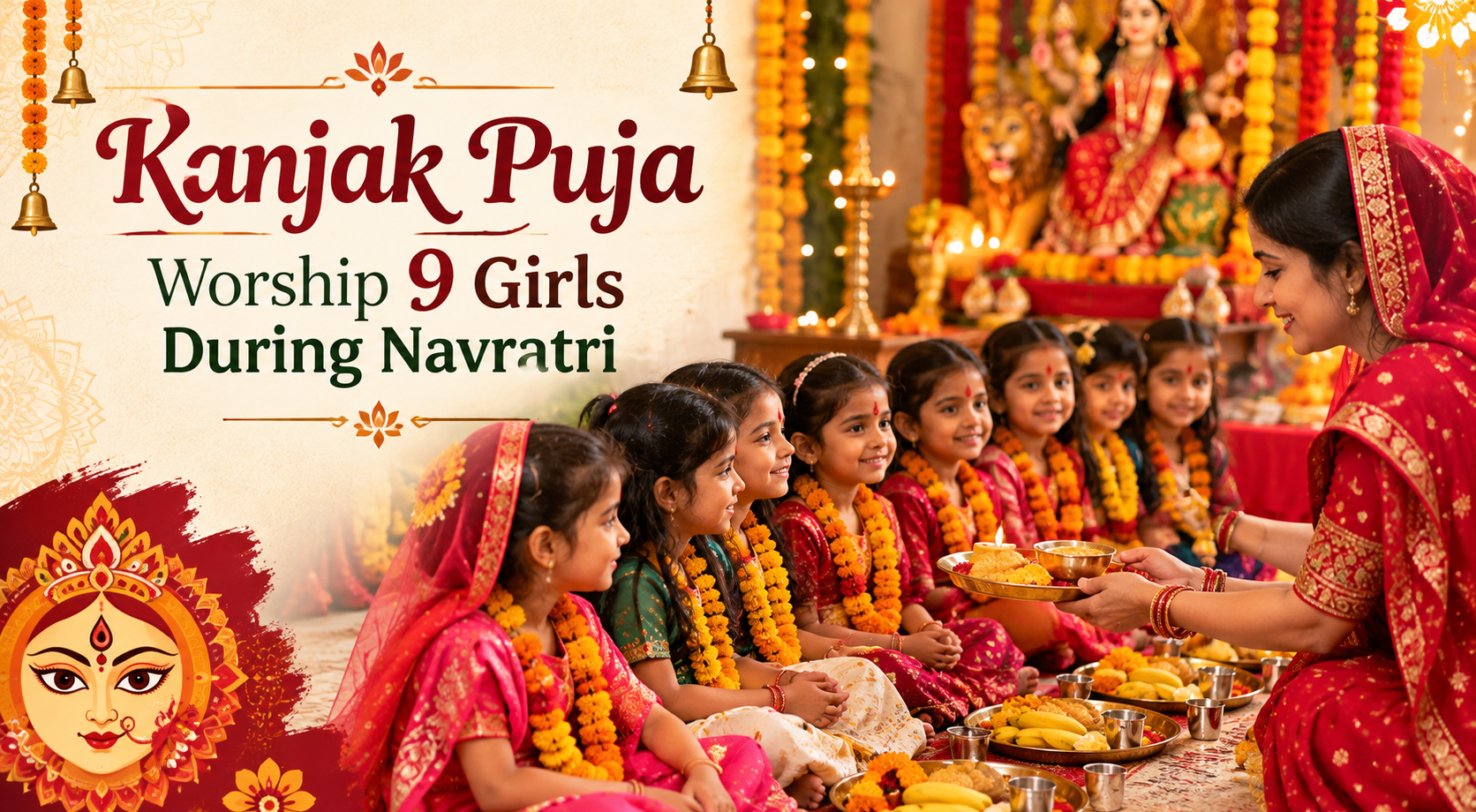
During the nine days of Navratri, we pray to statues, pictures, and sacred fires. But on Kanjak day, something truly magical happens: we open our doors and invite the living embodiments of Goddess Durga directly into our homes. We welcome nine young girls—who represent the nine forms of Goddess Durga (Navadurga)—along with one young boy who represents Bhairav Baba. We wash their little feet, adorn their foreheads with bright red kumkum, wrap colorful chunris over their shoulders, feed them a delicious homemade feast, and bow down to touch their feet for blessings.
When I was younger, I used to watch my mother manage this entire morning with such quiet grace. Now that I run my own household and prepare this puja myself, I realize just how much planning, devotion, and love goes into making this morning special. Over the years, I’ve learned a lot of practical tricks to keep everything running smoothly without any stress.
Whether this is your very first time hosting Kanjak Puja or you are simply looking for a simple, heartwarming guide to refresh your tradition, here is my complete step-by-step journey of how I celebrate this sacred day at home.
1. Preparing My Home the Night Before

If there is one thing I’ve learned from years of doing this, it’s that a peaceful Kanjak Puja morning always begins the evening before. On the seventh or eighth night of Navratri, after the evening aarti is complete, I sit down in my kitchen to get a head start.
Soaking the Black Chickpeas
The very first thing I do is measure out black chickpeas (kale chana). These little legumes are quite tough, so if you don’t soak them long enough, they will take forever to cook in the morning and won’t get soft. I wash them thoroughly under running water three or four times until the water runs clear. Then, I submerge them in a deep bowl of fresh water with a pinch of salt and leave them on the counter overnight. By morning, they plump up to double their size and pressure cook in just a few minutes.
Deep Cleaning the House
On Kanjak day, we believe that divine energy enters our home in the form of these little children. Because of this, cleaning the house isn’t just about housework; it’s a spiritual preparation.
- The Main Entrance: I sweep and mop the front porch and doorstep. I like to hang a fresh marigold garland (toran) over the front door and light a small incense stick near the entrance to welcome our little guests.
- The Puja Room: I clean the altar, polish my brass lamps, wipe down the pictures of Devi Mata, and lay down clean floor mats (asans) where the children will sit.
- Setting Aside the Puja Supplies: To avoid running around frantically in the morning, I set up a small basket near the temple containing everything we will need:
- A box of red kumkum powder
- A small bowl of unground raw rice (akshat)
- A roll of red sacred thread (moli)
- Nine bright red or golden embellished chunris
- A clean brass or steel basin and a soft, fresh towel for washing feet
- A packet of camphor (kapoor) and a brass diya filled with pure ghee
Waking Up in Brahma Muhurta
On the morning of the Kanjak Puja, our whole household wakes up early, usually around 4:30 AM or 5:00 AM during Brahma Muhurta. Before anyone enters the kitchen or touches a single cooking utensil, we all take a refreshing bath and put on clean, traditional clothes (usually red, yellow, or orange, which are considered auspicious colors for Navratri).
2. Cooking the Traditional Sattvik Bhog


The menu for Kanjak Puja is classic, timeless, and comforting. In my family, we have been cooking the exact same three dishes for generations: Sukhe Kale Chana, Suji ka Halwa, and Fluffy Wheat Puris.
Because this food is prepared as a sacred offering (bhog) to Goddess Durga, we follow strict sattvik rules in the kitchen:
- No onions, garlic, or processed spices are used.
- We use pure desi ghee for all three dishes.
- No one tastes the food while cooking! We don’t use a spoon to sample the sugar or salt. We cook with complete focus and trust that Mata Rani will make it taste wonderful.
Here is how I prepare each dish step-by-step:
+-------------------------------------------------------------------------+| MY TRADITIONAL BHOG MENU |+-------------------------------------------------------------------------+| || 1. SUKHE KALE CHANA || Soft, pressure-cooked black chickpeas tossed simply in ghee, || cumin seeds, rock salt, coriander powder, and amchur. || || 2. SUJI KA HALWA || Golden roasted semolina simmered in a warm ghee & sugar-water || syrup, seasoned with ground cardamom and sliced almonds. || || 3. GOLDEN PURIS || Fresh, hand-rolled whole wheat discs deep-fried in hot ghee || until they puff into light, golden balloons. || |+-------------------------------------------------------------------------+
A. Sukhe Kale Chana (Dry Black Chickpeas)
After draining the overnight soaking water, I put the black chickpeas into a pressure cooker with fresh water and a teaspoon of rock salt (sendha namak). I cook them for about 4 to 5 whistles on medium flame, then lower the heat and let them simmer for another 10 minutes until they are buttery soft when pressed between two fingers.
In a pan, I melt two tablespoons of pure desi ghee. Once warm, I toss in a teaspoon of cumin seeds. As soon as they crackle, I turn the heat down to low and add coriander powder, a dash of red chili powder, roasted cumin powder, and a touch of dry mango powder (amchur) for a subtle tang. I pour the cooked chickpeas into the pan, toss them gently until every chickpea is coated in spiced ghee, and let them cook for 5 minutes.
B. Suji ka Halwa (Semolina Sweet)
To make perfect, non-sticky halwa, I stick to my grandmother’s simple Golden Ratio: 1 part Suji : 1 part Ghee : 1 part Sugar : 3 parts Water.
I start by heating water and sugar in a saucepan just until the sugar dissolves completely—no need to make a thick syrup. In a separate heavy-bottomed pan, I melt the desi ghee and add the fine semolina (suji). I roast the suji on a gentle, low flame, stirring continuously. This step requires patience! You want the semolina to slowly change color from pale cream to a warm, golden tan while filling your kitchen with a rich, nutty fragrance.
Once the suji is perfectly roasted, I slowly pour in the warm sugar water while stirring rapidly with my other hand to prevent any lumps from forming. The semolina will quickly absorb the liquid and thicken into a smooth, silky halwa. I finish it with fresh cardamom powder and chopped almonds.
C. Golden Whole Wheat Puris
Making puris is always the last thing I do so they stay hot and puffy when served. I knead a tight, smooth dough using whole wheat flour, a splash of water, and half a teaspoon of ghee. A firmer dough is important because it prevents the puris from absorbing too much oil while frying.
I roll out small, even discs and drop them into a deep pan of hot ghee. Within seconds, the dough expands into a fluffy golden balloon. I flip it over for a few seconds, drain the excess ghee, and stack them neatly in a insulated container lined with clean paper.
3. My Step-by-Step Kanjak Puja Vidhi
Once the food is cooked, I carefully plate a small portion of halwa, chana, and a puri on a thali and place it at our altar in front of Mata Rani as the first offering. Then, it’s time for the most joyful part of the Kanjak Puja morning: welcoming the children.
We traditionally Kanjak Puja invite nine young girls (ideally between 2 and 10 years old) to represent the nine forms of Durga, and one young boy to represent Bhairav Baba, the guardian protector who accompanies the Goddess.
Here is the exact step-by-step ritual we follow once the children arrive:
Step 1: Welcoming and Washing Their Feet In Kanjak Puja

As the little girls walk through our doorway, we greet them with warm smiles and chants of “Jai Mata Di!” We guide them to sit comfortably in a straight line on clean woven floor mats (asans) that we’ve spread out on the carpet.
I sit down on the floor in front of them with a large brass basin and a jug of lukewarm water. One by one, I place their small feet into the basin, gently pour warm water over them, and dry them thoroughly with a clean, soft towel.
This isn’t just a physical cleanup; it is a deep ritual of humility and reverence. In Indian culture, washing someone’s feet is the highest form of respect you can offer. Doing this for young children reminds us that pure innocence is the closest thing to God on this earth.
Step 2: Applying Tilak, Moli, and Chunri In Kanjak Puja

Next, my family members help me adorn the children:
- The Tilak: I take red kumkum paste and make a small red dot on the middle of each child’s forehead, pressing a few grains of raw rice (akshat) onto the mark. The red color symbolizes divine power, while rice represents abundance.
- The Moli: I take the red sacred thread (moli) and tie it gently around their right wrists while saying a quick silent prayer for their protection and health.
- The Chunri: I take a bright red or golden mesh chunri and drape it lovingly over their shoulders, transforming these little neighborhood kids into glowing miniature representations of the Goddess.
Step 3: Performing Aarti and Seeking Blessings In Kanjak Puja
Kanjak Puja With all ten children seated and decorated, I light our brass ghee lamp and incense sticks. We perform a brief Aarti in front of the children, moving the light in slow clockwise circles before them while singing devotional songs or chanting “Sarva Mangala Mangalye, Shive Sarvartha Sadhike.”
After the aarti, my entire family—young and old—bows down and touches the feet of each child, asking them to bless our home with peace, happiness, and good health. The pure, shy smiles on their faces during this moment are absolutely priceless.
Step 4: Serving the Fresh Bhog In Kanjak Puja

Now comes the part the kids have been waiting for! We place clean stainless steel or eco-friendly leaf plates in front of each child.
We serve them generous helpings of warm suji halwa, savory kale chana, and fluffy puris. We also keep glasses of fresh water nearby.
always tell the kids, “Eat as much as you like, slowly and happily! Don’t feel rushed.” Watching them eat with genuine joy and satisfaction brings a deep sense of fulfillment that no restaurant meal could ever match.
Step 5: Distributing Gifts, Dakshina, and Bidding Farewell

Once the children finish eating and clean their hands, we give each child a small gift along with a token coin or cash (dakshina).
We escort them back to the front door, thank them for coming to our home, and bid them farewell as they head off to the next house in our neighborhood.
4. The Kanjak Puja Spiritual Meaning Behind the Ages
Many people don’t realize that in traditional Vedic texts, young girls of different ages represent distinct, powerful aspects of Goddess Durga. Every age group brings a specific spiritual blessing to the home during Kanjak Puja:
| Age of Kanya | Scriptural Name | Spiritual Meaning & Blessing Brought to the Home |
| 2 Years | Kumarika | Removes poverty, clears family sorrows, and brings pure energy. |
| 3 Years | Trimurti | Grants health, wealth, family harmony, and long-term stability. |
| 4 Years | Kalyani | Fulfills noble desires, grants success, and brings overall good luck. |
| 5 Years | Rohini | Helps family members overcome long-standing health issues and illnesses. |
| 6 Years | Kālika | Destroys internal fear, removes negative influences, and gives strength. |
| 7 Years | Chandika | Grants clarity of mind, wisdom, academic success, and good reputation. |
| 8 Years | Shambhavi | Resolves misunderstandings, bringing deep peace and domestic harmony. |
| 9 Years | Durga | Protects the household from unseen obstacles and destroys negativity. |
| 10 Years | Subhadra | Helps complete long-term life goals and brings overall happiness. |
5. Kanjak Puja Practical Tips I’ve Learned Over the Years


Over two decades of organizing Kanjak mornings, I’ve hit my share of small speedbumps. Here are my top practical tips to help you keep your Kanjak Puja morning stress-free:
1. Invite Children 1-2 Days in Advance
On the Kanjak Puja morning of Ashtami or Navami, almost every Hindu household in the neighborhood is looking for young girls to host! If you wait until 8:00 AM on the day of the puja to find kids, you might end up wandering down empty streets. Talk to your neighbors, friends, apartment guards, or local domestic workers two days ahead. Ask if their daughters can visit your home around a specific time window (e.g., 8:30 AM to 9:30 AM).
2. Choose Practical, Thoughtful Gifts
In the past, people used to give cheap plastic toys or simple steel bowls that often ended up cluttering drawers. Over the last few years, I shifted toward giving practical gifts that kids actually use and love:
- Stationery Kits: Brightly colored pencil cases, drawing pads, watercolor sets, or fun eraser packs.
- Personal Items: Small stainless steel water bottles, colorful lunchboxes, or cute hair accessories (clips, hairbands, ribbons).
- Books: Illustrated mythological storybooks, coloring books, or puzzle sets.
3. Don’t Stress Over Strict Numbers
Sometimes, despite your best efforts—especially if you live in a high-rise city apartment or abroad—you simply cannot find nine young girls.
My mother always taught me: Goddess Durga looks at your intention (bhāv), not your numbers. If you can only find two, three, or five girls, perform the entire puja for them with the exact same love and devotion. You can also set aside additional portioned plates of food and gift packs and donate them to a nearby temple, an orphanage, or children in need in your area. Never let a number make you feel anxious or guilty on a sacred day.
🌺 More Navratri Puja Tips
Explore Navratri 2026 dates, puja samagri, Kanya Pujan rituals, and the spiritual significance of this sacred festival.
Read the Navratri 2026 Guide →FAQ’s
1. Should Kanya Pujan be performed on Ashtami or Navami?
Both days are considered highly auspicious, and the choice largely depends on your family’s tradition (kul-reet). Durga Ashtami (the 8th day) represents Goddess Mahagauri, symbolizing purity and serenity, while Maha Navami (the 9th day) represents Goddess Siddhidatri, who grants all spiritual fulfillments and blessings. If you do not have a specific family tradition, you can comfortably perform the puja on either day based on your schedule and when local children are available.
2. What if I am unable to find 9 young girls in my neighborhood?
Never worry or feel guilty if you cannot gather nine girls. In traditional scripture and practice, Goddess Durga values your devotion (bhāv) far more than exact numbers. You can host 2, 3, 5, or 7 girls and perform the full ritual for them. For the remaining counts, you can prepare portioned plates of bhog (halwa, chana, and puri) along with gifts and deliver them to a local temple, an orphanage, or children in need near your community.
3. Why do we invite one young boy during Kanjak Puja?
The young boy represents Bhairav Baba (or Langoor / Batu K Bhairav). According to Hindu tradition, Lord Shiva appointed Bhairav Baba as the guardian and eternal protector of Goddess Durga’s pilgrimages and worship. It is believed that worship of the Devi remains incomplete without honoring Bhairav Baba as her guardian.
4. What is the ideal age limit for girls invited to Kanya Pujan?
Traditionally, girls between the ages of 2 and 10 years are invited for Kanjak Puja. At this stage of childhood, girls are considered pure, innocent, and unburdened by worldly ego or pretention, making them the purest human representations of the Divine Mother’s energy (Kanya Shakti).
5. Can we use onions, garlic, or regular table salt while making the Prasad?
No. The bhog prepared for Kanya Pujan must be strictly sattvik. This means:
- Avoid onion, garlic, and processed packaged spices that contain additives.
- Use pure rock salt (sendha namak) or unrefined pure salt instead of heavily processed table salt.
- Prepare everything in pure desi ghee or clean peanut/sesame oil, ensuring no one tastes the food before offering it at the altar first.




Leave a Reply