
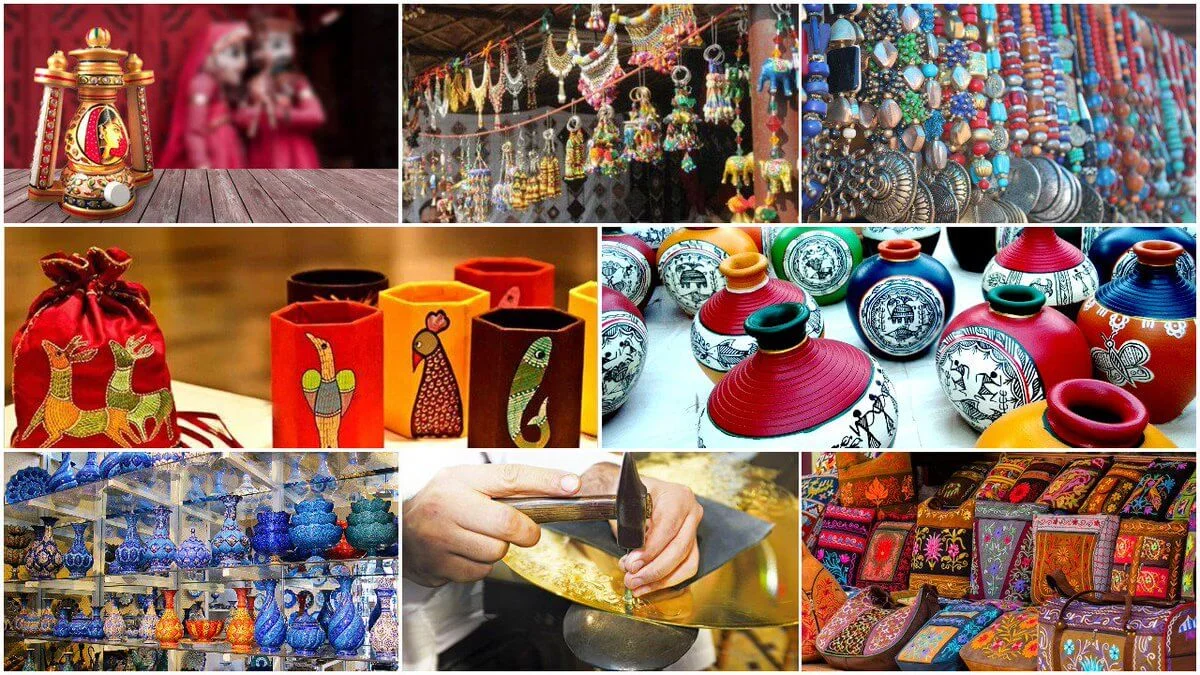
Think about the last souvenir you bought on a trip. A fridge magnet, probably. Now think about the quilt your grandmother stitched from Handicrafts old sarees, or the clay lamp a neighbour’s family has been shaping for four generations. One of those objects has a story behind it, and it isn’t the magnet.
That’s really why Indian art Culture and handicrafts keep drawing people back. Every region has its own way of turning clay, cloth, wood and metal into something you want to keep. In 2026, interest in these traditional crafts is growing, partly because online marketplaces have made them easier to find, and partly because many of us are tired of buying things that look identical in every home. If you’ve been curious but didn’t know where to begin, this guide is a good starting point.
Why These Crafts Are Still Worth Your Attention


A lot of Indian handicrafts are tied to a specific place and passed down inside families. Channapatna toys come from Karnataka, Bidriware from Bidar, Pattachitra from Odisha and West Bengal. Several have earned a Geographical Indication (GI) tag, which officially links a product to its home region.
There’s a simple practical side too. When you buy handmade from a cooperative, a fair or a verified seller, more of your money reaches the person who made the piece. And the object itself will be slightly different from anyone else’s. A small wobble in a painted line or a patch of uneven colour isn’t a flaw. It’s proof that someone’s hands were involved.
Folk Paintings That Tell a Story
Start with paintings, because they’re the easiest way to fall for a craft.
Madhubani, from the Mithila region of Bihar, is instantly recognisable. Every inch is filled with fish, peacocks, flowers and fine patterns, as if the artist was afraid of leaving a gap. It was originally painted on freshly plastered walls during weddings and festivals, and now it mostly appears on paper and cloth. When you’re buying one, look closely at the linework. Hand-drawn lines have tiny irregularities, while a printed copy looks suspiciously perfect.
Warli from Maharashtra feels like the opposite mood. White figures made of circles and triangles dance across a mud-brown background, showing harvests, village gatherings and everyday life. It looks simple, but a good piece has a rhythm that’s hard to fake. A small Warli canvas works well in a corner where a bigger painting would feel too heavy.
Then there’s Pattachitra, the cloth scroll painting from Odisha and West Bengal, usually retelling mythological stories with natural colours and crisp detail. Look for sharp faces and an even, neat border. And Gond art from Madhya Pradesh builds animals and trees from tiny dots and dashes, so the whole picture seems to hum. Many Gond artists now sell directly through workshops and online platforms, which makes it easier to buy without a middleman.
Textiles You Can Actually Wear

Textiles are where Indian craft gets personal, because you carry them around.
Kantha is a running-stitch embroidery from Bengal, traditionally made by layering old sarees into soft quilts. Phulkari, from Punjab, literally means “flower work”, and a good dupatta looks like a garden in bright silk thread. Both prove that a humble stitch can become real art when someone has enough patience.
Kalamkari from Andhra Pradesh is worth understanding before you buy. The Srikalahasti style is drawn freehand with a pen, while Machilipatnam is block-printed. Both use natural dyes, but the price gap between them can be big, so ask the seller which one you’re holding. Honest sellers love this question.
Pashmina needs a word of caution. Genuine pashmina from Kashmir is fine, light and very warm, and its price reflects that. If a shawl is suspiciously cheap, it’s probably a blend. For sarees, look for the Handloom Mark, which helps you tell handwoven cloth from power-loom copies.
Handicrafts Pottery, Metal and Wood
Some crafts surprise you the moment you pick them up.
Jaipur’s blue pottery, for example, isn’t made from ordinary clay. It uses a quartz-based mix with a bright cobalt glaze, and the result feels more like delicate ceramic than a rustic pot. Small bowls, tiles and trinket dishes are easy to carry home and look lovely on a dining table.
Dhokra is one of the oldest metal-casting traditions in the country. Artisans in Chhattisgarh, Odisha, West Bengal and Jharkhand use the lost-wax method to make animals, tribal figures and small lamps with an earthy, slightly rough finish. Since the mould is broken to release the metal, no two pieces are exactly the same.
Bidriware from Karnataka pairs a dark metal alloy with silver inlay, and the contrast is striking. Channapatna toys are lacquered wooden pieces in soft, rounded shapes, usually finished with vegetable dyes, which is why they make a thoughtful gift for children. Both crafts have struggled against cheap imitations, so buying a genuine piece does real good.
Where to Buy Authentic Handicrafts

The real thing isn’t hard to find, but it takes a little effort. Government emporiums and state cooperative shops sell fixed-price items from verified artisans, and they’re a safe place to start if you’re unsure. Craft fairs like Surajkund Mela and Dilli Haat, along with regional exhibitions, let you meet makers and ask questions face to face. I’ve found that a five-minute conversation with a maker tells you more than any label.
Online platforms have also improved. Several marketplaces now work directly with artisans, but you should still read reviews, check for GI or Handloom Mark details, and make sure the photographs show the actual product. If you ever travel to a craft cluster, buying straight from the village often gives you the best value and the best story to tell later.
How to Spot a Fake Without Being an Expert
You don’t need years of training to avoid most copies. Handmade pieces usually carry small variations. A natural-dye textile rarely has perfectly even colour. A painted line may wander slightly. If everything looks identical across ten pieces, that’s a sign of machine work.
Price is another clue. If a hand-embroidered shawl costs less than a machine-made one, something isn’t right. And don’t be shy about asking simple questions: Who made this? How long did it take? Which region does it come from? A genuine seller usually enjoys the conversation, while vague answers should make you pause.
A Note on Bargaining
At fixed-price emporiums there’s nothing to negotiate. In open markets and fairs, polite bargaining is normal. But pushing a craftsperson down to a price that barely covers their materials isn’t a win. One rule that works for me: if the price feels fair for the hours of work, pay it. The extra fifty or hundred rupees means a lot more to the maker than it does to you.
Bringing Handicrafts Into Daily Life

You don’t have to turn your house into a museum. Choose something you’ll actually use. A blue pottery bowl for keys, a Kantha throw on the sofa, a Warli print above your desk. Daily use keeps a craft alive, and most of these pieces age beautifully, picking up a bit of character the longer you own them.
If you want to go a step further, try a workshop. Many artisans now run short sessions where you can sketch Madhubani motifs or try block printing. You’ll probably make something slightly crooked, and that’s the point. It teaches you how much patience goes into a single finished piece, and you’ll never look at a handmade object the same way again.
FAQ’s
Q1. What are the most famous traditional Indian handicrafts? Madhubani paintings, Warli art, blue pottery, Pashmina shawls, Channapatna toys, and Banarasi silk weaving are popular Indian crafts.
Q2. Why are Indian handicrafts important to cultural heritage? Indian handicrafts preserve traditional skills, regional identities, cultural stories, and techniques passed down through generations.
Q3. Which Indian states are famous for traditional handicrafts? Rajasthan, Gujarat, Uttar Pradesh, Madhya Pradesh, West Bengal, Odisha, and Kashmir are known for distinctive handicrafts.
Q4. What are the different types of Indian folk art? Popular forms include Madhubani, Warli, Pattachitra, Gond, Kalamkari, and Phad painting.
Q5. How can I support Indian artisans in 2026? Buy directly from artisans, visit craft fairs, choose authentic handmade products, and support reputable artisan cooperatives.




Leave a Reply