
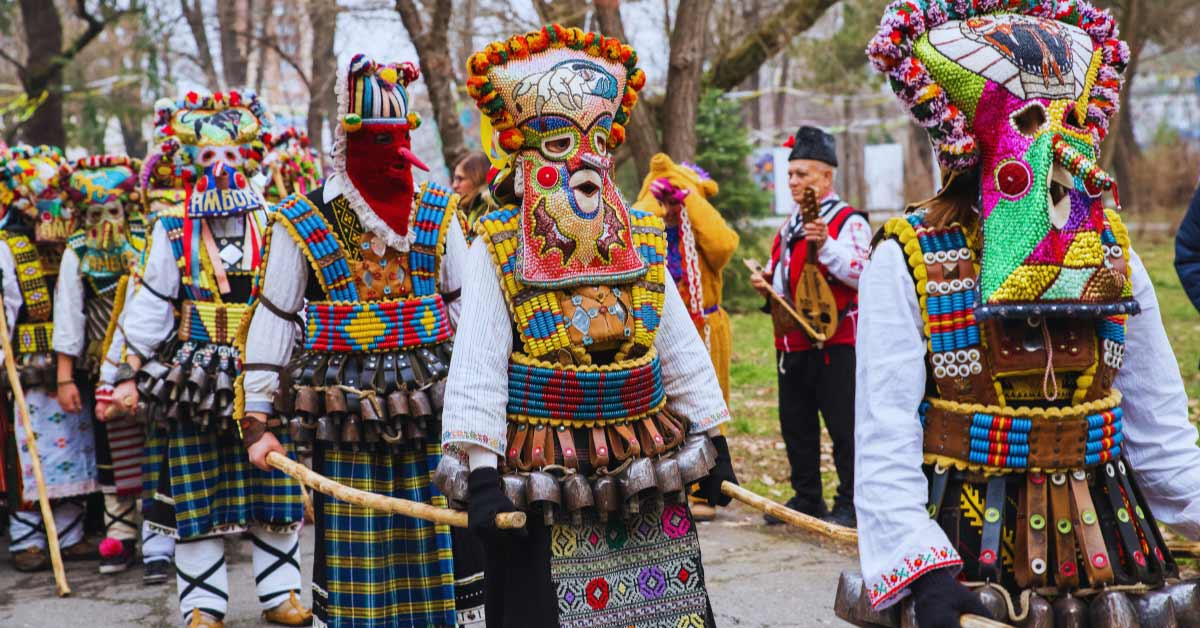
If you ask a Spaniard, a Pole and a Swede, you’ll get three very different answers, and probably a friendly argument. One will talk about late dinners and street festivals Culture. Another will mention Christmas Eve and a table set with twelve dishes. The third will bring up coffee breaks, candles and the one night of the year when the sun barely sets.
That’s the first thing worth knowing. Europe is not one culture. It’s dozens, packed into a space smaller than many single countries elsewhere, and they’ve been borrowing from, copying and occasionally annoying each other for centuries. This guide won’t try to cover everything (nobody could). Instead, it looks at the parts that tell you the most: how people celebrate, what they eat, how they behave around each other, and why old habits refuse to disappear.
Why Europe Feels So Layered

Walk around Split, in Croatia, and you’ll see cafés and shops built inside the walls of a Roman emperor’s palace. Wander through Seville, and Moorish arches sit a few steps from Catholic cathedrals. Neither is a coincidence. Europe’s heritage was never built in one go. It grew in layers, through Roman roads, medieval trade, religious movements, empires, wars and migration.
Language shows the same patchwork. The European Union has 24 official languages, and on top of those you have regional ones like Basque, Welsh, Breton and Sámi. For many families, speaking their own language isn’t just practical. It’s a way of saying, “this is who we are.”
So if you’re trying to understand European traditions, don’t try to memorize a list. Pick a region and watch how people eat, celebrate and spend a Sunday. The big picture comes together surprisingly fast.
Culture Festivals: Where Tradition Gets Loud
Europeans are good at finding reasons to gather. Many festivals started as religious days, harvest celebrations or old folk rituals, and over time they’ve grown into something that’s part faith, part party, part community reunion.
Southern Europe
Spain does festivals at full volume. La Tomatina in Buñol, held in late August, is a giant tomato fight, and yes, it’s as messy as it sounds, though there are strict rules and the town gets cleaned up quickly. San Fermín in Pamplona is best known for the running of the bulls, but locals will tell you it’s equally about music, processions and long, lazy meals.
Italy leans toward theater. The Carnival of Venice is all about masks and costumes, while Easter processions in Sicily and southern Spain are quiet, emotional events where entire neighborhoods walk together in the streets.
Central and Northern Europe
Germany’s Oktoberfest in Munich actually starts in September and ends in early October, which surprises many first-time visitors. Beer is the headline, but the traditional costumes, brass bands and giant pretzels matter just as much to the people who attend.
In Sweden, Midsummer might be bigger than Christmas. Families gather outdoors, raise a flower-covered pole, dance in silly little circles, and eat herring and new potatoes. After a long, dark winter, you can see why a night without darkness feels worth celebrating.
Then there’s Hogmanay, Scotland’s New Year festival. Edinburgh’s version includes torchlit processions and crowds singing “Auld Lang Syne,” a song that most of the world knows without realizing it came from Scottish poet Robert Burns.
The December Differences
If you want to see how varied Europe is, look at December. Dutch children celebrate Sinterklaas on 5 December and leave shoes out for small gifts. In Sweden, 13 December is Saint Lucia’s Day, when children in white robes walk with candles. In Poland, the Christmas Eve dinner called Wigilia begins when the first star appears, and families set an extra place at the table for an unexpected guest. Same season, completely different rituals.
Food: The Fastest Way Into a Culture

Honestly, if you only have a few days in a country, the best cultural lesson is a long meal. Food in Europe is rarely just fuel. It carries rules, memories and a fair amount of pride.
Italians take lunch seriously, and ordering a milky cappuccino after a big meal can earn you a polite look, since it’s seen as a morning drink. Spaniards eat late, often after 9 pm, and tapas turn dinner into a moving, shared event where you hop from bar to bar. In Sweden, fika (a coffee and pastry break) isn’t an indulgence. It’s a daily pause that colleagues and friends genuinely protect.
Regional pride runs deep too. France protects the names of its cheeses and wines. UNESCO has recognized both the art of Neapolitan pizza-making and the French gastronomic meal as cultural heritage. And in the Alps, dishes like fondue and raclette are less about recipes and more about sitting around one pot on a cold night.
A tip that works almost everywhere: skip restaurants facing the main tourist square. Walk a few streets further, find a place full of locals, and ask the staff what they’d order. It’s rarely a bad idea.
Music, Art and Craft
Music is where tradition tends to feel most alive. In Andalusia, flamenco is often performed in small rooms where the singer, guitarist and dancer seem to be sharing one emotion. In Lisbon, fado is sung storytelling, full of longing, and it’s usually best heard in a tiny bar where everyone goes quiet when the singer starts.
Ireland’s pub sessions work differently. Musicians sit around a table with fiddles, flutes and bodhrán drums and just begin playing, no stage required. Visitors are welcome, as long as they listen properly and don’t talk through the tunes.
Europe’s famous art is easy to list: Renaissance painting in Florence, Gothic cathedrals in France, Baroque palaces in Vienna. But the quieter crafts matter too. Embroidered textiles in Eastern Europe, Delft pottery in the Netherlands, and wooden toys from Germany’s Ore Mountains show how heritage lives in ordinary objects, passed from one generation to the next.
Family, Faith and Everyday Life

Religion shaped Europe for centuries, mainly through Catholic, Protestant and Orthodox Christianity, with long-standing Jewish and Muslim communities too. Today, though, many countries are largely secular. Plenty of people still celebrate Christmas or Easter, but more as family tradition than as a religious act.
Family life also changes from place to place. In southern Europe, big Sunday lunches with grandparents are still common. In Nordic countries, children are encouraged to become independent early, and strong parental-leave systems shape how families share work and care.
A few everyday habits can catch visitors off guard:
- Greetings: A kiss on the cheek is normal in France, Spain and Italy, but the number of kisses depends on the region. In Germany or the UK, a handshake is safer.
- Time: Germans and the Swiss take punctuality seriously. In parts of southern Europe, arriving fifteen minutes late is perfectly normal.
- Sundays: In many countries, shops still close and the day is reserved for rest or family. Plan your groceries ahead.
Small Ways to Be a Good Guest
You don’t need to be an expert to travel respectfully. A few easy habits go a long way.
Learn three phrases: hello, please and thank you. Your pronunciation might be terrible, and people will still appreciate the effort.
Carry a light scarf. Many churches and monasteries ask visitors to cover their shoulders and knees, and a scarf solves that in seconds.
Go beyond the capitals. A village festival in Slovenia or a weekly market in Provence can show you more about daily life than a crowded landmark ever will.
Travel in spring or early autumn if you can. The weather is pleasant, the crowds are thinner, and people have more time to talk.
And check festival dates before you book. Many follow religious calendars or shift slightly from year to year, so confirm them closer to your trip rather than relying on an old guidebook.
Why These Traditions Haven’t Disappeared

It’s fair to ask why old customs survive in a world that moves so quickly. I think the answer is that they give people something steady. A grandmother’s recipe, a village brass band, a Christmas Eve ritual: these things connect generations in a way a new gadget can’t.
But traditions aren’t museum pieces. Younger Europeans adapt them, blend them with modern life, and sometimes argue about what should change. That’s messy, but it’s also the sign of a living culture. A tradition nobody questions is usually one that’s already fading.
FAQ’s
1. What are the main European cultures and traditions?
European cultures include traditional music, folk dances, regional clothing, local cuisines, festivals, art, architecture, and family customs.
2. What are some famous European festivals?
Some famous festivals include Oktoberfest in Germany, Carnival in Venice, La Tomatina in Spain, and St. Patrick’s Day in Ireland.
3. How does European culture differ from country to country?
Each European country has its own language, history, food, celebrations, music, and social customs, making the continent culturally diverse.
4. What are some traditional European foods?
Popular traditional foods include Italian pasta, French croissants, Spanish paella, German sausages, Greek moussaka, and Belgian waffles.
5. What role does religion play in European traditions?
Christianity has influenced many European holidays, buildings, art, and customs. Other religious traditions and secular practices also contribute to Europe’s cultural diversity.

Leave a Reply