
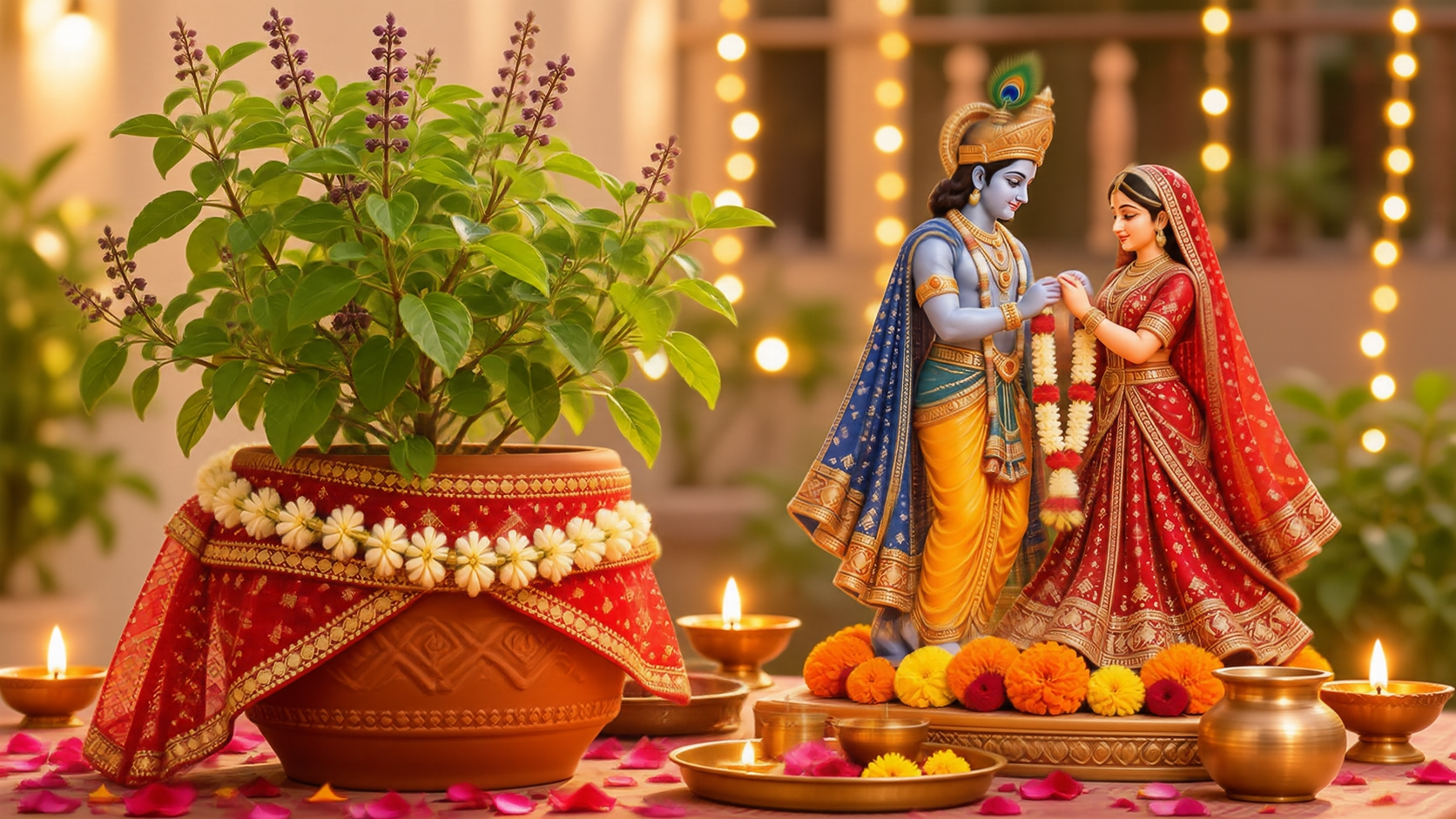
Every year, right after the main Diwali festivities wrap up, there is one particular evening that fills my heart and home with a special kind of warmth. The air turns crisp, the sweet aroma of sugarcane and marigolds lingers on the porch, and our courtyard transforms into a mini wedding venue. I am talking about Tulsi Vivah—the ceremonial marriage of the sacred Tulsi plant (Goddess Vrinda) to Lord Vishnu (or his divine form, the Shaligram stone).
If you ask me, this festival marks the true, soulful finale of the Diwali season. It is also the official green light for the traditional Hindu wedding season across India! Whether you have grown up watching your grandmother decorate the Tulsi planter or are planning to host a simple, peaceful ceremony at home for the first time, here is my personal guide to everything you need to know about Tulsi Vivah 2026.
1. Tulsi Vivah Exact Date and Shubh Muhurat for 2026

The Hindu calendar places Tulsi Vivah during the Kartik Shukla Paksha period, following Dev Uthani Ekadashi (the day Lord Vishnu awakens from his four-month cosmic slumber). Depending on your family tradition, some observe the ritual on Ekadashi evening, while most families observe it on Kartik Shukla Dwadashi.
┌────────────────────────────────────────────────────────┐| TULSI VIVAH 2026 TIMINGS |├────────────────────────────────────────────────────────┤| • Festival Date ➔ Saturday, November 21, 2026 || • Tithi ➔ Kartik Shukla Dwadashi || • Tithi Starts ➔ 6:31 AM (Nov 21, 2026) || • Tithi Ends ➔ 4:56 AM (Nov 22, 2026) || • Shubh Muhurat ➔ 5:25 PM to 7:49 PM (Pradosh Kaal) |└────────────────────────────────────────────────────────┘
In our house, we perform the wedding during the Pradosh Kaal (the auspicious evening twilight window). For 2026, the ideal evening window falls between 5:25 PM and 7:49 PM IST on Saturday, November 21. Gathering around the glowing diyas as dusk settles makes the ritual feel deeply magical.
2. Setting Up the Wedding Mandap: Simple Samagri List

Setting up for Tulsi Vivah feels just like preparing for a real wedding, only in miniature! You don’t need expensive store-bought props—just a few natural elements brought together with devotion.
+-------------------------------------------------------------------+| ESSENTIAL MANDAP SAMAGRI || || [Sugarcane Stalks (Canopy)] ➔ [Red Chunri & Bridal Ornaments] || [Shaligram Stone / Krishna Idol] ➔ [Fresh Marigolds & Diya] || [Roli, Turmeric & Akshat] ➔ [Sacred Gathbandhan Thread] |+-------------------------------------------------------------------+
What I Collect for the Altar
- For Goddess Tulsi (The Bride): A healthy potted Tulsi plant, fresh red or pink chunri (bridal veil), red glass bangles, sindoor, haldi (turmeric paste), and fresh marigold flowers.
- For Lord Vishnu / Shaligram (The Groom): A sacred Shaligram stone or a small idol of Lord Krishna/Vishnu wrapped in yellow cloth. Dharmayana
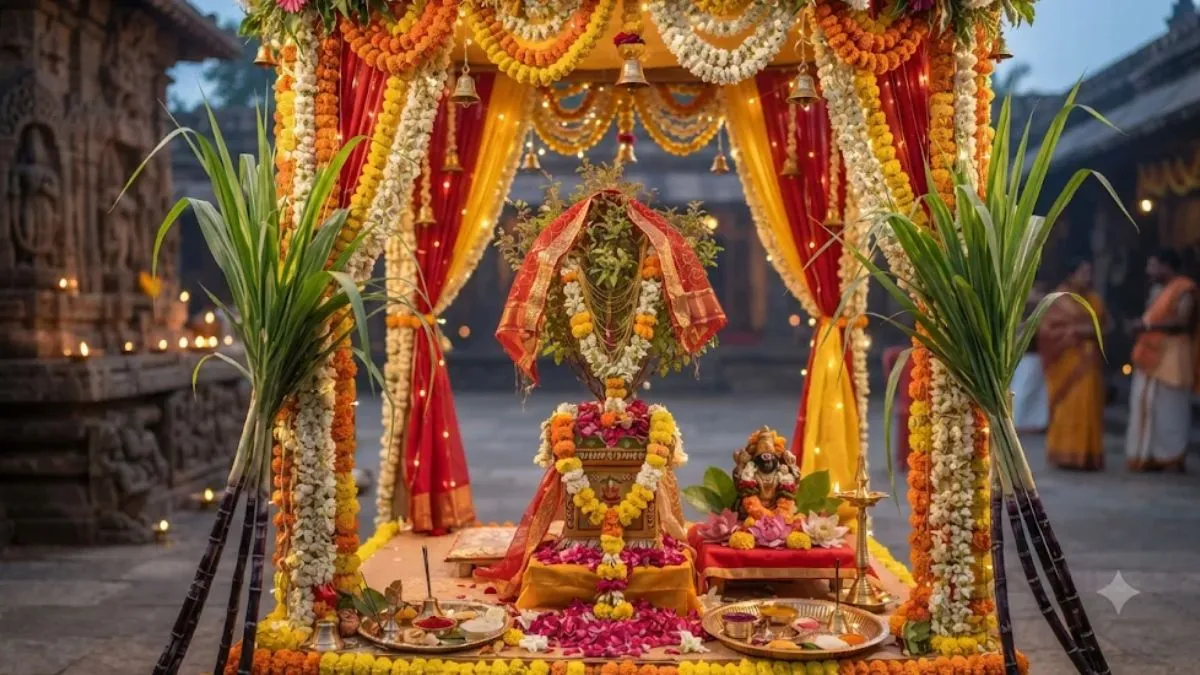
- For the Mandap Canopy: 4 long sugarcane stalks tied together at the top to form an arched wedding canopy around the planter.
- For the Rituals: Sacred thread (Mauli or Kalava for the Gathbandhan knot), raw unbroken rice (Akshat), incense sticks, ghee diyas, seasonal fruits (especially gooseberries/amla and apples), and sweets for bhog.
3. Step-by-Step Home Tulsi Vivah Puja Vidhi
If you are celebrating at home, keep the atmosphere calm, cozy, and joyful. Here is the straightforward step-by-step ritual sequence our family follows every year:
       [ Step 1: Clean & Build Sugarcane Mandap ]
                           │
                           ▼
       [ Step 2: Decorate Tulsi Mata in Bridal Attire ]
                           │
                           ▼
       [ Step 3: Place Shaligram / Krishna Idol Beside Her ]
                           │
                           ▼
       [ Step 4: Apply Turmeric & Tie Gathbandhan ]
                           │
                           ▼
       [ Step 5: Recite Vrinda Katha & Perform Aarti ]
- Mandap Assembly: Thoroughly clean your courtyard or porch space. Place the Tulsi pot on a clean wooden stool (chowki) and erect the sugarcane canopy over it.
- Dressing the Bride: Wrap the red chunri gracefully around the Tulsi plant. Carefully place small red bangles on the branches, offer sindoor, and drape fresh flower garlands.
- Seating the Groom: Place the Shaligram stone or Krishna idol on a raised cushion right next to the Tulsi pot, adorned with yellow cloth and garlands.
- The Gathbandhan & Tilak: Apply a soft stroke of haldi-kumkum paste to both deities. Take the red mauli thread and symbolically bind the Tulsi plant and Shaligram together—this Gathbandhan signifies their eternal marital union.
- Katha, Bhog & Aarti: Shower unbroken rice (akshat) over the divine couple like confetti. Read or listen to the story of Vrinda and Lord Vishnu, offer sweet bhog along with seasonal fruits, and complete the ceremony by singing the Tulsi Aarti with a glowing ghee lamp. Distribute prasad to everyone present!
4. The Legend of Vrinda: Why We Celebrate Tulsi Vivah

I have always found the story behind Tulsi Vivah to be deeply moving. According to sacred scriptures, Goddess Tulsi was originally a woman named Vrinda, known for her legendary purity and unwavering devotion to her husband, the demon king Jalandhara.
┌────────────────────────────────────────────────────────┐| THE DIVINE TRANSFORMATION |├────────────────────────────────────────────────────────┤| • Vrinda's Purity ➔ Kept her husband invincible || • Vishnu's Action ➔ Broken for cosmic harmony || • Cosmic Blessing ➔ Vrinda transformed into Tulsi || • Eternal Promise ➔ Vishnu marries Tulsi as Shaligram|└────────────────────────────────────────────────────────┘
Because of Vrinda’s unblemished fidelity, Jalandhara became invincible, throwing the universe out of balance. To restore peace, Lord Vishnu disguised himself to break her vow. Realizing what had happened, Vrinda cursed Vishnu to turn into a black stone (Shaligram). Impressed by her devotion and purity, Lord Vishnu granted her a boon: she would manifest on Earth as the sacred Tulsi plant, her leaves would be mandatory for his worship, and he would unite with her in marriage every year as Shaligram.
5. Spiritual & Household Significance
Tulsi Vivah is far more than a ceremonial re-enactment; it holds profound meaning for domestic life:
- Welcoming Auspiciousness: It cleanses household energy, inviting peace, longevity, and spiritual protection into your living space.
- Marital Harmony: Married couples who perform or participate in Tulsi Vivah seek blessings for lasting love, mutual respect, and prosperity in their own relationships.
- Opening of Wedding Season: Across India, families hold off on fixing marriage dates during the Chaturmas months. Tulsi Vivah signals that auspicious astrological alignments (Abhijit/Shubh Muhurats) have officially reopened for weddings and major celebrations! Dharmayana
A Note for Your Evening Celebration

Don’t worry about getting every tiny ritual detail picture-perfect. If you don’t have four tall sugarcanes, simply tie two stalks together or drape marigold garlands across your planter.
At its heart, Tulsi Vivah is about simple gratitude, home warmth, and celebrating divine love. Turn off your TV, light a few clay diyas around your courtyard, gather your family, and enjoy the quiet, beautiful evening glow.
Wishing you and your loved ones a peaceful, blessed, and happy Tulsi Vivah 2026!
FAQ’s
1. When is Tulsi Vivah 2026?
Tulsi Vivah 2026 will be celebrated on November 21, 2026 (Saturday).
2. What is the Shubh Muhurat for Tulsi Vivah 2026?
The main Tulsi Vivah ceremony is traditionally performed in the evening during Godhuli/Pradosh time. The exact muhurat varies by location.
3. Who gets married during Tulsi Vivah?
Tulsi Vivah symbolically celebrates the marriage of Goddess Tulsi with Lord Vishnu, commonly represented by a Shaligram stone or Vishnu/Krishna idol.
4. Why is Tulsi Vivah celebrated?
Tulsi Vivah marks the sacred union of Tulsi and Lord Vishnu and is traditionally associated with the beginning of the Hindu wedding season after Chaturmas.
5. How is Tulsi Vivah celebrated at home?
Devotees decorate the Tulsi plant, prepare a small mandap, offer prayers, perform wedding rituals, and conduct aarti and prasad distribution in the evening.


Leave a Reply