
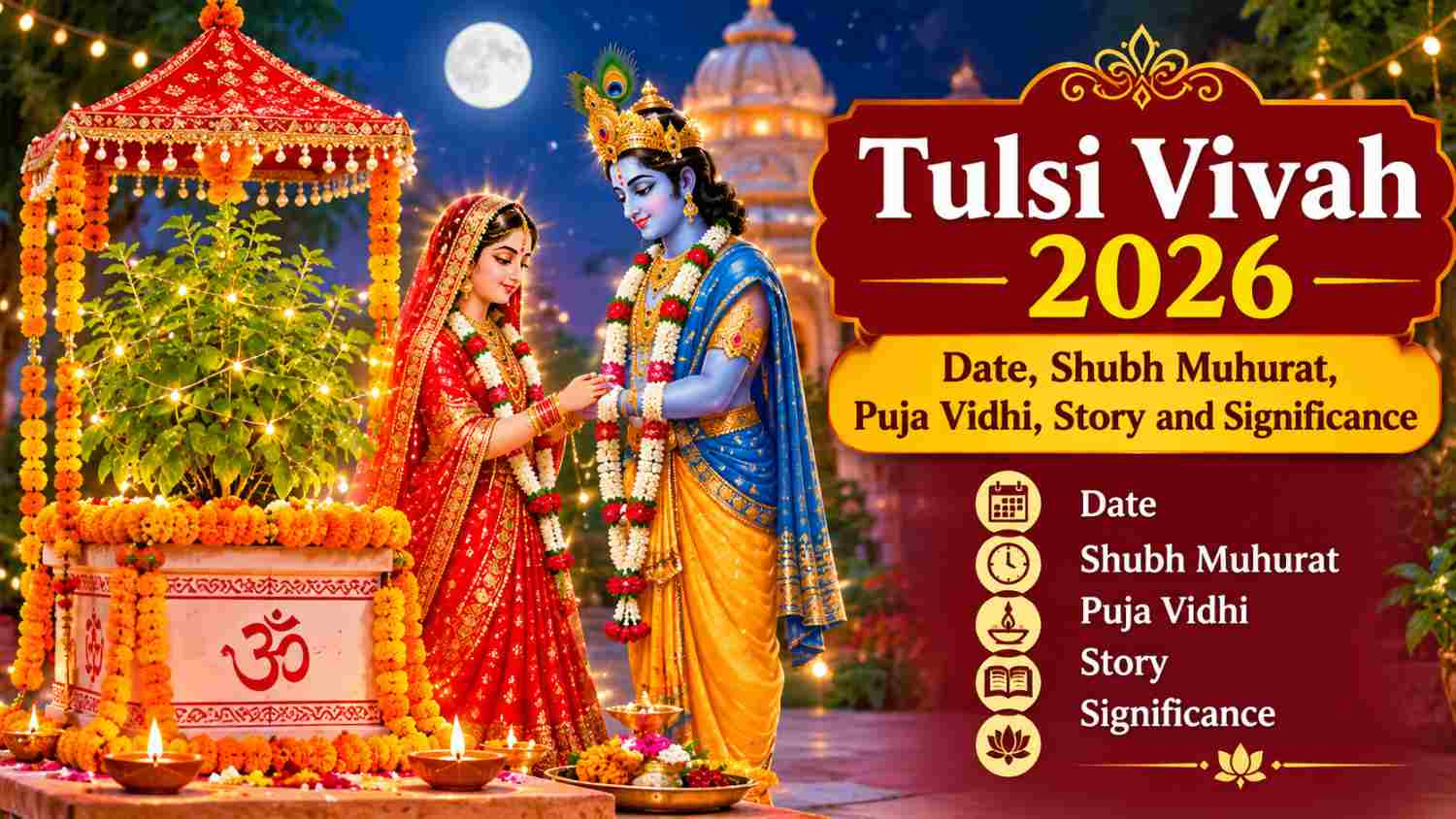
Tulsi Vivah is one of the most meaningful Hindu festivals, and families across India celebrate it with devotion and traditional wedding rituals. On this day, Goddess Tulsi is ceremonially married to Lord Vishnu, who is usually represented by the sacred Shaligram stone or an idol of Lord Krishna. Homes take on a wedding-like mood, with Tulsi plants dressed up in colourful chunaris, flowers, bangles and lights. A small mandap is set up, devotional songs are sung and the whole family joins in the ceremony. But the festival is not only about rituals, because it also carries a beautiful story about Goddess Vrinda, Lord Vishnu and the power of devotion. If you’re planning to celebrate Tulsi Vivah in 2026, here is a complete guide to its date, puja vidhi, vrat katha, puja samagri and customs.
When Is Tulsi Vivah in 2026?

Tulsi Vivah will be celebrated on Saturday, 21 November 2026, according to the Kartik Shukla Dwadashi date followed by Drik Panchang.
Dev Uthani Ekadashi falls on Friday, 20 November 2026. Many families perform Tulsi Vivah on the evening of Ekadashi, while others follow the Dwadashi tradition and do it the next day.
The ceremony is usually held during Godhuli Vela, the evening period around sunset. The exact auspicious time depends on your city and local Panchang, so check your regional calendar before arranging the puja.
Why Do We Celebrate Tulsi Vivah?
Tulsi Vivah marks the divine marriage of Goddess Tulsi and Lord Vishnu. In Hindu tradition, Tulsi is a sacred plant, especially dear to Lord Vishnu and Lord Krishna.
The festival is also linked with Dev Uthani Ekadashi. According to religious belief, Lord Vishnu wakes from his four-month cosmic sleep on this Ekadashi. This ends Chaturmas, a period when many Hindu communities traditionally avoid major wedding ceremonies.
After Dev Uthani Ekadashi and Tulsi Vivah, the auspicious wedding season begins in many parts of India.
For many households, it’s also a chance to bring the family together, perform traditional rituals and ask for blessings of happiness, peace and prosperity.
Tulsi Vivah Vrat Katha: The Story of Goddess Vrinda

The popular Tulsi Vivah vrat katha is about Goddess Vrinda and her husband Jalandhar.
According to Hindu mythology, Vrinda was a devoted woman whose faith and spiritual dedication were believed to protect her husband. Jalandhar was a powerful demon king, and the gods found him hard to defeat because of the strength that came from Vrinda’s devotion.
The gods finally went to Lord Vishnu for help. In the popular version of the story, Vishnu took the form of Jalandhar and approached Vrinda. When she learned the truth, she was deeply hurt and cursed Lord Vishnu to turn into stone.
Lord Vishnu accepted her curse, and this is linked with the sacred Shaligram form worshipped by his devotees.
Afterwards, Vrinda left her earthly body, and a sacred Tulsi plant grew from the place associated with her. Lord Vishnu blessed her and declared that Tulsi would always remain dear to him.
He also promised that worship of him would be incomplete without Tulsi leaves. The ceremonial marriage of Tulsi and Shaligram is celebrated every year as Tulsi Vivah.
This story is remembered during the festival, and it teaches devotees about faith, devotion and the sacred place of Tulsi in Hindu worship.
Tulsi Vivah 2026 Puja Vidhi: How to Perform the Ceremony at Home

Celebrating Tulsi Vivah at home doesn’t always need elaborate arrangements. Families can perform a simple ceremony with traditional puja items and sincere devotion.
1. Clean and Decorate the Puja Area
Start by cleaning the area around the Tulsi plant. Decorate the Tulsi platform with rangoli, flowers, diyas and colourful decorations.
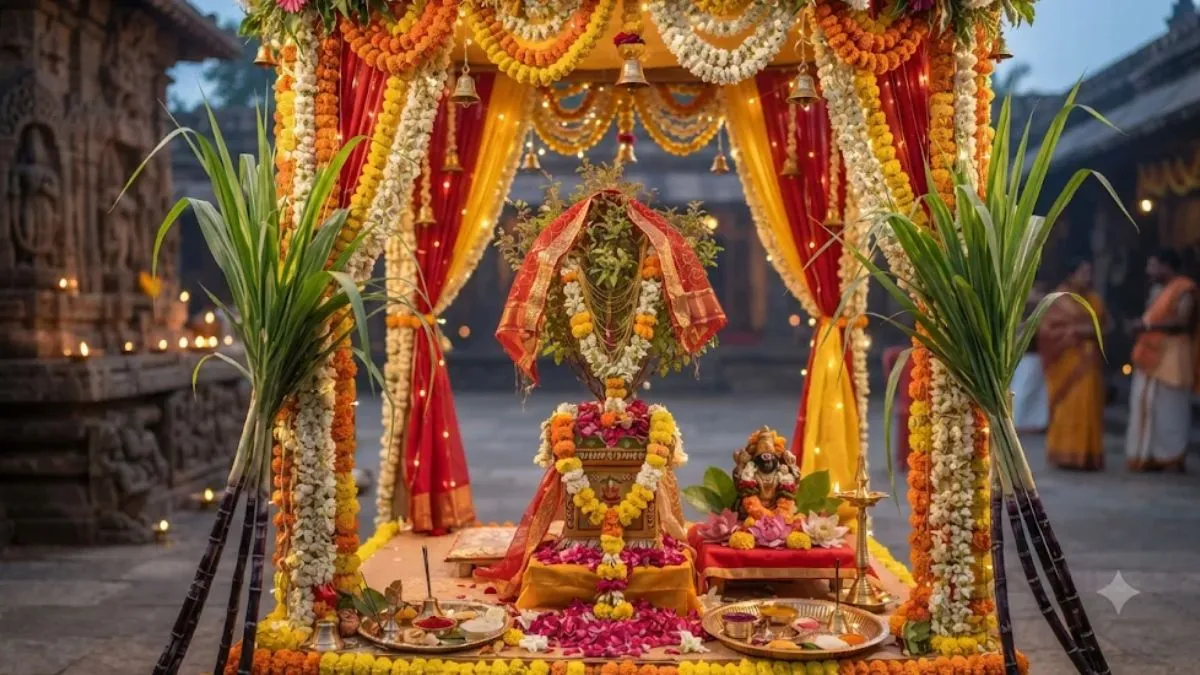
Many families also build a small wedding mandap using sugarcane sticks.
2. Prepare Tulsi Mata Like a Bride
Goddess Tulsi is traditionally dressed like a bride. Drape a red or yellow chunari around the plant and decorate it with flowers, bangles, kumkum and other traditional ornaments.
Keep the decorations gentle on the plant and avoid damaging its leaves or branches.
3. Place Shaligram or Lord Vishnu’s Idol
Place a Shaligram stone, or an idol or picture of Lord Vishnu or Krishna, near the Tulsi plant. This represents the groom in the symbolic wedding.
Arrange flowers, a small garland and other puja items around the platform.
4. Perform Ganesh and Tulsi Puja
Begin the ceremony by remembering Lord Ganesha. Then worship Goddess Tulsi and Lord Vishnu with flowers, turmeric, kumkum, sandalwood and rice.
Light a diya and incense sticks. Devotees may also recite Vishnu mantras or Tulsi prayers.
5. Perform the Traditional Wedding Rituals
The heart of Tulsi Vivah is the symbolic marriage ceremony. A sacred thread or cloth may be used to connect Tulsi Mata and Shaligram.
Families perform rituals such as kanyadaan, mangalashtak and pheras according to their own customs. Some households also sing wedding songs and shower flower petals during the ceremony.
6. Perform Aarti and Distribute Prasad
Finish the ceremony with the aarti of Tulsi Mata and Lord Vishnu. Offer fruits, sweets and other vegetarian preparations as bhog.
Lastly, share the prasad with family members and guests.
Tulsi Vivah Puja Samagri
Getting the puja samagri ready in advance makes the ceremony easier and better organised.
Common items include:
- Tulsi plant and Shaligram or Vishnu idol
- Red or yellow chunari
- Flowers and flower garlands
- Kumkum, turmeric and sandalwood
- Rice or akshat
- Sugarcane sticks for the mandap
- Coconut and betel leaves
- Fruits and traditional sweets
- Diya, ghee and cotton wicks
- Incense sticks and camphor
- Kalawa or sacred thread
- Rangoli colours and wedding decorations
Some families may add other items depending on their regional and family traditions.
Tulsi Vivah Vrat Rules and Traditions
Many devotees keep a fast on Dev Uthani Ekadashi and take part in Tulsi Vivah celebrations. Some also follow fasting traditions on Dwadashi.
People may eat fruits, milk and permitted fasting foods, while others keep a stricter fast according to their family customs.
Devotees generally maintain cleanliness, offer prayers to Lord Vishnu, read the Tulsi Vivah vrat katha and join the evening ceremony.
It’s also common to prepare traditional sweets and vegetarian dishes for bhog. Fasting rules can vary, so follow your family traditions and keep your personal health needs in mind.
How Is Tulsi Vivah Celebrated Across India?

Tulsi Vivah is celebrated in different ways across Indian states, though the central religious belief stays much the same.
In Maharashtra, families often perform the wedding with a traditional mandap, sugarcane decorations and Mangalashtak prayers.
In Uttar Pradesh and Madhya Pradesh, many households decorate their Tulsi platform, invite relatives and hold the wedding ceremony in the courtyard.
In Gujarat, devotees celebrate with colourful rangoli, flowers, devotional songs and traditional puja arrangements.
In Andhra Pradesh and Telangana, the festival is known as Tulasi Kalyanam in many communities. The ceremony is performed with traditional prayers and regional customs.
These celebrations show how one religious festival can bring together different regional cultures and family traditions.
FAQ’s
Q1. When is Tulsi Vivah in 2026?
Tulsi Vivah will be celebrated on Saturday, 21 November 2026.
Q2. Why is Tulsi Vivah celebrated?
Tulsi Vivah celebrates the divine marriage of Goddess Tulsi with Lord Vishnu in his Shaligram form.
Q3. What is the best time to perform Tulsi Vivah Puja in 2026?
The puja is generally performed during the evening Godhuli or Pradosh period. The exact muhurat depends on your location.
Q4. Which items are required for Tulsi Vivah Puja?
Common puja items include a Tulsi plant, Shaligram stone or Lord Vishnu idol, red chunri, flowers, sugarcane, diya, incense sticks, fruits and sweets.
Q5. Can Tulsi Vivah be celebrated at home?
Yes, devotees can celebrate Tulsi Vivah at home by decorating the Tulsi plant, performing the wedding rituals, offering prayers and distributing prasad.


Leave a Reply