

Mountain There is an old, unspoken rule among people who walk into the hills: you never return down the same person you were when you walked up.It sounds like typical outdoor romanticism, the kind of dramatic phrasing you find stamped onto the back of gear catalogs.
But if you have ever stood at a high ridge line just as the morning mist burns off, feeling the cold air bite at the edge of your jacket while the world drops away into green and gray fractures below you, you know it is entirely literal. Mountains have a clumsy way of making our grandest daily anxieties feel completely irrelevant. They don’t actively try to humble you; they simply exist with such immense, heavy indifference that your internal static naturally goes quiet.
Modern life is loud, structured, and aggressively curated. We move from small, climate-controlled boxes to slightly larger boxes, our eyes fixed on smooth glass screens that tell us exactly what to think, feel, and buy next. It is an exhausting way to exist, even if we are used to it.
A mountain journey breaks that script entirely. It replaces the digital hum with the unpredictable crunch of scree under a heavy boot, the sharp smell of damp pine needle compost, and the physical reality of your own lungs working hard against gravity. It is an environment where you cannot fast-forward, skim, or double-tap. You simply have to put one foot in front of the other, breathe through the burn in your thighs, and adjust to a timeline that was set down long before humans arrived to measure it.
Why We Leave the Mountain Valleys Behind

Every traveler who packs a bag for the high country is running toward something, even if they claim they are just going for the view. For some, it is the raw, uncomplicated satisfaction of a physical benchmark—reaching a specific altitude, crossing a notorious pass, or seeing a map line become a real horizon. There is a deep, primal confidence that comes from using your own two legs to carry yourself to a place where machines cannot easily go. It is a reminder that our bodies are meant for movement, resilience, and endurance, not just for sitting behind steering wheels and office desks.
For others, the pull is far more internal. They are looking for the kind of quiet that you can only find when you get far enough away from cell towers and highway corridors. Mountain silence isn’t actually silent; it is composed of moving water, wind catching the hard edges of exposed stone, the sudden warning whistle of a marmot, and the rhythmic thump of your own heartbeat.
But it is a clean sound. It leaves space in your head that is usually crowded out by notifications and deadlines. In the high country, your priorities shrink down to the essentials: watch your step, stay hydrated, keep an eye on the clouds, and make camp before the light fails. That radical simplification is incredibly liberating. It is a mental reset that clears away the clutter and leaves you with an honest, unembellished view of yourself.
The Scale of the Himalayas Mountain

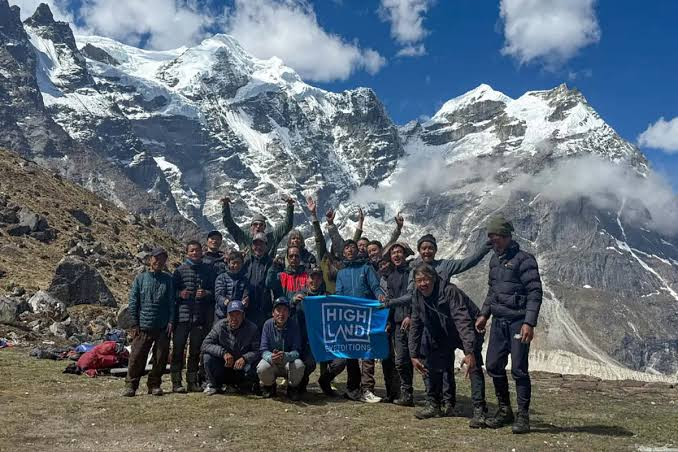
If you want to understand what true isolation and monumental scale feel like, you eventually have to look toward the spine of Asia. The Himalayas are not just a mountain range; they are a geological event that is still actively happening. Walking among these giants is an exercise in perspective. The peaks don’t just rise above the valley floor; they wall it in, cutting off the horizon with jagged walls of ice and black rock that seem to prop up the sky.
Trekking through places like the Khumbu region of Nepal or the high passes of Ladakh in the Indian Himalayas is a slow process of acclimatization, both physical and cultural. The lower trails lead you through vibrant terraced hillsides where water buffalo pull wooden plows through dark mud. As you climb higher, the trees begin to thin, the air loses its heavy moisture, and the landscape transitions into a stark, high-altitude desert of stone and ice.
What anchors this massive landscape is the human life that has adapted to it. You will find yourself sharing narrow suspension bridges with strings of pack yaks, their bells clanking against the roar of glacial meltwater below. You will pass stone mani walls carved with ancient mantras and see strings of weathered prayer flags snapping violently in the wind, sending silent intentions out across the empty valleys.
When you sit down in a cold stone tea house at night, your hands cupped around a hot metal mug of ginger tea while the wind rattles the corrugated tin roof, you realize that the hospitality here is as tough and enduring as the mountains themselves. The Himalayas don’t just test your physical limits; they show you how small you are, and strangely, that realization brings a massive sense of peace.
Mountain Precision in the Swiss Alps

Shift your gaze to western Europe, and the mountain experience transforms into something completely different. If the Himalayas are a wild, chaotic frontier, the Swiss Alps are a masterclass in elegant design and alpine balance. Here, the relationship between human civilization and the natural world feels remarkably harmonious. You can be standing on the edge of a massive, blue-tinted glacier in the morning and sitting in a wood-paneled tavern eating wild mushroom rosti by mid-afternoon.
The beauty of the Alps lies in this accessibility. The Swiss have turned mountain travel into a functional art form without stripping the landscape of its grandeur. A network of cogwheel railways and cable cars allows anyone—whether a seasoned mountaineer or a family with young children—to experience the high alpine environment. You can watch the iconic, crooked tooth of the Matterhorn reflect perfectly in the still waters of a tiny tarn, or walk through alpine meadows so thick with blue gentians and yellow buttercups that the scene looks almost artificial.
But don’t let the postcard perfection fool you; the Alps still possess plenty of teeth. The sheer north face of the Eiger, a vertical wall of dark limestone and brittle ice, stands as a grim reminder of the risks that defining peaks demand. The magic of this place is the constant contrast between the comforts of the valley and the harsh realities of the summits. It is an environment that invites you to enjoy the mountains with a sense of refined calm, proving that an adventure doesn’t have to be brutal to be profoundly beautiful.
The Raw Edges of Patagonia

At the southern tip of the American continent lies Patagonia, a landscape that rejects any notion of predictability or comfort. Shared by Chile and Argentina, this is a place defined by its wild geography. Here, the Andes do not fade away gently; they erupt from the cold southern ocean in jagged granite spires like the towers of Torres del Paine or the massive, imposing block of Mount Fitz Roy.
Patagonia is an environment of intense moods. The weather here is a living entity, shaped by fierce winds that sweep across the Southern Patagonian Ice Field, carrying moisture that can transform a warm, sunny morning into a driving horizontal snowstorm within thirty minutes. The trees themselves show the scars of this climate, growing at dramatic angles, bent permanently eastward by the relentless gales.
To travel through Patagonia is to accept that you are not in control. You will hike through ancient lenga forests dripping with pale green lichen, cross vast gravel flats where the wind threatens to knock you off your feet, and watch massive chunks of blue ice calve off the faces of glaciers with a sound like artillery fire. It is a exhausting, demanding landscape that offers no apologies for its harshness. But when the clouds finally split apart at sunset, catching the granite peaks in a fierce, blood-red glow against a dark purple sky, the sheer emotional weight of that beauty is enough to make you forget every mile of wet boots and frozen fingers.
The Painted Walls of the Dolomites

In northern Italy, the mountains offer a different kind of visual drama. The Dolomites are made of an ancient coral reef that was pushed high above sea level millions of years ago, resulting in a landscape of pale, vertical limestone towers that look completely different from the dark granite of the Alps or Patagonia.
The defining characteristic of the Dolomites is a phenomenon the locals call enrosadira. Because of the unique chemical composition of the rock, the pale cliffs absorb the changing light of the sun. At dawn and dusk, the dull gray stone undergoes a stunning transformation, glowing in deep shades of yellow, pink, burnt orange, and violet. It is a theatrical display that makes the mountains feel temporary, as if they are made of light rather than solid stone.
The Palette of Enrosadira[Midday] --> Pale, chalky white and sterile gray cliffs.[Pre-Sunset]--> Warm butter-gold creeping up the vertical fissures.[Sunset] --> Deep crimson and vibrant rose across the flat rock faces.[Twilight] --> Cool, ghostly lavender before fading into dark blue.
The lifestyle here is a beautiful blend of Italian hospitality and Tyrolean mountain tradition. The trails are dotted with rifugi—high-altitude mountain huts that are closer to boutique alpine inns than basic shelters. After a long day navigating the exposed ledges of a via ferrata (iron pathway), you can sit on a wooden sun terrace, drinking a glass of local Lagrein wine and eating handmade spinach dumplings while the peaks around you turn pink. The Dolomites show us that mountain travel can be sophisticated, artistic, and deeply restorative all at the same time.
The Lasting Imprint

When you pack up your gear at the end of a mountain trip and head back toward the airport or the train station, the physical evidence of the journey starts to fade. The mud on your boots dries and flakes off, the sunburn turns to tan, and the ache in your muscles goes away. But the internal shift stays with you.
You will find that your relationship with time has altered slightly. Back in the routine of traffic lights, calendar invites, and endless emails, a part of your mind remains anchored to the slow, steady rhythm of the trail. You remember the exact texture of the cold air at four in the morning when you left camp, the specific blue of a glacial lake that looked too bright to be real, and the profound quiet that settled over you when you finally stopped moving and looked out across an empty horizon.
These memories become internal landmarks. They are quiet spaces you can return to when the modern world gets too loud, too fast, or too complicated. The mountains don’t care about our deadlines, our bank accounts, or our social status. They simply stand there, patient and exposed, waiting for the next traveler who needs to remind themselves what it means to be grounded, present, and completely alive.
Frequently Asked Questions
1.What makes a mountain adventure beautiful?
A mountain adventure becomes beautiful when it combines dramatic scenery, peaceful atmosphere, meaningful effort, and memorable experiences. The beauty often comes from both the landscape and the feeling the journey creates.
2.Which mountain destination is best for beginners?
The Swiss Alps, Canadian Rockies, and Dolomites are often great choices for beginners because they offer scenic trails, accessible viewpoints, and a wide range of travel styles.
3.Which mountain adventure is best for experienced travelers?
The Himalayas, Patagonia, Nepal, and the Andes are especially appealing to experienced travelers who want challenge, altitude, and more immersive adventure.
4.Can mountain trips be relaxing as well as adventurous?
Yes, many mountain destinations offer both. Travelers can enjoy easy walks, scenic drives, cable cars, quiet lodges, and beautiful viewpoints while still experiencing the excitement of the mountains.
5.When is the best time to visit mountain destinations?
The best time depends on the region and the type of trip you want. Summer is often ideal for hiking, while winter can be perfect for snow views, skiing, and a different kind of mountain atmosphere.

Leave a Reply